+86 183 3953 1958
中文
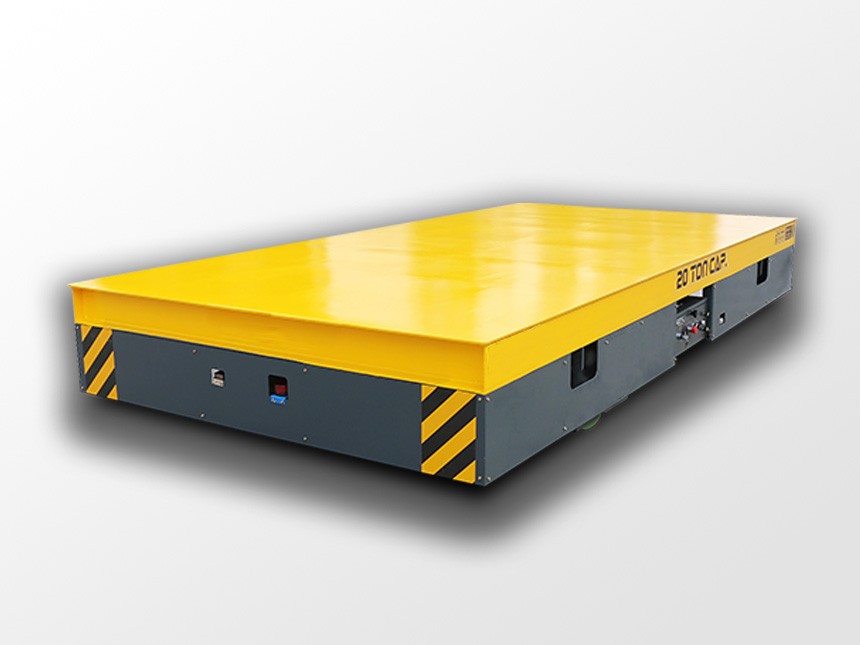
No question in material handling equipment selection generates more debate than "electric cart vs forklift"—and yet the debate rarely produces a useful answer, because the question is asked too broadly. Whether an electric cart or a forklift is the right choice depends entirely on the specific application, the specific facility, and the specific operational requirements. A forklift optimized for pallet handling in a wide-aisle warehouse is a different product from an electric cart optimized for continuous heavy-load transport on a fixed route, and the comparison between them makes sense only when the application requirements match both products' strengths.
Electric carts have specific advantages that make them the superior choice in certain conditions. The primary advantage is efficiency in continuous-flow, fixed-route operation. An electric cart that travels a fixed route repeatedly can be optimized for that route in a way that a forklift—which must handle many different routes and many different types of transport tasks—cannot be. The cart's control system can be programmed with the exact route profile: speed limits at specific points, acceleration and deceleration rates optimized for energy efficiency, and positioning accuracy matched to the requirements of each stop. This route optimization produces lower energy consumption, higher transport consistency, and better positioning accuracy than a forklift performing the same transport task.
The second major advantage is clean operation. Electric carts produce no exhaust emissions, which makes them superior in environments where air quality is critical: food processing, pharmaceutical manufacturing, clean room operations, and any application where the空气 quality in the working environment must be controlled. Forklifts with internal combustion engines produce exhaust gases—including carbon monoxide, nitrogen oxides, and particulate matter—that can affect product quality in these environments and require ventilation infrastructure that adds to the facility cost. Electric carts eliminate this problem entirely.
The third advantage is low maintenance. Electric drive systems have fewer wearing components than forklift drive systems: no engine oil, no transmission, no exhaust system, no hydraulic lift system. The maintenance requirements of an electric cart are significantly lower than a comparable forklift, which reduces both the maintenance cost and the maintenance-related downtime that interrupts operations.
Forklifts have their own specific advantages that make them the superior choice in different conditions. The primary advantage is versatility: a forklift can handle a wide variety of transport tasks in the same facility, moving between different routes, handling different load types, and adapting to task variations that would require a dedicated cart for each specific task in an electric cart fleet. For facilities with high task variety—where the same equipment must handle many different transport requirements in the same shift—a forklift's versatility provides significant operational flexibility.
The second major advantage is lifting capability. Forklifts are designed to lift loads vertically, typically to heights of 3-8 meters for warehouse forklifts and higher for specialized high-lift equipment. Electric platform carts are designed for horizontal transport only; they cannot lift loads vertically. For applications that require vertical transport—stacking pallets in racking, unloading trucks, loading containers—forklifts remain the standard equipment choice. Any application where the destination is elevated above floor level requires a lifting mechanism that electric platform carts do not provide.
The third advantage is terrain adaptability. Forklifts are designed to operate on surfaces that are uneven, rough, or not fully paved—construction sites, outdoor yards, uneven warehouse floors. Electric platform carts are optimized for smooth, level, indoor floor surfaces, and their performance degrades significantly on surfaces outside those conditions. For applications that include outdoor operation or indoor surfaces that are not smooth and level, forklift capability provides advantages that electric carts cannot match.
The right way to approach the electric cart versus forklift decision is not to compare the equipment types in the abstract, but to define the specific application requirements and then evaluate which equipment type best meets those requirements. The key application characteristics to evaluate are: the transport task profile (fixed-route repeated transport versus variable-route multi-task transport), the load characteristics (horizontal-only transport versus transport that requires vertical lift), the operating environment (indoor smooth floor versus outdoor or rough surface), the air quality requirement (clean environment versus standard), and the utilization pattern (high utilization on specific routes versus variable utilization across many tasks).
When the application requirements favor electric carts on multiple dimensions—fixed routes, horizontal-only transport, indoor operation, clean environment—the electric cart is the clear choice. When the application requirements favor forklifts on multiple dimensions—high task variety, vertical lift required, outdoor or rough surface operation—forklifts are the clear choice. The decision is most difficult when the application has mixed requirements: some tasks that favor electric carts and some that favor forklifts. In mixed-requirement situations, the analysis typically leads to a hybrid solution: some electric carts for the tasks that match their capabilities, and some forklifts for the tasks that require forklift capabilities.