+86 183 3953 1958
中文
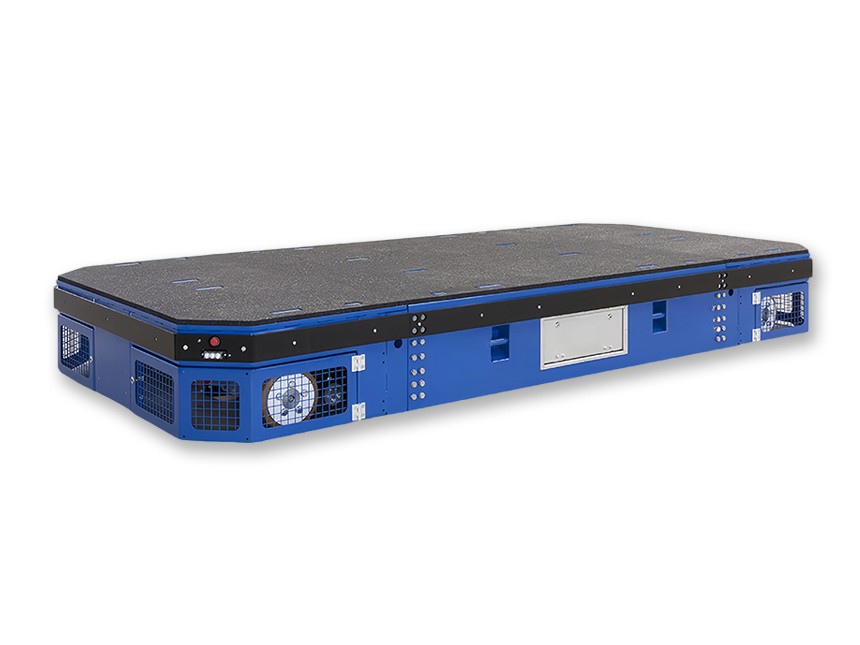
Selecting the right battery for your Automated Guided Vehicle fleet is one of the most consequential decisions in an AGV procurement process. Battery technology directly determines operational runtime, maintenance cycles, facility safety, and long-term cost of ownership. Yet with rapid advances in lithium-ion chemistries, the emergence of solid-state prototypes, and shifting supplier landscapes, keeping pace with industrial battery technology trends is a challenge even for experienced procurement teams. This guide cuts through the noise — breaking down the key selection criteria, comparing the dominant battery chemistries, and delivering actionable recommendations for different operational scenarios.
The three chemistries most relevant to modern AGV deployments are lead-acid, lithium-ion, and lithium iron phosphate (LiFePO4). Each occupies a distinct position in the performance-cost spectrum.
Lead-acid remains the lowest upfront cost option. Mature technology, wide availability, and simple charging infrastructure make it a practical choice for low-throughput, cost-sensitive operations. Drawbacks include short cycle life (500–1,000 cycles), slow charging, and significant weight that limits energy density.
Lithium-ion has become the default choice for dynamic, multi-shift operations. High energy density, fast charging (often under 2 hours), and 2,000–5,000 cycle life deliver compelling total cost of ownership. The primary variants used in AGV applications are nickel manganese cobalt (NMC) and lithium iron phosphate (LiFePO4). LiFePO4 is increasingly preferred for its superior thermal stability, longer cycle life (5,000+ cycles in some formulations), and absence of cobalt — which carries both cost and ethical supply chain concerns.
Emerging technologies worth monitoring include solid-state batteries (higher energy density, improved safety, still in early commercial rollout) and hydrogen fuel cells (relevant for high-throughput, long-running applications — but currently limited by infrastructure complexity and cost).
Runtime per charge dictates how long your AGV can operate before returning to a charging station. For an 8-hour shift operation, you need to calculate the energy consumption profile based on load weight, travel distance, and frequency of stops. Lithium-ion batteries typically deliver 150–200 Wh/kg energy density, versus 30–50 Wh/kg for lead-acid. If your AGV operates continuously for long stretches, energy density and a capable Battery Management System (BMS) that prevents deep discharge become critical selection factors.
Cycle life — the number of charge/discharge rounds a battery can endure before capacity degrades below usable thresholds — is the single most important factor in long-term cost. LiFePO4 batteries rated at 5,000 cycles at 80% depth of discharge translate to roughly 10 years of service under typical industrial use. Lead-acid, by contrast, typically requires replacement within 2–3 years in demanding applications. Always calculate total cost of ownership across the expected operational lifespan, not just the upfront acquisition cost.
Your charging approach shapes operational efficiency. Two dominant models exist: opportunity charging (brief charging during work breaks or shift pauses, keeping AGVs running nearly continuously) and full overnight charging (deep charging after operation concludes). Li-ion batteries are well-suited to opportunity charging and can tolerate partial charge cycles without the memory effects that plague NiMH chemistries. Lead-acid batteries require longer, controlled full charges and degrade faster if subjected to opportunity charging patterns. Your facility layout, shift schedule, and AGV fleet size will determine which strategy is viable — and your battery choice must align with that decision.
Temperature extremes directly affect battery performance and lifespan. Standard Li-ion batteries perform reliably in the 0°C to 45°C range. For cold storage facilities (sub -20°C) or high-heat environments (above 50°C), specialized battery formulations or active thermal management systems are necessary. Lead-acid batteries are sensitive to temperature as well, requiring careful charge voltage compensation in variable environments. Always verify the manufacturer's rated operating temperature range against your facility's actual conditions — not just nominal specifications.
Modern AGV operations increasingly depend on real-time fleet management data. Battery systems that communicate state-of-charge, health status, and temperature readings via CAN bus, Modbus, or industrial Ethernet enable predictive maintenance, optimized routing, and centralized monitoring. Not all battery suppliers offer this level of integration — verify API compatibility with your existing WMS or fleet management platform before making a selection. BMS (Battery Management System) quality varies significantly across suppliers; demand documentation of BMS functionality and testing standards.
The table below summarizes the primary trade-offs across the three main battery types.
Lead-Acid: Lowest upfront cost | 500–1,000 cycles | Slow charge | High weight | Best for budget-constrained, light-duty applications
Lithium-ion (NMC): High energy density | 2,000–4,000 cycles | Fast charge (1–2 hrs) | Moderate cost | Suitable for high-throughput, multi-shift operations
LiFePO4: Superior thermal stability | 5,000+ cycles | Fast charge | Higher upfront | Ideal for demanding industrial environments with long operational runs
Solid-State (emerging): Highest energy density potential | Limited commercial availability | Premium cost | Worth monitoring for future deployments
For high-throughput e-commerce logistics: Lithium-ion (NMC or LiFePO4) with opportunity charging capability. Prioritize a BMS with fleet management integration for real-time monitoring.
For cold storage and refrigerated warehouses: Cold-rated LiFePO4 with active thermal management. Verify low-temperature charge acceptance and capacity rating at operating temperature.
For light-duty, budget-sensitive deployments: Quality lead-acid with a controlled charging regime. Monitor cycle count and plan for replacement on a 2–3 year cycle.
For automotive manufacturing (heavy load, continuous operation): LiFePO4 with high discharge current rating. Factor in opportunity charging windows during shift breaks.
Industrial battery technology for AGVs has matured significantly, and the choice has narrowed to a clear decision framework: LiFePO4 for demanding industrial applications, Li-ion NMC for general high-throughput operations, and lead-acid for cost-constrained light-duty scenarios. As solid-state technology approaches commercial viability, early-stage evaluation is worthwhile for organizations planning multi-year fleet expansions. Regardless of chemistry chosen, demand full transparency on BMS specifications, cycle life ratings, and post-sale technical support. The battery is not a line item — it is the operational heartbeat of your AGV fleet.
Ready to evaluate battery options for your specific AGV application? Contact our technical team for a tailored energy assessment and TCO analysis for your operation.