+86 183 3953 1958
中文
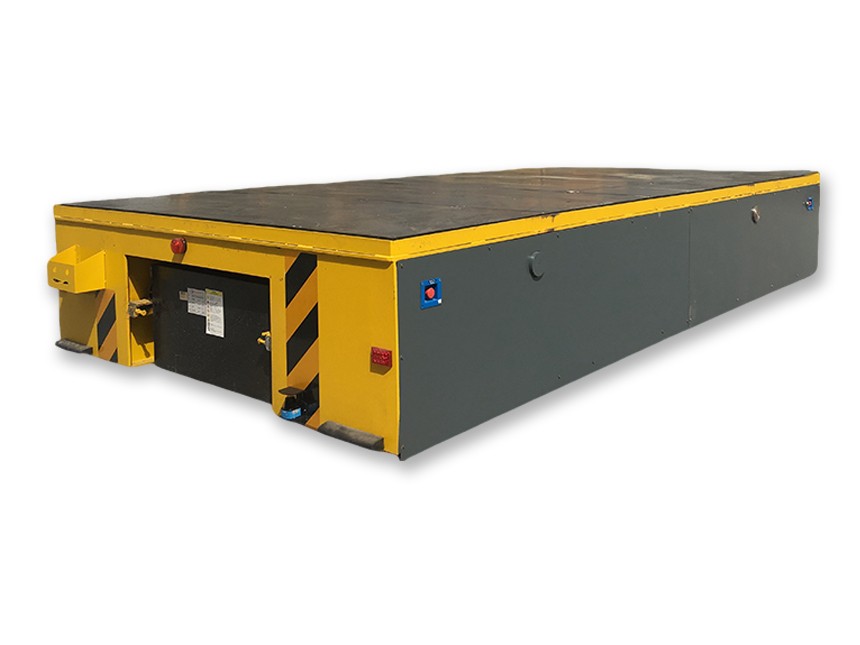
Rail-less transfer carts derive their fundamental advantage from not being constrained to fixed paths. This route freedom—being able to travel anywhere the floor allows rather than only where tracks run—is not merely a convenience feature. It is a strategic capability that shapes how a facility can organize its operations, adapt to changes, and optimize material flow. Understanding the full range of benefits that route freedom enables helps manufacturing managers evaluate whether rail-less carts offer sufficient value to justify their specification over more constrained alternatives.
The most immediate benefit of rail-less transfer carts is the elimination of rail infrastructure costs. Embedded or surface-mounted tracks require engineering, fabrication, and installation labor that represents significant capital investment—often ranging from 15-30% of the total material handling system cost for facilities with complex rail networks. These infrastructure costs are fixed at installation and represent ongoing facility obligations: floor repairs where rails are embedded, fastener replacement as surface rails loosen, and cleaning routines to prevent debris accumulation in track grooves.
Rail-less carts require only a flat, level floor surface—conditions that already exist in virtually every manufacturing facility. The absence of infrastructure commitments simplifies facility management and preserves flexibility. When operations change, rail-less carts simply operate on different routes. When facility layouts are modified, no rail demolition or repositioning is required. This flexibility advantage compounds over time as facilities evolve and the accumulated cost of rail infrastructure changes would have exceeded any initial equipment premium.
Manufacturing operations are rarely static. Product mixes change with market demand, production volumes fluctuate seasonally or cyclically, and new products introduce different material handling requirements. A rail-guided cart system serving a stable, high-volume production line may operate very efficiently—but when that production line must change over to different products, different volumes, or different routing, the rail infrastructure that enabled efficient fixed-route transport becomes a constraint on necessary operational changes.
Rail-less carts adapt to changing requirements without physical modifications. When a new production station is added, rail-less carts can serve it immediately if floor access exists—adding the same station to a rail-guided system requires track extension that disrupts operations during installation. When transport volume increases and more carts are needed, additional rail-less carts simply join the fleet and begin operating on existing routes. Rail-guided expansion requires track capacity expansion that is far more capital-intensive.
Facilities with complex layouts—multiple buildings, irregular floor shapes, obstacles that create irregular traffic patterns—often struggle to apply material handling equipment effectively because the equipment cannot access the spaces where materials need to move. Narrow aisles, irregular corners, and areas where multiple traffic flows intersect create zones where rail-guided carts cannot operate.
Rail-less carts with compact turning radii access areas that rail-guided systems cannot reach, serving material flow requirements in the irregular spaces that exist in real manufacturing facilities rather than the idealized layouts assumed in system planning. This access advantage is particularly valuable in older facilities, multi-story buildings, and spaces where structural columns or fixed equipment create obstacles that fixed tracks cannot navigate around.
Production changeovers—switching from one product to another—create material handling requirements that fixed-route systems handle poorly. When a production run ends and materials specific to that run must be cleared, rail-guided carts may have limited route options for moving those materials to appropriate locations. When a new production run begins, materials must arrive from storage areas that may not be conveniently located on the established rail network.
Rail-less carts provide the routing flexibility to handle changeover material movements efficiently, moving materials from wherever they happen to be to wherever they need to go without being constrained to predetermined paths. This responsiveness advantage reduces changeover time—a critical metric in high-mix manufacturing environments where products change frequently and changeover efficiency directly affects production capacity.
Rail infrastructure creates physical hazards in the work environment. Floor-level rails are tripping hazards for personnel walking through the area. Rails create obstacles that fork-lift tires and cart wheels must navigate carefully, generating wear and collision damage. Rails collect debris in their grooves, requiring regular cleaning to maintain safe wheel engagement. Embedded rails create permanent floor variations that affect vehicle stability on turns.
Rail-less cart operations eliminate these infrastructure-related hazards. Personnel can walk freely throughout the facility without navigating around tracks. No floor-embedded obstacles create collision risks or tripping hazards. The floor surface remains consistent regardless of where material transport occurs, maintaining predictable vehicle behavior across the entire operational area.
Rail-less cart systems avoid the infrastructure lifecycle costs that rail-guided systems accumulate. No rail track replacement as tracks wear. No floor repairs where embedded rails damage surrounding concrete. No fastener replacement or track realignment for surface-mounted systems. No specialized cleaning equipment or procedures for track groove maintenance. These cost categories are often underestimated when rail-guided systems are initially specified but become significant over a 10-15 year equipment life cycle.
The rail-less cart itself may have a slightly higher initial cost than a comparably-specified rail-guided cart due to more sophisticated steering and navigation systems. But when infrastructure costs are included, rail-less systems typically deliver lower total cost of ownership—particularly for facilities where layout flexibility, operational adaptability, and future-proofing have value beyond the immediate application requirements.