+86 183 3953 1958
中文
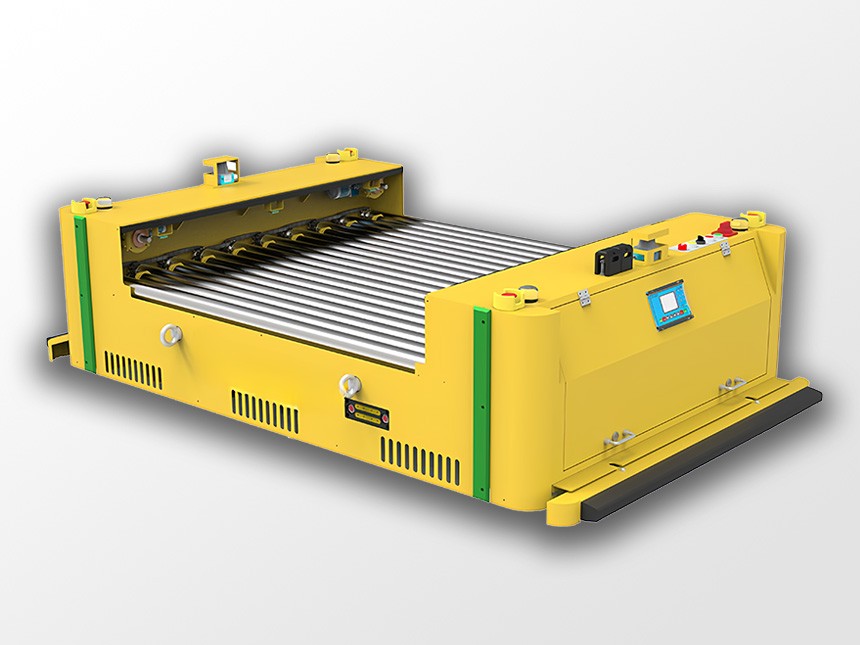
Rail-guided and rail-less transfer carts represent two fundamentally different approaches to controlling cart movement and positioning. Rail-guided carts follow physical tracks embedded in or mounted on the floor, with wheels or guide rollers that constrain the cart to the rail path. Rail-less carts use steering systems—manual, semi-automated, or fully automated—that allow the cart to travel along any path the operator or control system directs. This architectural difference affects every aspect of the cart's capabilities, cost, and suitability for different applications.
Rail-less transfer carts offer complete path flexibility—the cart can travel anywhere the floor can support it, turning in any direction, reversing, and navigating around obstacles. This flexibility makes rail-less carts ideal for facilities where material flow patterns are complex, where multiple destinations require different routes, or where layout changes are frequent. A rail-less cart serving a job shop that produces hundreds of different product configurations can access any workstation in any sequence without being constrained to fixed paths.
Rail-guided carts are limited to their rail paths—every destination the cart must reach must be located on or accessible from a rail track. This limitation is acceptable when material flow patterns are highly consistent and destinations are fixed, such as assembly lines that run the same products for extended production runs. But rail-guided systems struggle to serve dynamic material flow requirements where the flexibility to change routes is needed.
Rail-guided systems require physical rail infrastructure that must be designed, fabricated, and installed to exact tolerances. Embedded rails require floor construction work that disrupts operations during installation and creates permanent floor modifications. Surface-mounted rails are less disruptive to install but create floor obstructions that affect other traffic and require careful integration with existing floor surfaces. Both approaches involve significant engineering and installation costs that are proportional to the complexity of the rail system layout.
Rail-less carts require no floor modifications—any flat, level floor surface that supports the load is sufficient. The absence of infrastructure installation means lower capital cost, faster deployment, and no permanent facility modifications that complicate future layout changes. When operations change and material flow patterns need to evolve, rail-less carts simply receive updated route programming, while rail-guided systems require physical rail modifications.
Rail-guided carts naturally achieve high positioning accuracy at stops along the rail, as the rail constrains the cart position along a defined path. When the rail terminus is at a fixed loading position—say, directly aligned with a machine tool spindle—the cart arrives precisely at that position every time without operator adjustment. This inherent accuracy is valuable for applications requiring exact alignment with fixed equipment interfaces.
Rail-less carts achieve positioning accuracy through their steering and control systems. Modern rail-less carts using encoder-equipped drive systems or precision GPS/visual positioning can achieve accuracy comparable to rail-guided systems, but this accuracy requires more sophisticated control systems that add cost and maintenance complexity. Simpler rail-less carts with basic steering require operator skill to achieve accurate positioning, introducing variability that may be unacceptable for some applications.
Rail-guided carts can typically operate at higher speeds along their fixed paths because the rail eliminates uncertainty about the travel trajectory. With no steering decisions required and no risk of deviation from the path, rail-guided carts can be pushed to higher maximum speeds with lower risk of path deviation incidents.
Rail-less carts operate more cautiously by default—the steering system must continuously track position relative to the intended path, and operators or automated systems manage speed based on upcoming turns, intersections, and obstacles. While advanced rail-less systems with comprehensive sensor suites can approach rail-guided speeds on straighter routes, the practical maximum speed for rail-less operation is typically lower due to the need to maintain steering awareness.
Rail-guided systems have two maintenance domains: the cart itself and the rail infrastructure. Rail tracks require regular inspection for debris accumulation, mechanical wear, and fastener integrity. Rails embedded in floors are difficult to access for maintenance, while surface-mounted rails require cleaning and inspection routines that add operational overhead. The complexity of the complete rail-guided system—mechanical guidance components on the cart plus the track infrastructure—creates more maintenance points than a rail-less cart of equivalent complexity.
Rail-less carts maintain their path control entirely through the cart's own systems—steering motors, position sensors, and control algorithms. When maintenance is needed, all components are accessible on the cart itself without floor access requirements. The absence of infrastructure maintenance makes rail-less systems simpler to maintain over their operational life, though the cart-side systems may be more electronically sophisticated than their rail-guided equivalents.
Rail-guided transfer carts are the appropriate choice when: material flow routes are fixed and unchanging, destinations are always located on or immediately accessible from the rail path, high positioning accuracy is required without sophisticated electronic systems, and the throughput benefits of higher operating speed justify the infrastructure investment.
Rail-less transfer carts are the appropriate choice when: material flow routes change over time, destinations are scattered throughout the facility without consistent rail-accessible positions, layout flexibility is valuable for future operational changes, infrastructure installation is disruptive or impractical, and the material flow pattern complexity exceeds what a practical rail system can serve.