+86 183 3953 1958
中文
Factory logistics bottlenecks occur when material flow cannot keep pace with production demand, creating queues, delays, and idle time throughout the production system. Bottlenecks typically develop at transfer points between process steps—areas where materials must move from one operation to the next but the transport infrastructure is inadequate for the required volume. The symptoms are visible: work-in-progress accumulation before certain operations, production line stoppages waiting for materials, and excessive lead times that fluctuate unpredictably.
Diagnosing bottlenecks requires distinguishing between temporary demand fluctuations and structural capacity limitations. Temporary bottlenecks respond to short-term adjustments—adding transport equipment during peak periods or temporarily increasing staffing. Structural bottlenecks require capital investment in transport infrastructure, additional equipment, or layout modifications that change the fundamental capacity of the material handling system.
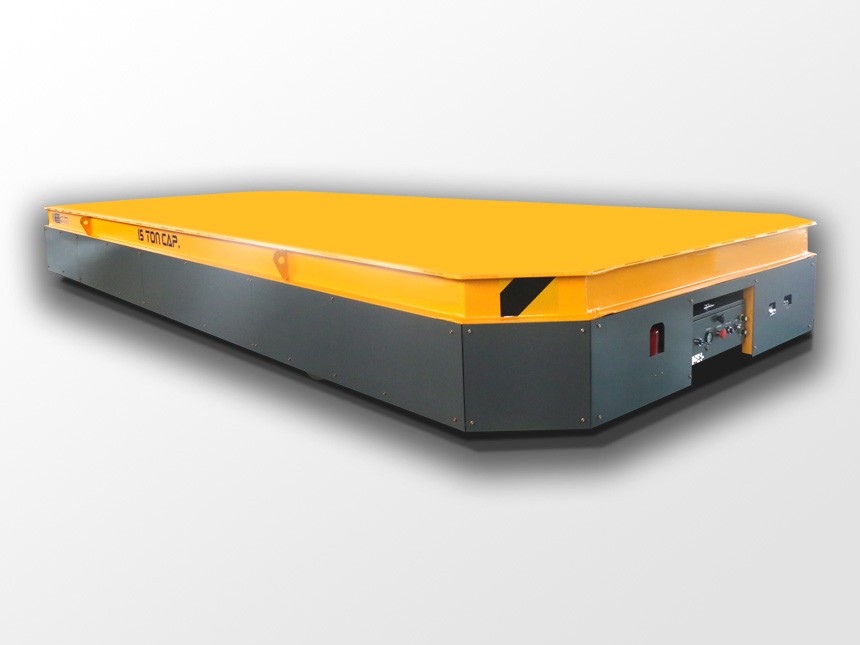
Common structural causes include insufficient transport equipment quantity for the required material volume, inadequate speed or capacity of existing transport equipment, and transfer point layouts that require time-consuming maneuvering or repositioning. Electric transfer carts address these structural limitations by providing reliable, adequately-sized transport capacity that matches production requirements without the variability of manual handling alternatives.
Unexpected equipment failures in material handling operations create immediate production disruptions—production lines stop when materials cannot be delivered, and the recovery time after a breakdown often exceeds the breakdown duration itself due to catch-up requirements and scheduling disruption.
Equipment failures in factory logistics typically result from inadequate preventive maintenance, equipment specified below the demands of the application, or components reaching the end of their service life without replacement. The cost of reactive maintenance—emergency service calls, expedited parts, production downtime—far exceeds the cost of systematic preventive maintenance that catches developing problems before they cause failures.
Implementing a maintenance management system that tracks equipment condition, schedules routine maintenance at appropriate intervals, and maintains critical spare parts inventory reduces the frequency and impact of equipment failures. For electric transfer carts, battery replacement, wheel bearing inspection, brake system checks, and drive system calibration at defined intervals prevent the majority of unexpected failures that disrupt production.
Material handling operations relying on human operators are subject to variability in operator skill, attention, and decision-making. Even experienced operators make errors when workloads are high, time pressure is intense, or procedures are unclear. Common operator errors include incorrect material selection from storage, wrong destination routing, inadequate load securing, and collision damage to equipment or facilities.
Reducing operator errors requires clear procedures, adequate training, and system designs that make correct operation easier than incorrect operation. Carts with simple, intuitive controls reduce the cognitive load on operators during complex transport tasks. Pre-defined routes with automated guidance reduce routing errors. Load verification systems that confirm materials match transport orders before departure prevent selection errors.
Beyond individual errors, inefficient operational practices develop when operators find workarounds that are convenient but wasteful. These practices—taking indirect routes, carrying partial loads, or leaving equipment in suboptimal positions—individually seem minor but compound into significant productivity losses when they become habitual across a team.
Factory layouts that were adequate for historical production volumes often create bottlenecks when volumes increase or when new product lines are added. Material handling traffic conflicts—situations where different transport flows interfere with each other—develop when the spatial organization of the facility does not match the actual traffic patterns required by current operations.
Traffic conflicts are particularly problematic in facilities that have evolved incrementally rather than being designed holistically. Production equipment gets added where space is available, creating irregular traffic patterns that no transport system can serve efficiently. Common symptoms include frequent dead-ends requiring backing up or complex repositioning, narrow passages where two carts cannot pass, and intersection congestion where multiple traffic flows converge.
Addressing layout limitations through dedicated traffic lanes, defined turning areas, and clear zone boundaries improves flow efficiency even without additional transport equipment. For facilities with fundamental layout constraints, low-turning-radius carts that can navigate tight spaces more effectively than standard equipment provide a practical mitigation for spatial limitations.
Material handling is fundamentally a coordination function—materials must arrive at the right place, at the right time, in the right condition to support production operations. Coordination failures occur when the timing, location, or material condition does not match what the receiving operation needs, creating either production delays or quality problems from materials arriving in an unsuitable condition.
Common coordination failures include materials arriving before they are needed and blocking valuable floor space, materials arriving after their processing window has closed, and materials arriving in a damaged condition that requires re-work or replacement. Each failure type has different root causes: early arrivals result from excess transport capacity or poor scheduling; late arrivals result from inadequate transport capacity or poor communication; damaged materials result from inadequate load securing or improper handling procedures.
Integrated material handling management systems that coordinate transport schedules with production schedules reduce timing failures. Visual management systems that clearly display material status and location improve coordination visibility. Standardized containers and load securing procedures reduce damage rates during transport.
Material handling operations involving heavy equipment create inherent safety risks that require systematic management. Safety incidents—collisions, pinch points, dropped loads—result in worker injuries, equipment damage, and production interruptions that are far more costly than the investment in prevention.
Compliance gaps in material handling safety typically result from inadequate training, insufficient safety equipment on transport equipment, and procedures that prioritize speed over safe operation. When safety procedures are perceived as obstacles to productivity, workers find ways to circumvent them—creating the conditions for incidents that proper procedures would have prevented.
Effective safety management in factory logistics requires equipment with adequate safety features, operator training that emphasizes hazard awareness and safe operating practices, and supervisory accountability that maintains safety standards even under production pressure. Carts equipped with modern safety features—obstacle detection, emergency stops, warning lights and sounds—provide the engineering controls that reduce incident likelihood, but these features are effective only when operators are trained and supervised to use them correctly.