+86 183 3953 1958
中文
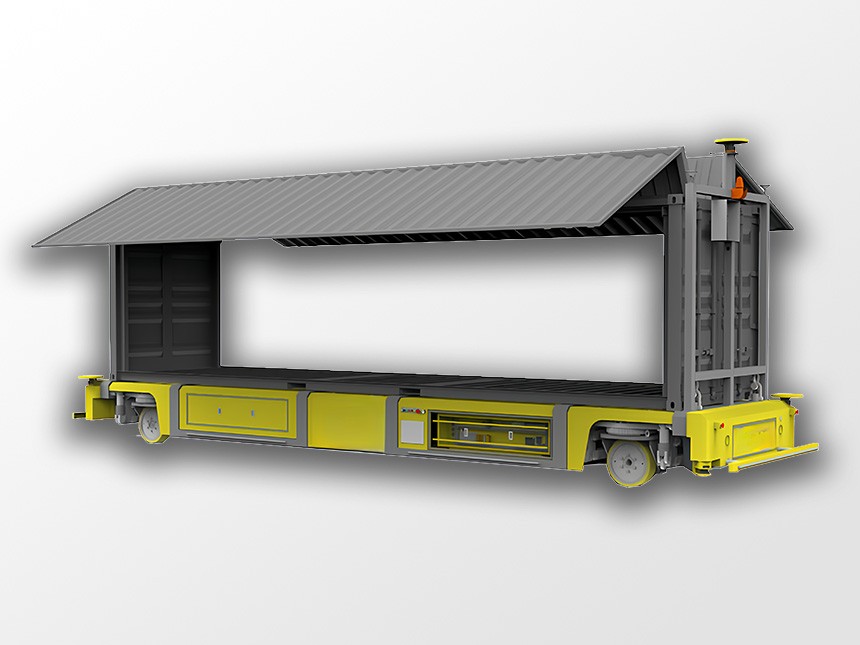
An assembly line is a synchronized production system where every workstation depends on materials arriving at a specific time, in a specific sequence, at a specific location. A transfer cart operating in an assembly line context is not just moving material—it is part of a timing-critical system where delays propagate instantly through the production schedule. The equipment selection criteria that apply to general-purpose material transport do not fully capture what assembly line integration demands.
This article covers the specific factors that determine whether a transfer cart will succeed in an assembly line application—or whether it will become the bottleneck that disrupts the entire production sequence.
The assembly line's cycle time—the rate at which products move from one workstation to the next—determines the maximum allowable cart transport time. If a workstation completes its operation every 90 seconds and the next workstation is 60 meters away, the cart must complete the round trip in less than 90 seconds or the downstream workstation will run out of material to process.
This calculation is not simple distance divided by speed. The actual cycle time must include: travel time from load position to unload position, deceleration and acceleration at each end, load and unload positioning time (which may require precise alignment with fixtures or conveyor interfaces), any wait time for path clearance (other carts, personnel, vehicles), and battery state if the cart requires opportunity charging.
A common mistake is specifying the cart's maximum speed as the effective speed. In practice, carts operate at 50–70% of maximum speed in assembly line applications because of acceleration limits, safety sensor interventions, and maneuvering time at workstations. A cart rated at 40 meters per minute effectively achieves 20–28 meters per minute in service.
Assembly line cart routes are typically fixed, which simplifies the cart specification but requires careful infrastructure planning. The route must be designed to avoid conflicts with other material flows, personnel movement, and production equipment positioning.
Grade and ramp: if the route includes any slope, verify the cart's motor power is adequate for the grade at maximum loaded weight. Most standard transfer carts are rated for maximum 2–3% grade; steeper grades require higher-power motors or traction assist systems. Minimum turning radius: the cart's steering configuration determines its minimum turning path. An 8-wheel steering cart can turn in its own length; a 4-wheel steer cart requires additional clearance at turns. Verify the route's tightest corner against the cart's turning circle.
Path conflicts: in most assembly facilities, the floor is shared by multiple pieces of equipment, personnel, and other material handling devices. The cart's route should be designed to minimize path crossings with other traffic. Where crossings are unavoidable, consider: raised crosswalks or pavement markings to signal pedestrian right-of-way, mirrors at sight-line-limited intersections, and automatic warning devices when the cart is in motion.
Transfer carts for assembly lines typically operate at higher utilization rates than general-purpose carts—often 16–24 hours per day in two or three production shifts. This high utilization accelerates floor wear and makes floor preparation more critical.
The cart's wheel configuration and floor loading determine whether the floor will survive long-term operation. For continuous-shift operations, consider: higher-capacity floor specifications than the minimum required for the static load, regular floor inspection and maintenance schedules to address wear before it affects cart stability, floor joint treatment for expansion joints along the route that could cause vibration or cart imbalance, and level surface verification—the cart's stability and load security depend on a flat surface; any surface deviation greater than 3mm over 1 meter affects the cart's ability to maintain position during loading.
The battery is the limiting factor for continuous-shift operation. Lead-acid batteries in continuous-shift applications require battery exchange or equalization charging windows that interrupt operation. Lithium batteries with opportunity charging eliminate this constraint.
A lithium battery cart that receives a 15–20 minute opportunity charge during each shift break (lunch, shift change, scheduled pauses) can operate continuously without a dedicated charging window. The charging infrastructure requirement is minimal: one or more 380V charging stations positioned at natural pause points in the cart's route. The opportunity charging benefit is proportional to the frequency and duration of natural pauses—if the assembly line has regular scheduled breaks, the cart can charge during every break.
Calculate the battery capacity required using: total daily energy consumption (kWh per day based on loaded trips, empty trips, and stop/idle time), available opportunity charging time (sum of natural pause durations during the shift), and required state of charge buffer (battery should not be depleted below 20% for lead-acid or 10% for lithium to maximize battery life).
A battery sized too tightly will require forced opportunity charging or reduced operation in high-demand periods. A battery with excess capacity adds purchase cost and cart weight without operational benefit. The right capacity is the minimum that provides reliable operation through the longest expected shift plus a safety margin for unexpected demand.
Assembly line carts often need to integrate with the production control system: receiving dispatch signals from the MES or PLC, reporting position and status to the control system, and responding to emergency stop commands from the line controller.
Dispatch interface: the cart should accept dispatch commands via the facility's standard industrial protocol (Profinet, EtherNet/IP, Modbus TCP, or equivalent). When the assembly line control system sends a transport request, the cart should acknowledge, navigate to the load position, and confirm when loaded. Position reporting: the cart should report its current position to the control system, either through absolute position sensors along the route or through wheel odometry with periodic position calibration. Accuracy requirement is typically ±100mm for workstation approach positioning. Emergency stop integration: the cart's emergency stop circuit must interface with the facility's emergency stop network. When the line issues an emergency stop, all carts on the route must decelerate to a controlled stop within the specified distance.
The assembly line application favors specific cart configurations:
Dual motor drive (two or four wheels driven) provides the best traction and acceleration for frequent start-stop cycles. Single motor drive is adequate for low-speed shuttle applications with fewer than 10 cycles per shift. Steering configuration: 4-wheel steering provides the tightest turning radius; 2-wheel steering requires more aisle space but is mechanically simpler. For straight-line routes with minimal turning, 2-wheel steering is adequate. For routes with 90-degree turns, 4-wheel steering significantly reduces the required aisle space.
Radio remote control is standard for manually operated assembly line shuttles. For automated operation, specify PLC-compatible control cards with the industrial protocol used at the facility. Automated carts require additional sensors and sometimes infrastructure modifications (floor markers, guide wires, or vision systems) for navigation.
Start with the cycle time requirement and work backward: what is the maximum allowed transport time? What speed and acceleration does the cart need to meet this requirement? What battery capacity supports this utilization rate? What control integration is required? The answers to these questions define the specification—and define which suppliers can meet it.
Specification driven by actual operational requirements, not by catalog ratings, produces the right equipment at the lowest total cost. A cart that meets the exact cycle time requirement with 20% margin costs less than one specified with 50% margin—but only if the 20% margin is calculated correctly using real-world effective speeds and positioning times, not catalog maximum values.