+86 183 3953 1958
中文
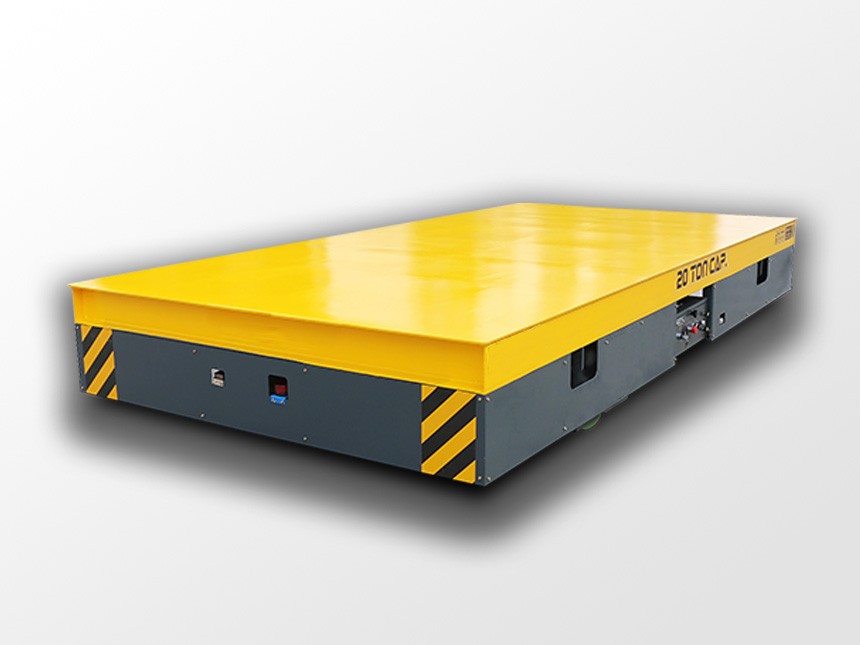
Standard transfer carts work well for common applications: straightforward point-to-point transport on flat floors, with predictable loads and no special environmental requirements. But most industrial material handling situations have deviations from the standard—unusual load dimensions, non-standard voltage, constrained spaces, or specific control integration requirements. These deviations are precisely where standard cart specifications fall short and customization becomes necessary.
Transfer cart manufacturers vary significantly in their customization capabilities. Some offer catalog carts with limited modification options; others engineer custom configurations for every application. Understanding what can be customized—and at what cost and lead time—helps you specify the right cart rather than accepting a compromise that creates ongoing operational problems.
The most fundamental customization dimension is load capacity. Standard transfer carts typically range from 1 ton to 100 tons. Beyond 100 tons, custom engineering is required because the structural design, wheel loads, and drive systems all change qualitatively as capacity increases.
Below 20 tons: standard structural steel framing, conventional wheel assemblies, standard drive motors. 20–50 tons: reinforced structural members, higher-capacity wheel sets, larger drive motors. 50–100 tons: specialized wheel materials, multiple drive units, structural engineering for distributed load paths. Above 100 tons: custom structural engineering, hydraulic or traction-assist drive systems, multi-wheel configurations with load equalization systems.
When specifying a high-capacity cart, the critical customization is not just the rated capacity but the wheel load calculation. A cart rated at 50 tons with 8 wheels produces approximately 6.25 tons per wheel contact patch. If the facility floor is rated for 5 tons per square meter, the cart will damage the floor even within its rated capacity. Wheel count, wheel diameter, and tire material all determine the actual floor loading—and these are customization variables.
Standard cart decks are rectangular—simple to manufacture and adequate for standard loads. Custom deck configurations address non-standard load geometries.
Contoured decks: for cylindrical loads, pipe spools, or pressure vessels, the deck can be shaped to match the load's curvature and include positive restraints that prevent rotation during transport. Tapered decks: for loads that must be positioned precisely at a receiving station, a tapered or notched deck can guide the load into a specific alignment during offloading. Multi-level decks: for facilities that need to transport different load types simultaneously, multiple deck levels on a single cart—or multiple carts on a rail system—maximize transport efficiency. Removable deck inserts: for facilities that handle variable load geometries, modular deck inserts allow the same cart to be reconfigured between jobs.
The drive system determines how the cart moves, how much power is available, and how the cart integrates with facility infrastructure. Standard carts use AC motor drive with rubber tires on flat floors. Custom drive configurations address specialized requirements.
Standard industrial voltage configurations are 380V 3-phase for high-power applications and 220V single-phase for lower-power carts. Custom voltages are available for facilities with non-standard power systems: 480V for North American facilities, 415V for UK and Commonwealth installations, 24V DC for battery-powered carts in explosion-hazard areas, and custom voltages for specialized industrial environments.
2-wheel steering: simplest configuration, adequate for straight-line routes with wide aisles. 4-wheel steering: provides tight turning radius, required for routes with 90-degree turns and limited aisle space. 8-wheel steering (4-wheel on each end, mechanically linked): allows turning within the cart's own length while maintaining stability at high capacities. This is a common customization for carts above 30 tons.
Control system customization is often the most impactful modification because it determines how the cart integrates with the facility's production control environment. Standard carts ship with basic pushbutton pendant controls. Customization options range from simple radio remote control upgrades to full PLC integration with factory automation systems.
Radio remote control is a common upgrade that significantly improves operator safety and efficiency. The operator walks alongside the cart rather than riding or standing on a pendant, maintaining direct sightlines to the load and the travel path. Radio remote systems are available with varying ranges, redundant safety channels, and multiple frequency options to prevent interference in facilities with multiple radio-controlled carts.
For automated or semi-automated operations, PLC integration allows the cart to receive dispatch commands from the facility's control system. The integration typically requires: a PLC-compatible control card installed in the cart's control panel, wiring for the industrial protocol used at the facility (Profinet, EtherNet/IP, DeviceNet, or equivalent), configuration of address mapping between the cart's control system and the host PLC, and testing to verify command acknowledgment, position reporting, and emergency stop response.
Beyond the drive system voltage, the power supply configuration affects how the cart operates in the facility. Standard options are: 380V/480V industrial power through cable reel or conductor bar systems, and battery power with lead-acid or lithium battery chemistry. Customizations address specialized power requirements.
Cable reel systems work well for fixed-route carts but create maintenance issues in high-cycle applications—the cable bends repeatedly and requires regular replacement. Conductor bar systems are more durable but require physical infrastructure along the route. Battery systems eliminate the cable and infrastructure entirely but introduce battery capacity constraints. For facilities that need continuous operation without interruption for charging, a dual-power configuration—battery with opportunity charging—provides the flexibility of battery operation with the endurance of wired power.
For facilities with explosive atmospheres (paint shops, chemical storage areas, fuel handling zones), the cart must comply with ATEX, IECEx, or equivalent hazardous area standards. This requires: explosion-proof motor housings, intrinsically safe control circuits, explosion-proof cable glands and connectors, and documentation for the certification authority's approval. Hazardous area compliance is a specialized customization that requires direct engagement with the cart manufacturer and often with a third-party certification body.
Standard transfer carts are designed for controlled indoor environments. Customizations extend operation to challenging environments.
Standard carts operate reliably between -10°C and +50°C. For outdoor operation in cold climates, modifications include: cold-weather hydraulic fluid, heated battery compartments to maintain battery performance in cold temperatures, insulated operator compartments if the cart is operator-controlled in outdoor environments, and winter-grade lubricants that maintain viscosity at low temperatures. For high-temperature environments such as forge shops or foundry discharge areas, custom carts include heat shields, high-temperature lubricants, and ceramic or specialized wheel materials that resist thermal degradation.
In corrosive environments—saltwater facilities, chemical plants, coastal outdoor storage—standard carbon steel carts corrode rapidly. Stainless steel or aluminum construction provides corrosion resistance but at significantly higher cost and reduced load capacity for a given frame size. Marine-grade finishes on standard steel construction offer intermediate corrosion resistance with lower cost than full stainless steel. Wheel material selection also matters in corrosive environments—polyurethane tires with stainless steel wheel centers resist corrosion better than standard industrial wheels.
Standard safety features on most transfer carts include: emergency stop button on the control panel, audible warning device (horn or chime), and basic collision avoidance through operator visibility or ground chain. Custom safety systems address specific facility hazards.
Laser area scanners create a protective zone around the cart—if personnel or obstacles enter the zone, the cart decelerates to a controlled stop. This is particularly valuable for pedestrian-heavy environments where carts operate at unpredictable speeds or in areas with limited sightlines. Load-securing devices including positive-locking clamps, hydraulic retainers, or vacuum clamps prevent load movement during transport on carts that handle loose or top-heavy materials. Anti-tilt systems use load moment sensors to detect when the cart's center of gravity approaches an unsafe condition—useful for lifts with variable load heights or for carts that operate on uneven surfaces.
Customization has practical limits. Understanding what manufacturers can and cannot modify helps you identify when an application fits a custom cart versus when it requires a fundamentally different equipment type.
Customization typically cannot overcome: basic physics limits on wheel loading and floor capacity, safety certification constraints for hazardous area equipment (modifications to certified equipment void the certification), structural limitations of standard frame designs (a cart rated at 50 tons cannot be upgraded to 75 tons without a complete re-engineering of the frame and running gear), and lead time constraints—if the application requires custom engineering and certification, lead times of 12–20 weeks are common for high-customization orders.
The most important step before specifying a customized cart is to define the problem completely: what does the standard cart fail to do, and what is the specific operational consequence of that failure? The answer to this question tells you whether the customization cost is justified by the operational benefit—and whether the customization you're specifying will actually solve the problem rather than creating new ones.