+86 183 3953 1958
中文
Factory managers evaluating modernization options face a persistent question: pursue full smart factory integration or focus on practical, proven improvements that deliver measurable returns without the complexity of comprehensive digital transformation? This is not a theoretical debate—it has direct implications for capital allocation, implementation timelines, and competitive positioning.
The practical factory approach is often mischaracterized as anti-technology. In reality, it is a disciplined approach to technology adoption: select tools that solve specific operational problems, measure outcomes rigorously, and expand only when evidence supports further investment. A practical factory might use sensors and data collection without attempting full predictive analytics, or implement workflow automation without connecting every system into a unified digital twin.
A smart factory is characterized by deep integration across production systems, real-time data collection and analysis, automated decision-making at the operational level, and digital connectivity between machines, processes, and enterprise systems. The defining characteristic is not any individual technology but the degree to which these systems work together as an integrated whole.
Industrial IoT (IIoT) sensors form the foundation of smart factory capabilities, providing continuous monitoring of equipment status, production rates, environmental conditions, and energy consumption. These sensors generate the data volume that makes machine learning and advanced analytics economically viable. Without dense sensor coverage, the analytical tools that define smart manufacturing have insufficient input data to function effectively.
Manufacturing Execution Systems (MES) connect the shop floor to enterprise planning systems, providing real-time visibility into production status, quality metrics, and capacity utilization. In a smart factory, MES data flows bidirectionally with equipment-level systems, enabling automated scheduling adjustments, quality feedback loops, and inventory synchronization without manual intervention.
Digital twins—virtual replicas of physical production systems—allow engineers to simulate process changes, optimize parameters, and predict equipment behavior before implementing changes on the live system. Digital twin effectiveness depends on the fidelity of the underlying models and the quality of real-time data feeding them. Building and maintaining high-quality digital twins requires ongoing engineering investment that many operations underestimate during initial planning.
A practical factory takes a problem-first approach to technology adoption. Rather than implementing a technology platform and then searching for applications, practical factory operators identify specific operational problems—excessive changeover time, high scrap rates in specific processes, unpredictable maintenance events—and evaluate technology options based on their ability to address those specific problems.
Practical factories prioritize operator usability over technical sophistication. Systems that require specialized training to operate, that generate more data than the team can meaningfully analyze, or that create dependency on external support organizations for routine operation tend to underperform in practical environments. The most effective practical factory tools are those that operators can understand, trust, and use to make better decisions in their daily work.
Progressive automation is another hallmark of the practical approach. Rather than attempting to automate entire production lines simultaneously, practical factories identify specific manual tasks with high labor content, significant quality variance, or safety concerns, and implement targeted automation for those specific operations. This approach generates clear ROI calculations, builds organizational confidence, and develops internal expertise that enables more ambitious automation projects over time.
Smart factory implementations offer genuine advantages in specific scenarios. Large-scale continuous process operations with complex material flows, high product variety, and stringent quality requirements often see substantial benefits from smart factory capabilities. The ability to detect and respond to deviations in real time across multiple interdependent process variables can significantly reduce quality costs and unplanned downtime in these environments.
However, smart factory implementations carry real costs that are frequently underestimated. Sensor and connectivity infrastructure alone can represent 15–25% of total automation investment. The software platforms, integration services, data engineering resources, and ongoing system maintenance required to keep smart factory systems functioning effectively represent a substantial and sustained operational cost commitment. Organizations that budget for smart factory hardware without accounting for the full lifecycle cost of software ownership frequently face difficult choices when those costs materialize.
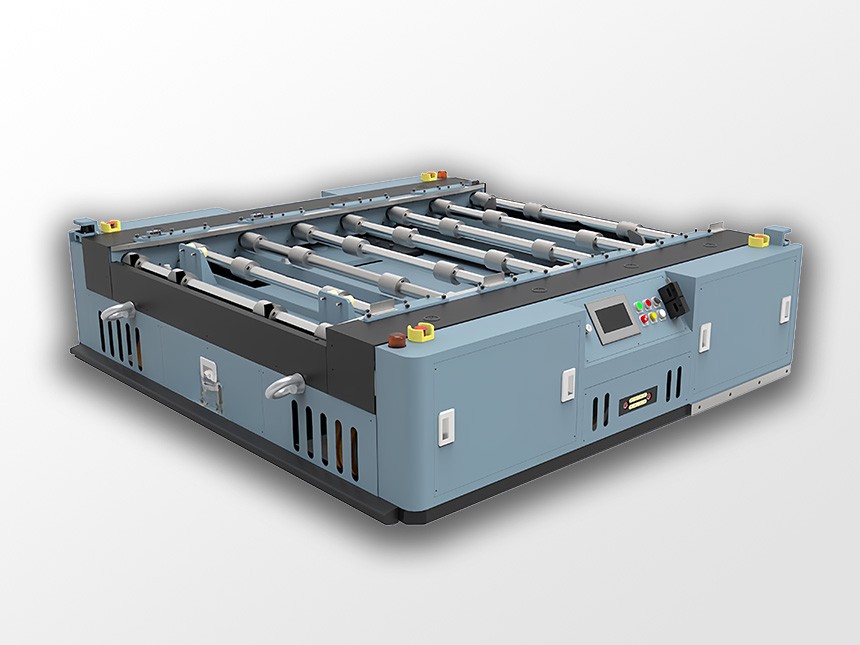
Practical factories often achieve superior returns on automation investment, particularly in environments with stable product portfolios, well-understood processes, and relatively low product variety. In these settings, the incremental value of deep system integration diminishes rapidly. A practical factory that directs its automation budget toward targeted improvements in specific problem areas—automated guided vehicles for high-frequency material movement, vision-based quality inspection for critical quality points, predictive maintenance on high-cost rotating equipment—often generates better returns than one pursuing comprehensive digital transformation.
The choice between smart factory and practical factory approaches should be driven by your specific operational context rather than technology trends or competitive positioning considerations. Evaluate your operation honestly against a set of concrete criteria.
Smart factory integration makes economic sense when your operation has high product variety that creates complex scheduling and routing decisions, significant quality costs associated with process variability that can be addressed through real-time process control, substantial inventory costs driven by poor demand visibility and production planning accuracy, or demonstrated organizational capability to manage complex technology implementations and extract ongoing value from them. If your organization lacks experience managing enterprise software implementations or has limited internal engineering resources to maintain and improve sophisticated systems over time, the practical approach will likely deliver better results.
Practical factory improvements are the better strategy when your core operational challenges are well-understood and have known solutions, when you are operating in a competitive environment where time to market and capital efficiency matter more than maximum operational sophistication, when your organization is earlier in its automation maturity journey and needs to build foundational capabilities before attempting advanced integration, or when your products and processes are relatively stable and do not require the flexibility that smart factory systems provide. The practical approach also builds organizational capability progressively. Each successful targeted automation project develops your team's ability to specify, implement, and operate more sophisticated systems—building toward smart factory capabilities organically rather than attempting a disruptive transformation that exceeds your organization's absorption capacity.
The smart factory versus practical factory choice is not a one-time decision but an ongoing strategic calibration. Start with a rigorous assessment of your operation's most significant sources of production loss—define them in specific, quantifiable terms rather than general categories. For each significant loss source, evaluate whether the solution requires integrated smart factory capabilities or whether targeted practical improvements can address it effectively. Reserve smart factory investments for situations where the complexity and interdependence of the problem genuinely requires integrated digital capabilities to solve. Pursue practical improvements for the majority of your automation opportunities, building organizational capability and generating returns that fund continued advancement.
The factories that ultimately achieve the most sustainable competitive advantage are rarely the most technologically sophisticated. They are the ones that make better decisions more consistently—backed by the right information, applied by skilled people using well-designed tools, and refined through continuous learning from operational experience.