+86 183 3953 1958
中文
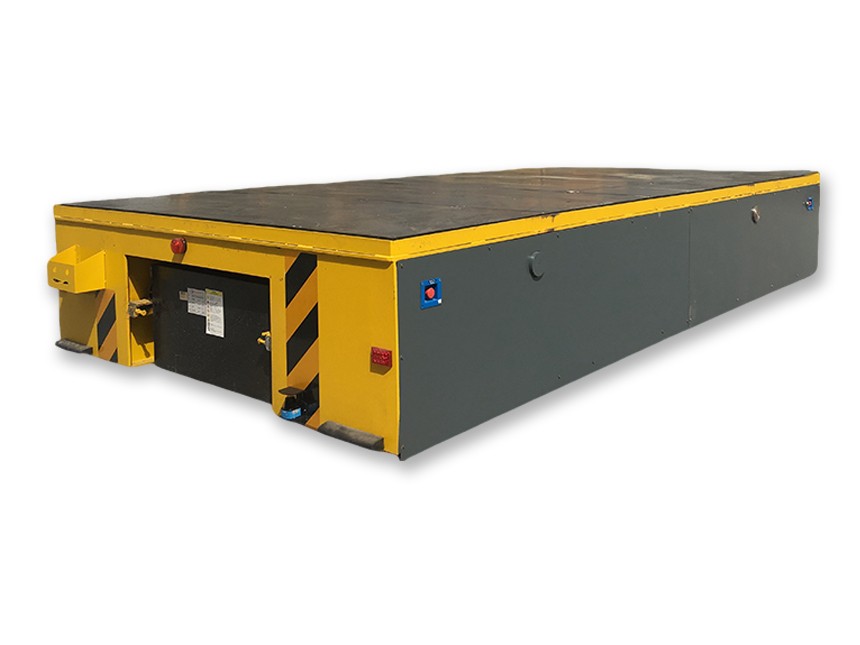
Material handling decisions shape daily operational performance more than almost any other equipment choice in a manufacturing or logistics facility. The level of technology you deploy in your material handling systems affects not just productivity but also labor requirements, safety performance, equipment lifecycle costs, and organizational flexibility. Yet the technology level that makes sense varies dramatically depending on your operation's specific characteristics—volume, product variety, facility layout, labor market, and operational objectives.
The assumption that higher technology always delivers better outcomes leads many organizations to over-invest in sophisticated material handling systems that deliver less value than simpler alternatives. At the same time, some operations that cling to legacy low-technology approaches miss opportunities to reduce costs and improve performance. The right answer depends on understanding what each technology level actually delivers in your specific context.
Material handling technology exists on a broad spectrum, from simple manual equipment to fully automated systems. Most practical operations fall somewhere in the middle, using a combination of technology levels matched to specific handling requirements. The key is not to choose one technology level for the entire operation but to match technology to each handling task based on its characteristics.
Low-tech material handling relies primarily on human operators supported by basic mechanical equipment. Hand trucks, pallet jacks, forklifts with human operators, simple conveyor sections, and gravity roller tracks represent the core of this category. These systems require human judgment at every decision point but offer maximum flexibility, lower initial investment, and simpler maintenance.
The defining characteristic of low-tech material handling is that human operators control the pace, sequence, and handling method for each load. A forklift operator decides when to pick up a load, where to transport it, and how to place it—all based on real-time observation of conditions in the facility. This flexibility is valuable in environments with high product variety, irregular demand patterns, or frequent layout changes.
Mid-tech systems add technology that assists human operators without fully replacing them. Powered pallet jacks that follow operator guidance, conveyor systems with variable speed control, automated storage and retrieval assist systems, and warehouse management software that directs operators to optimal pick locations all fall in this category. These systems add capital cost but reduce operator fatigue, improve consistency, and increase throughput compared to basic equipment.
The mid-tech category often delivers the best return on investment in operations that have moderate volumes and reasonable consistency in their material flows. The technology is sophisticated enough to provide meaningful productivity gains but simple enough to implement and maintain without specialized engineering support.
High-tech material handling replaces human decision-making with automated systems: autonomous mobile robots, automated storage and retrieval systems (AS/RS), robotic palletizers, automated guided vehicles, and similar sophisticated equipment. These systems offer the highest throughput and consistency but require significant capital investment, specialized technical expertise to maintain, and well-defined, stable operating conditions to perform effectively.
Low-tech material handling delivers its best results in specific operational contexts. Understanding when low-tech is genuinely appropriate—rather than assuming it represents outdated thinking—is important for making good equipment decisions.
Low-tech material handling is often the right choice in facilities with high product variety and low volume. A job shop that produces hundreds of different product configurations in small batches, each requiring different handling sequences and end destinations, is a poor fit for high-tech automation. The changeover costs and complexity of automated systems in this environment would far exceed any productivity gains. A skilled operator with a forklift or powered pallet jack handles this work efficiently because human flexibility handles the variety that automation cannot economically address.
Facilities with frequent layout changes also favor low-tech approaches. An operation that reconfigures its production layout every few months—or that is still optimizing its layout through experimentation—will destroy the ROI of automated material handling systems by requiring frequent, expensive system modifications. Low-tech equipment that humans can quickly reposition and redirect is essential during periods of organizational learning about optimal facility design.
Labor market conditions also influence the technology choice. In regions where skilled forklift operators are readily available at reasonable wages, the economic case for expensive automated material handling weakens. The labor cost savings from automation must exceed the total cost of automation acquisition, maintenance, and technical support over the system's useful life. In many lower-wage labor markets, this calculation favors continued use of labor-intensive material handling methods.
High-tech material handling systems are not universally superior but are clearly the right choice in specific operational contexts. Recognizing those contexts and making the investment confidently when they apply is as important as avoiding inappropriate automation in other situations.
High-tech automation delivers its best returns in operations with high volumes and consistent material flows—typically large distribution centers, continuous production lines, and high-volume manufacturing operations. In these environments, the same handling sequences repeat thousands of times per day, the economics of automation improve dramatically, and the consistency benefits of automation (predictable timing, consistent quality of handling, elimination of human error) deliver measurable operational value.
A distribution center that processes 10,000 units per day with consistent SKU counts and predictable demand patterns is a fundamentally different automation candidate than a facility handling 500 units per day with extreme SKU variety. The high-volume operation can amortize the capital cost of automation across millions of handling cycles; the low-volume operation cannot.
Human operators have physical limits to handling speed that automated systems can exceed. In operations where cycle time is a critical competitive factor—e-commerce fulfillment where same-day shipping depends on picking speed, production lines where material delivery timing directly affects line efficiency—automated material handling often delivers competitive advantage that justifies the investment. The value of a few seconds per cycle, multiplied across thousands of cycles, can generate sufficient productivity value to support high-tech automation costs.
However, speed optimization is only valuable when the bottleneck in the operation is actually material handling speed. Many operations invest in high-speed material handling automation while other constraints—changeover time, quality inspection bottlenecks, upstream supply variability—limit actual throughput to well below what the automation can deliver. Optimizing the wrong constraint wastes automation investment.
In facilities where material handling safety is a significant concern—environments with heavy loads, hazardous materials, or high pedestrian traffic in handling zones—automated handling systems often improve safety outcomes by removing human operators from the highest-risk handling situations. Autonomous mobile robots that navigate around pedestrians, automated storage systems that eliminate the need for operators to work at height, and robotic systems that handle dangerous materials without human exposure all represent situations where high-tech handling improves both safety and operational performance.
The material handling technology decision should be driven by analysis of your specific operational requirements rather than technology trends or competitive positioning. The most effective approach evaluates each material handling zone independently, identifies the specific performance requirements for that zone, and selects the technology level that best meets those requirements at the lowest total cost over the system's lifecycle.
For each material handling zone or function, document the handling volume (units per hour, weight per cycle, distance per move), product variety (how many different SKUs, how much variation in size and weight), operational schedule (continuous operation vs. batch, shift patterns, seasonal variability), labor situation (availability, cost, skill level), and facility characteristics (layout stability, space constraints, environmental conditions). These factors together determine which technology level makes economic sense.
Evaluate low-tech first: if the requirements can be met with basic equipment at acceptable cost and productivity, the flexibility advantage of low-tech often makes it the right choice. Only if low-tech cannot meet requirements—throughput is insufficient, labor is unavailable, or safety cannot be adequately managed—should you evaluate mid-tech alternatives. Only if mid-tech also cannot meet requirements should you consider high-tech automation. This sequence prevents the common mistake of defaulting to sophisticated systems when simpler, more flexible alternatives would serve better.
The highest-performing material handling operations in most industries use a hybrid approach—different technology levels for different handling zones based on each zone's specific requirements. High-volume, consistent flows get automated; variable, lower-volume flows get assisted or basic equipment. This hybrid approach maximizes the flexibility benefits of human operators where variety demands it while capturing automation productivity gains in the zones where those gains are most accessible.
The hybrid approach also provides organizational resilience. An operation that is 100% dependent on automated material handling systems has a single point of failure—any system downtime affects the entire operation. A hybrid operation with automated handling for high-volume flows and manual handling as backup can maintain partial operations during automated system outages, protecting the facility's ability to serve customers even during equipment failures.