+86 183 3953 1958
中文
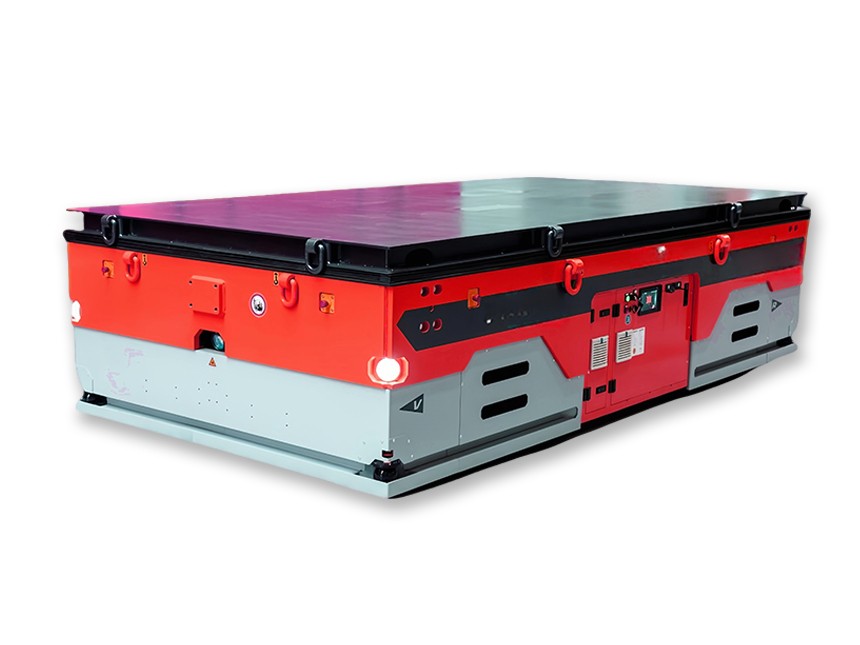
Standard transfer carts are designed for common industrial load requirements—typically ranging from 1 to 50 tons depending on the cart type and wheel configuration. These standard ratings cover the majority of material handling needs across manufacturing, warehouse, and logistics operations. But certain applications require load capacities that exceed standard specifications, unusual load distributions that standard decks cannot accommodate, or transport requirements that standard cart designs cannot safely or effectively address. For these applications, custom transfer cart engineering is not a luxury—it is a necessity.
The decision to specify a custom transfer cart is driven by load characteristics rather than simply the magnitude of the load. A 50-ton load that is compact and evenly distributed across a standard deck can be handled by a standard-rated cart. A 30-ton load that is irregularly shaped, concentrated at one end, or requires precise positioning to within millimeters cannot be handled safely by standard equipment without modification. Understanding which load characteristics drive the need for custom engineering helps operations make better cart selection decisions.
Transfer cart load capacity is not a single parameter—it is a set of specifications that must be evaluated together. A cart rated for 50-ton capacity under ideal conditions may have a significantly lower effective capacity if the load is concentrated, if the load creates an unfavorable center of gravity, or if the cart must operate on uneven surfaces. Custom engineering addresses these real-world complexities that simple capacity ratings do not capture.
Transfer cart load capacity is ultimately limited by the weakest component in the load path. The structural frame can typically be engineered to handle very high loads—modern steel fabrication can support capacities well beyond 1000 tons for specialized heavy industrial applications. The more limiting factor is typically the wheel assemblies: the wheels, bearings, axles, and drive system that must transmit the load to the running surface. Heavy-duty wheel capacities range from 3 tons per wheel for standard industrial casters to 25+ tons per wheel for specialized heavy-duty wheels with precision-ground treads and high-capacity tapered roller bearings.
For custom heavy-capacity transfer carts, the wheel system design is the critical engineering challenge. Cart designers must balance wheel size, bearing capacity, and drive power against the practical constraints of floor loading, wheel track requirements, and the available infrastructure for moving such heavy loads. This often involves detailed analysis of the interaction between the cart's wheel system and the facility's floor structure, as concentrated loads from heavy carts can damage standard concrete floors.
A transfer cart's rated capacity assumes an evenly distributed load with the center of gravity within the cart's wheelbase. When loads are unevenly distributed—long loads that cantilever beyond the cart's ends, off-center loads, or loads with a high center of gravity—the effective capacity decreases significantly even if the total load is within the cart's nominal rating. Custom cart design addresses these conditions through wider decks, multiple pick-up points, reinforced frames, and counterweight systems that maintain stability under adverse load configurations.
For loads that must be transported with the center of gravity above the cart deck level—such as tall vessels, towers, or elevated structures—custom carts incorporate low-profile designs, extended wheelbases, and sometimes outrigger systems that provide lateral stability beyond what a standard flat-deck cart can offer. These designs require careful engineering analysis of the load's center of gravity and the cart's tipping threshold under various operating conditions including acceleration, braking, and uneven surfaces.
Custom transfer cart engineering addresses high-capacity and unusual load requirements through several design approaches, each with specific applications and trade-offs.
The most direct approach to increasing transfer cart capacity is adding more wheels to distribute the load. A standard 50-ton transfer cart might have four wheels; a 200-ton custom cart might have sixteen wheels arranged in four axle lines. Each additional wheel set distributes the load across a wider contact area, reducing the load per wheel and enabling higher total capacities without exceeding wheel or floor loading limits.
Multi-axle carts introduce additional design complexity. The wheels must be aligned precisely to prevent binding and uneven wear. The drive system must apply power to all wheels uniformly. The steering system—particularly for steerable carts—must coordinate multiple axle directions simultaneously. These engineering challenges are well within the capability of experienced transfer cart manufacturers, but they require design analysis and fabrication precision that standard cart builders may not offer.
Custom deck design addresses loads that cannot be safely or effectively placed on a standard flat deck. Tapered decks accommodate conical or tapered loads that would slide off a flat surface. Recessed decks provide containment for loads that might shift or roll during transport. V-groove decks position cylindrical loads securely. Articulating decks allow the cart to adapt to uneven load distributions while maintaining level orientation of the load itself.
For particularly challenging load geometries, manufacturers can design carts with multiple deck levels, adjustable deck configurations that can be modified between loads, or completely custom deck shapes that match the specific geometry of the load being transported. The cost of these customizations must be weighed against the cost of alternative handling methods—sometimes a less sophisticated cart with specialized lifting fixtures is more economical than a fully integrated custom deck.
For extremely heavy loads—typically above 200 tons—conventional transfer cart designs may not be the optimal solution. Self-propelled modular trailers, sometimes called heavy haulage vehicles or SPMTs (Self-Propelled Modular Transporters), are often a better choice for ultra-heavy loads. These are specialized vehicles designed from the ground up for heavy transport, with individual axle lines that can be added or removed to match the load, powered by individual drive wheels on each axle, and capable of moving loads in the 500–2000+ ton range.
The choice between a custom transfer cart and a heavy haulage solution depends on the operational context. If the load must travel a fixed route repeatedly—such as moving heavy turbine components from a staging area to a production position on a permanent basis—a custom transfer cart with fixed deck and drive configuration is often more economical and more efficient than SPMTs. For one-off or infrequent moves of very heavy loads, SPMT rental or specialized heavy haulage services are typically the better choice.
Custom transfer cart engineering requires close collaboration between the equipment manufacturer and the end-user operation. The manufacturer needs detailed information about the load characteristics—weight, geometry, center of gravity, any constraints on how the load can be supported or positioned—along with the operating environment and cycle requirements. This information forms the basis for engineering analysis that determines the appropriate cart configuration.
When requesting custom transfer cart pricing, provide the maximum load weight and the typical load weight, the load's overall dimensions and geometry, the position of the load's center of gravity relative to the cart's reference points, any constraints on load attachment or support points, the travel distance and route including any grade or surface condition concerns, the required cycle rate (how many moves per hour or shift), the available power supply for cart operation, and any special environmental requirements such as explosion protection or cleanroom compatibility.
The more complete this information, the more accurately the manufacturer can engineer the cart to meet actual requirements without over-specifying—and without discovering after delivery that the cart cannot handle the intended application. Experienced custom cart manufacturers will typically ask clarifying questions about edge cases and unusual conditions that may not be obvious to the buyer. Treat these questions as evidence of thorough engineering rather than excessive caution.
Custom transfer carts typically require longer lead times than standard models—12 to 20 weeks from order to delivery is common for heavily customized designs, compared to 6 to 10 weeks for standard configurations. The additional time is required for detailed engineering analysis, custom component procurement, and the more complex fabrication and testing procedures that custom designs demand.
Custom carts also cost more than standard models—typically 30% to 100% premium depending on the degree of customization and the complexity of the engineering challenges. This premium should be evaluated against the alternative costs of handling the load with inappropriate equipment: equipment damage from overloading, safety incidents from inadequate capacity, production delays from unreliable handling equipment, and the cost of modifications that might be required to standard carts to accommodate unusual loads.