+86 183 3953 1958
中文
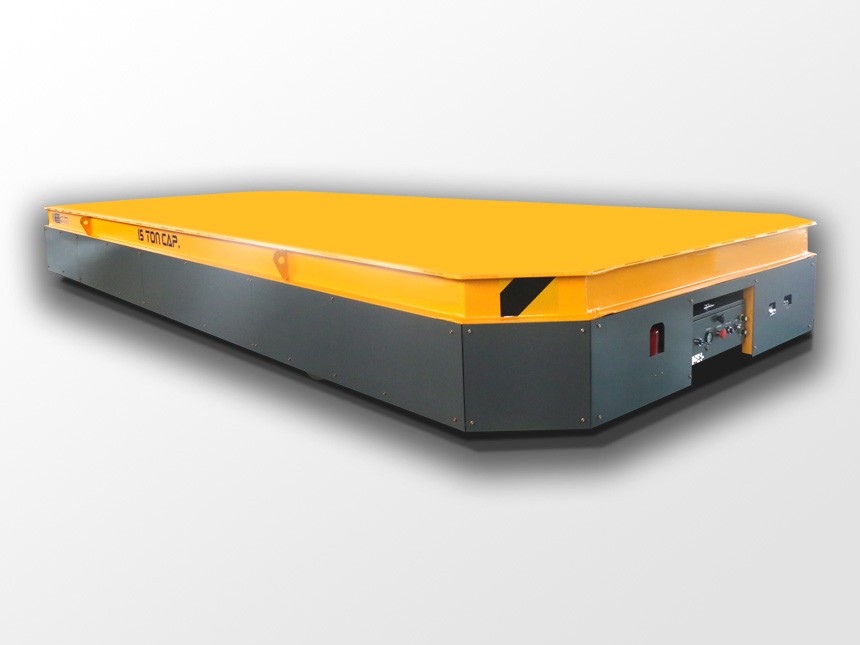
Off-the-shelf electric flatbed carts work fine for standard loads on flat floors. But industrial reality rarely fits a catalog specification. Odd-shaped components, extreme temperatures, corrosive environments, or specific integration requirements push most standard models past their limits. That's where custom design becomes necessary — not as a luxury, but as an engineering requirement.
This guide walks through the key design decisions for custom electric flatbed carts. Not every project needs every element, but understanding the full picture helps you specify what you actually need and avoid paying for what you don't.
Every design starts with the load. Not just the weight, but how that weight behaves during transport.
The rated load on a cart spec sheet is usually static — the weight sitting still on a flat platform. In practice, carts accelerate, decelerate, turn, and sometimes climb inclines. Dynamic loads can exceed static loads by 30-50% during normal operation. A 2-ton cart handling 2-ton loads on a sloped floor needs structural margins designed for 2.6-3 tons.
Here's a simple rule: take your maximum static load, add 25% for horizontal acceleration forces, and another 15% if your floor has any slope over 2 degrees. That's your structural design load.
Where the weight sits matters as much as how much it weighs. A 1-ton load centered on the platform is straightforward. The same load hanging 300 mm off the front edge creates a completely different stress profile. Custom designs should specify:
For loads with high centers of gravity — tall molds, stacked components, vertical assemblies — the platform width and wheelbase need extension to prevent tipping during turns.
The platform is what everyone sees, but its design affects functionality more than most buyers realize.
Standard steel plate works for dry indoor environments. But consider alternatives when conditions demand them:
Platform thickness typically ranges from 6 mm for light-duty carts to 16 mm for heavy industrial use. The right thickness depends on load distribution and span between support beams, not just total weight.
Oversized platforms waste space and reduce maneuverability. Undersized platforms create loading hazards. The practical approach: add 150-200 mm clearance on each side of the maximum load footprint. This gives operators room for loading equipment and prevents edge-loading stress.
Platform height above floor matters too. Lower platforms (200-300 mm) improve stability but limit under-clearance for obstacles. Higher platforms (400-600 mm) work better with forklift loading and uneven floors but raise the center of gravity.
The power system is where custom designs diverge most from standard products. Three decisions dominate: battery chemistry, capacity sizing, and charging strategy.
| Type | Pros | Cons | Best For |
|---|---|---|---|
| Lead-acid | Low cost, proven, easy service | Heavy, shorter cycle life, slow charging | Budget projects, standard duty cycles |
| Lithium-ion | Light, fast charging, long life | Higher cost, thermal management needs | High utilization, opportunity charging |
| Lithium iron phosphate | Safe, stable, long cycle life | Higher initial cost, lower energy density | Safety-critical, high-temperature environments |
For most custom industrial carts, lithium iron phosphate (LiFePO4) has become the practical choice. The safety profile matters in facilities where thermal runaway risks are unacceptable, and the total cost of ownership usually beats lead-acid within 3-4 years.
Battery capacity isn't just about total energy. It's about peak discharge rates during acceleration and sustained output during long runs. A common mistake: specifying a battery that can store enough energy for a full shift but can't deliver the current spikes the drive system demands.
Work with your drive motor supplier to get the peak current draw, then size your battery pack with at least 20% margin above that peak. For continuous operation, plan for 30-40% depth of discharge per cycle to maximize battery life.
How the cart moves depends on your floor, your space, and your precision requirements.
Differential drive (two fixed drive wheels, one or two casters): Simple, reliable, tight turning radius. Best for open spaces with minimal obstacles.
Four-wheel drive: Better traction on uneven floors and ramps. More complex, higher cost, but necessary for outdoor or rough-surface use.
Steerable drive wheel: Combines drive and steering in one unit. Allows precise positioning but adds mechanical complexity. Common in rail-less transfer carts where maneuverability matters.
For custom designs, the wheel arrangement should match the facility's actual floor conditions. A differential drive cart on a cracked concrete floor with 10 mm level variations will have traction problems regardless of how well it's designed.
Safety systems should be part of the initial design, not afterthoughts. Key elements for custom carts:
For hazardous environments (chemical plants, paint shops, explosive atmospheres), specify ATEX or IECEx compliance from the start. Retrofitting explosion-proofing is essentially impossible.
Modern custom carts need more than forward/reverse switches. Consider what level of control your operation requires:
Basic manual control: Handheld pendant or panel-mounted buttons. Simple, reliable, no integration needed.
Scheduled automatic operation: PLC-based control with programmed routes and stops. Good for fixed loops with predictable schedules.
Full system integration: Wireless communication with MES or WMS, real-time task assignment, traffic management. Requires custom software development and network infrastructure.
Most custom industrial carts fall in the middle category. The hardware cost difference between basic and scheduled control is modest (15-25%), but the operational flexibility increase is substantial.
Industrial environments vary wildly. Design for your actual conditions, not standard catalog assumptions.
Temperature extremes: Standard electronics operate reliably from -10°C to 40°C. Outside that range, specify industrial-grade components, battery heaters for cold environments, or cooling for high-temperature areas.
Moisture and washdown: IP54 is standard for indoor industrial carts. Food processing or chemical plants often need IP65 or higher. Sealed motors, corrosion-resistant fasteners, and potted electronics add cost but prevent failure.
Dust and debris: Foundries, woodworking shops, and construction material handling create abrasive environments. Specify sealed bearings, protected drive components, and regular maintenance access points.
Custom electric flatbed cart design is fundamentally an engineering exercise in matching specifications to reality. The most expensive mistake isn't overspecifying — it's designing for a perfect environment that doesn't exist.
Start with accurate load data, understand your floor conditions, choose power systems based on actual duty cycles, and build safety in from the beginning. A well-designed custom cart will outlast two or three poorly specified standard models, even if the initial cost is higher.
If you're evaluating a custom cart project, gather your operational data first. Weights, dimensions, cycle times, floor conditions, environmental factors. With that information, a competent designer can build exactly what you need — nothing more, nothing less.