+86 183 3953 1958
中文
Every plant manager has heard the same advice. Automate everything. Go smart factory. Digitize now. But here's the reality — most factories aren't starting from zero. They're running legacy equipment, tight budgets, and production schedules that don't pause for six-month integration projects.
Improving efficiency doesn't always mean replacing your entire operation. Sometimes it means removing the small frictions that add up to big losses. A cart that waits for a forklift. An aisle blocked by temporary storage. A shift handover that takes twenty minutes because the next crew can't find the right materials.
Before fixing anything, you need to know where the time goes. Not where you think it goes — where it actually goes.
In many workshops, operators spend more time moving parts than working on them. Double handling, backtracking, and waiting for shared equipment (cranes, forklifts) are common. The distance between stations often grew organically as the factory expanded, with no one revisiting the layout.
Unplanned stops kill throughput. But planned stops can hurt just as much if they're poorly scheduled. Maintenance during peak production, changeovers that take twice as long as they should, and battery swaps that interrupt cycles all erode effective capacity.
Paper-based tracking, verbal handovers, and tribal knowledge create delays. When an operator has to walk to the office to check a schedule, or when a supervisor spends an hour reconciling inventory by hand, that's not labor — that's overhead wearing a production uniform.
You don't need a full Industry 4.0 overhaul to see gains. These approaches deliver results without massive capital investment.
Replace shared forklift dependency with dedicated electric transfer carts on fixed routes. This removes waiting time, reduces aisle congestion, and lets operators focus on value-added work. For heavy or repetitive moves, a cart running on a predictable loop is often faster and safer than a forklift called on demand.
Rearranging workstations to match the actual flow — not the original 1990s blueprint — can cut travel distance significantly. Even without new equipment, moving a staging area closer to the production line or consolidating storage near the shipping dock reduces motion waste.
Shift from reactive to time-based maintenance. Track runtime hours, set replacement intervals for consumables, and schedule major service during planned downtime. The goal isn't zero maintenance — it's maintenance that doesn't surprise you.
Barcode scanning or basic digital checklists at key handoff points eliminate the "where is it?" problem. You don't need a full MES to know whether a batch is in cutting, welding, or finishing. A shared whiteboard updated hourly beats a paper log no one reads.
Process improvements have limits. At some point, the bottleneck is physical. If your cranes are booked solid, your forklifts are creating safety incidents, or your manual carts can't handle the load, equipment becomes the constraint.
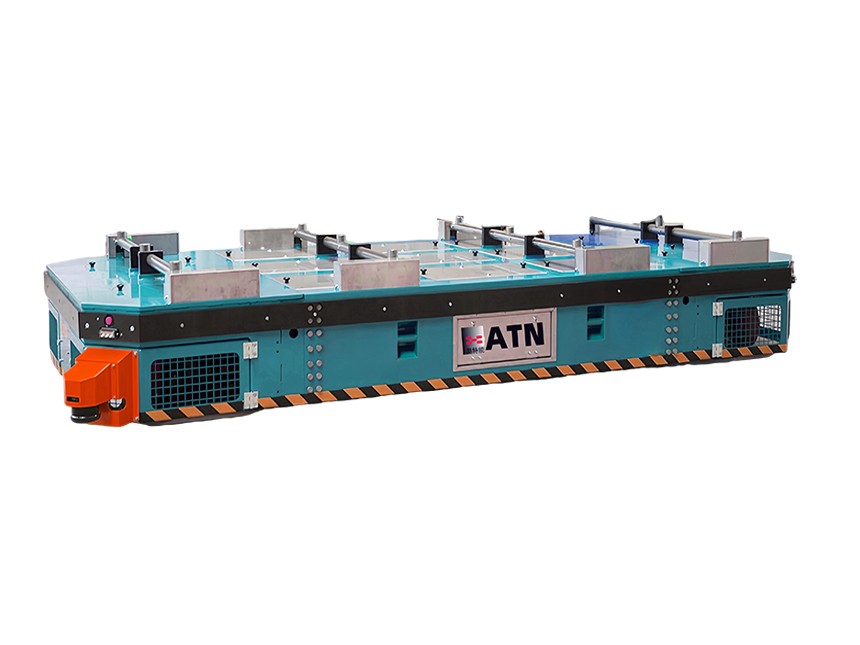
Electric transfer carts are a practical upgrade for factories at this stage. They handle loads from one to several hundred tons, run without exhaust emissions, and integrate into existing floor layouts without overhead infrastructure. For operations moving heavy materials on predictable routes, they're often the most cost-effective automation step available.
Tools help, but habits matter more. The best factories have operators who notice when a cart is slow, suggest layout changes, and report small delays before they become big ones. This doesn't happen by accident. It happens when management responds to suggestions, tracks simple metrics, and celebrates incremental wins.
Start with a 15-minute daily standup. What's blocking the line today? What moved slowly yesterday? What one thing would make this shift easier? The answers often reveal problems that no consultant would find — and solutions that cost nothing to implement.
Efficiency metrics should be simple and actionable. Overall Equipment Effectiveness (OEE) is useful but complex. Start with these instead:
Cycle time per batch. Transport distance per part. Unplanned downtime hours per week. Number of material holds due to missing inventory. These numbers tell you where to focus tomorrow, not where you were last quarter.
Factory efficiency isn't a destination. It's a discipline. The plants that improve steadily are the ones that treat every friction as a signal, every delay as data, and every operator as a source of insight. You don't need the most advanced technology to be efficient. You need the right technology, applied to the right problem, supported by people who care about the outcome.