+86 183 3953 1958
中文
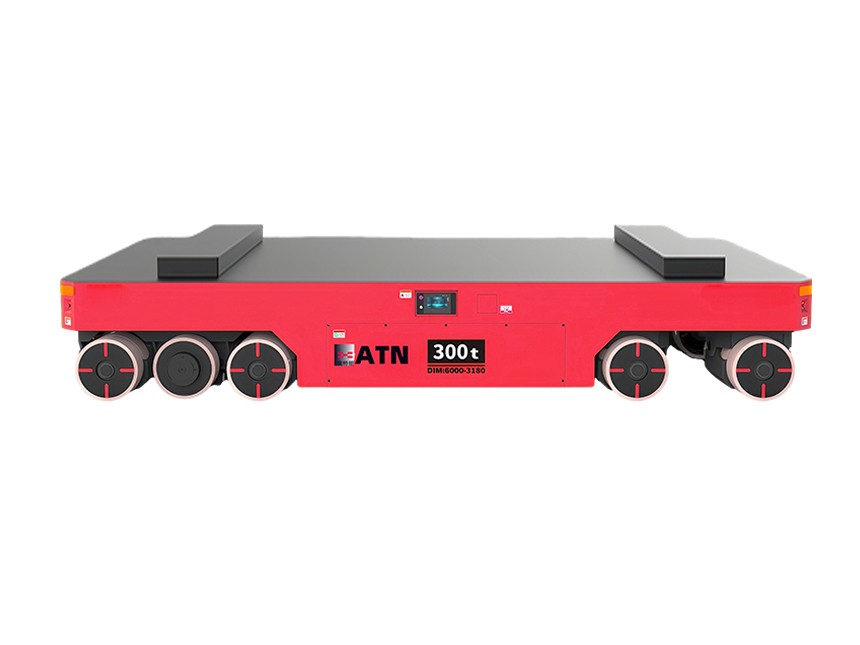
Buying an electric transfer cart isn't like ordering office supplies. It's a capital investment that affects material flow, floor space, safety protocols, and labor allocation for years. Get the planning phase right, and the cart integrates smoothly into your operation. Skip it, and you end up with mismatched capacity, charging headaches, and aisles that suddenly feel too narrow.
Most project failures aren't caused by bad equipment — they're caused by incomplete requirements. This guide lays out a practical planning framework that covers everything from load analysis to vendor selection, so your electric cart project delivers what it promises.
Start with the material, not the cart. What are you moving? Steel coils weigh differently than plastic bins, and both behave differently on a flatbed surface. Document load dimensions, weight distribution, center of gravity, and surface conditions. A 10-ton coil with a narrow footprint creates point-loading issues that a evenly distributed 10-ton pallet doesn't.
Next, map the route. Measure aisle widths, doorway clearances, floor slopes, and turning radii. Note any obstacles — columns, pits, overhead cranes — that constrain path selection. If the cart needs to cross between buildings or navigate elevators, those transitions become critical design inputs.
Frequency and timing matter too. A cart making 20 trips per shift has different duty-cycle demands than one making 3. Calculate peak throughput requirements and identify whether multiple carts or a single unit fits the workflow. Don't average — plan for the busiest hour.
Electric transfer carts come in several configurations, and the choice depends on your route and control requirements.
Rail-guided carts offer precision and high payload capacity but require fixed track installation. They're ideal for repetitive point-to-point routes in heavy industry — steel mills, foundries, shipyards. The downside? Inflexibility. Changing the route means laying new rail.
Rail-less (steerable) carts run on factory floors without tracks, offering route flexibility. They're better suited to dynamic environments where transport paths change frequently. The trade-off is slightly lower precision and higher wheel wear on rough surfaces.
Remote-controlled carts give operators direct oversight, which is useful in congested areas or when handling fragile loads. Automated options — magnetic tape follow, QR navigation, or basic programmed routes — reduce labor but add complexity and cost. Match the control level to your operational reality, not your wish list.
Battery technology is where many projects stumble. Lead-acid batteries are cheaper upfront but require longer charging cycles and more maintenance. Lithium-ion packs cost more initially but offer faster charging, longer cycle life, and opportunity charging capability — plug in during breaks instead of swapping batteries mid-shift.
Calculate daily energy consumption based on route length, load weight, and duty cycle. Add a 20% safety margin. Then determine whether your shift pattern supports opportunity charging or if you need hot-swap battery packs. If the cart runs 24/7, battery swapping or dual-bank systems may be essential.
Charger placement is often overlooked. The charging station needs to be accessible without blocking traffic, close enough to the operating area to minimize dead-heading, and equipped with proper ventilation (especially for lead-acid). Plan the electrical supply — charger current draw can exceed 100A on larger systems.
An electric cart doesn't operate in isolation. It shares floor space with pedestrians, forklifts, overhead cranes, and production equipment. Safety planning starts with a traffic flow analysis — who has right-of-way, where are the blind corners, and what happens during shift changes when traffic peaks?
Specify safety features during procurement, not after. E-stop buttons, audible alarms, flashing beacons, and proximity sensors are standard, but their configuration varies. Laser scanners offer 360-degree obstacle detection but cost more than bump switches. Consider your environment — noisy plants need louder alarms, dusty plants need sealed sensors.
Operator training is part of integration. Even "simple" remote-controlled carts require familiarization with controls, load securing, and emergency procedures. Plan training time into the project schedule and identify who gets certified.
Not all suppliers are equal. Some specialize in standard catalog carts; others engineer custom solutions. For anything beyond a basic flatbed, custom capability matters — load-specific fixtures, non-standard dimensions, or integration with existing control systems.
When requesting quotes, provide a complete specification package: load data, route drawings, duty cycle, environmental conditions, and safety requirements. Vague RFQs get vague quotes, and vague quotes lead to change orders later.
Evaluate suppliers on engineering support, not just price. Can they provide 3D models for layout verification? Do they offer on-site commissioning? What's the spare parts availability? A slightly higher purchase price often pays for itself in faster commissioning and fewer headaches.
The cart itself is only part of the total cost. A realistic budget includes:
Installation and commissioning — rail laying, floor preparation, electrical hookup, control system integration. For rail-guided systems, civil work can exceed equipment cost.
Training — operator certification, maintenance team familiarization, safety protocol updates.
Spare parts — batteries, wheels, brushes, sensors. Keep critical spares on-site to avoid downtime.
Maintenance — scheduled inspections, lubrication, battery replacement cycles. Lithium packs last 5–8 years; lead-acid typically 2–3 years with proper care.
Factor in productivity gains too. Labor reduction, faster material flow, and fewer handling injuries all contribute to ROI. Most electric cart projects pay back within 12–24 months when properly planned.
A typical electric cart project spans 8–16 weeks from specification to commissioning. Break it into phases:
Weeks 1–2: Requirements gathering and route survey.
Weeks 3–4: Supplier evaluation, quote comparison, and purchase order.
Weeks 5–10: Manufacturing and factory acceptance testing (FAT).
Weeks 11–14: Delivery, installation, and site acceptance testing (SAT).
Weeks 15–16: Operator training, documentation handover, and warranty activation.
Custom engineering or rail installation can extend this timeline. Build in buffer time — rushing commissioning is where most projects go sideways.
Undersizing load capacity is the classic error. A cart rated for 10 tons won't reliably move 10 tons up a 2-degree ramp with a worn battery. Size for worst-case conditions, not average.
Ignoring floor condition is another. Rail-less carts need flat, clean surfaces. Cracked concrete, oil slicks, or debris fields cause wheel slip and premature wear. If your floor is rough, budget for surface repair or specify larger wheels with softer tread compounds.
Overlooking future expansion limits the cart's useful life. Maybe you're moving 5-ton loads today, but next year's product line adds 8-ton components. Specify a cart with growth headroom — it's cheaper than replacing it in 18 months.
Electric cart project planning isn't complicated, but it is detailed. Define your requirements precisely, select equipment that matches your operational reality, budget for the full lifecycle, and choose a supplier who understands your application. Do that, and the cart becomes a seamless part of your workflow — not a project you regret.