+86 183 3953 1958
中文
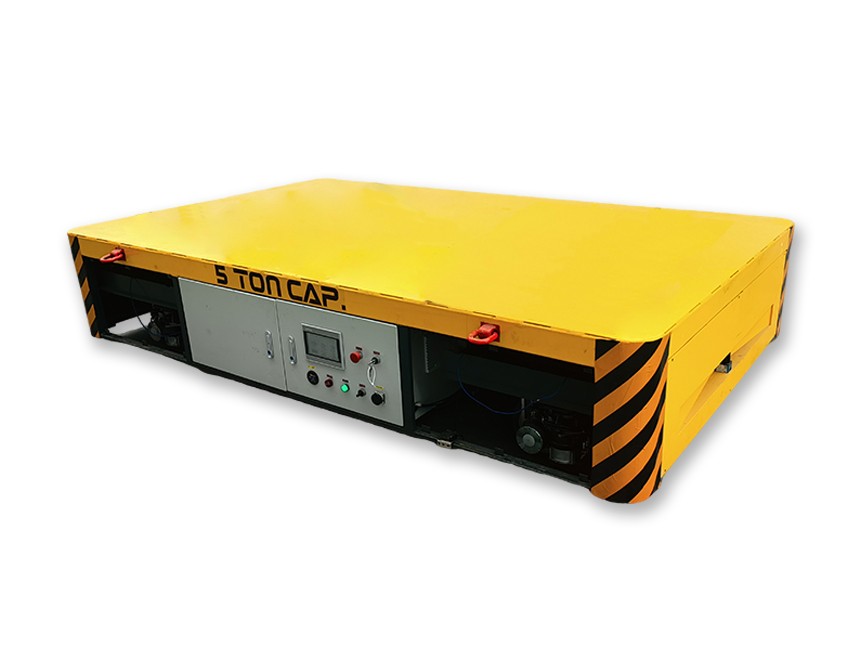
Moving heavy loads through a factory floor isn't just about the cart — it's about how the operator controls it. Walk alongside a 10-ton steel coil on a manual cart and you'll understand immediately. The physics of inertia, limited visibility, and the sheer danger of being near a multi-ton load make remote control not a convenience, but a necessity for safe operation.
Remote control technology in industrial electric carts has evolved significantly over the past decade. What started as simple wired pendant switches has expanded into sophisticated radio systems with safety-rated protocols, feedback displays, and integration with plant automation networks. Understanding the available technologies — and their limitations — helps engineers specify the right system for each application.
Industrial cart remote controls fall into three categories: radio frequency (RF), infrared (IR), and wired pendants. Each has distinct advantages, failure modes, and appropriate use cases.
RF is the dominant technology for industrial cart remote control today. Systems typically operate in the 433 MHz, 868 MHz, or 2.4 GHz bands, depending on regional regulations and application requirements.
The core components include a handheld transmitter with joysticks or push buttons, a receiver unit mounted on the cart, and a safety-rated control relay or PLC interface. When the operator presses a button, the transmitter encodes the command, modulates it onto the carrier frequency, and broadcasts it. The receiver demodulates the signal, decodes the command, and actuates the cart's drive system.
Modern RF systems use frequency-hopping spread spectrum (FHSS) or direct-sequence spread spectrum (DSSS) to resist interference. This matters in factories with welding equipment, variable-frequency drives, and other RF sources that can corrupt simple single-channel systems. FHSS rapidly switches frequencies across a defined band, making it nearly impossible for interference on one channel to block the signal.
Range varies significantly. Simple 433 MHz systems achieve 50–100 meters in open space, but metal structures, walls, and other equipment reduce this. In typical factory environments, expect 20–40 meters of reliable range. Higher-power systems or directional antennas can extend this, but regulatory limits apply.
Safety is where RF systems differentiate themselves. Industrial-grade remotes use dual-channel safety architectures — the receiver only activates when it receives two independent confirmation signals within a tight time window. If either channel fails, the system stops. This meets SIL 2 or SIL 3 requirements for safety-critical applications.
Battery life for handheld transmitters ranges from 40–100 hours of operation, depending on transmit power and duty cycle. Most systems use rechargeable lithium-ion packs with docking stations.
IR systems are less common in industrial applications but still find use in specific scenarios. They operate by modulating control signals onto infrared light beams, typically at 940 nm wavelength.
The main advantage of IR is immunity to RF interference. In environments with heavy welding, plasma cutting, or high-power RF heating equipment, IR can provide more reliable communication than radio systems. The signal doesn't pass through walls or metal structures, which can be an advantage in contained work areas where you want to prevent accidental activation from adjacent zones.
The disadvantages are significant. IR requires line-of-sight between transmitter and receiver. Dust, smoke, steam, or even bright sunlight can attenuate or block the signal. Range is limited to 10–20 meters under ideal conditions. And the receiver's photodiode can be blinded by direct sunlight or high-intensity lighting.
IR finds use in clean indoor environments where RF interference is severe and line-of-sight is guaranteed. Some specialized applications — like explosion-proof zones where RF sparking is a concern — may specify IR as a safer alternative.
The oldest and simplest approach: a cable connects the operator's control pendant directly to the cart. The pendant contains momentary-contact switches for forward, reverse, stop, and sometimes speed control.
Wired pendants offer absolute reliability — no batteries to fail, no interference to worry about, no range limitations. They're also the lowest-cost option. For short-distance operation in predictable environments, wired control remains a practical choice.
The downsides are obvious. The cable limits operator mobility and can become a trip hazard. It wears from repeated flexing and abrasion. In dirty environments, the cable collects contaminants and can be damaged by passing equipment. And the operator must stay within the cable's length, typically 5–10 meters, of the cart.
Wired pendants are still common on lighter-duty carts, in fixed workstations, and as backup control systems on RF-equipped carts for emergency operation.
Beyond the wireless link, the control system architecture determines functionality and safety.
Simple relay control maps each remote button directly to a relay output. Forward button closes the forward relay. Release it, and the relay opens. It's simple, robust, and inexpensive. But it offers no speed control, no feedback, and limited safety interlocks.
Variable speed control uses analog or digital signals to set motor speed proportionally to joystick position. This requires a motor controller — typically a VFD for AC motors or a PWM controller for DC systems — that accepts the remote's speed reference signal. Variable speed improves handling precision, especially for delicate loads or tight spaces.
PLC-integrated systems connect the remote receiver to a programmable logic controller. The PLC handles safety interlocks, route logic, collision avoidance, and integration with plant systems. This is the architecture used in automated or semi-automated operations where carts follow predefined paths or respond to station signals.
Feedback systems add data transmission from cart to operator. The remote's display shows battery status, fault codes, current position, or load weight. Two-way RF links enable this, though they add complexity and cost. In operations where the operator can't see the cart directly — common in long transport routes or around obstacles — feedback becomes essential.
Industrial remote control isn't consumer electronics. Safety standards govern design, testing, and certification.
EN ISO 13849-1 defines safety requirements for control systems, including performance levels (PL) that remote systems must achieve. A cart moving 20 tons near personnel needs PL d or PL e — requiring redundant channels, fault detection, and fail-safe behavior.
EN 60947-5-1 covers emergency stop devices. Remote transmitters must have easily accessible e-stop buttons that immediately cut power and engage brakes. The e-stop circuit must be hardwired, not software-dependent.
FCC and CE regulations govern RF emissions. Transmitters must stay within defined power limits and spectral masks. In Europe, the 433 MHz band allows up to 10 mW ERP; 868 MHz allows higher power but with duty cycle restrictions. 2.4 GHz ISM band offers more power but shares spectrum with WiFi, Bluetooth, and microwave ovens.
Functional safety certification from bodies like TÜV or SGS confirms that the remote system meets claimed safety integrity levels. For heavy-load applications, buyers should insist on certified systems rather than uncertified consumer-grade or commercial-grade equipment.
Modern industrial carts don't operate in isolation. Remote control systems increasingly integrate with broader plant infrastructure.
MES and WMS connectivity allows the cart to receive transport orders directly from the plant system. The operator's remote might display the next destination, confirm pickup, and report completion. This reduces misroutes and improves traceability.
Fleet management systems track multiple carts simultaneously, assigning routes, avoiding collisions, and optimizing traffic flow. Remotes in fleet environments may include route confirmation, traffic alerts, and priority override functions.
Positioning and navigation aids help operators in complex facilities. RFID tags, magnetic markers, or visual indicators guide the cart along approved routes. The remote can display position relative to waypoints or warn when deviating from the defined path.
Choosing a remote control system for an industrial cart involves matching technology to operational requirements.
Use RF systems when the operator needs mobility, the environment has moderate interference, and the transport distance exceeds 10 meters. Specify FHSS or DSSS for electrically noisy environments. Insist on safety-certified systems for loads over 5 tons or operation near personnel.
Consider IR only in contained, clean environments with severe RF interference or specific safety requirements that favor optical isolation. Ensure line-of-sight is maintainable throughout the route.
Use wired pendants for short-range, low-duty applications where cost matters more than operator convenience. They're also appropriate as backup controls on safety-critical carts.
Specify variable speed for loads requiring precise positioning, delicate handling, or operation in confined spaces. Simple on/off control works for long straight runs with minimal maneuvering.
Require two-way feedback when the operator can't directly observe the cart during operation. Battery status, fault indication, and position feedback all improve safety and efficiency.
Remote control systems fail. Understanding how they fail helps design appropriate mitigations.
Signal loss is the most common RF failure. Good systems detect lost signal within 500 milliseconds and trigger a safe stop. The operator must release and re-press the command to resume — preventing uncontrolled movement if the transmitter drops or the operator falls.
Interference can corrupt commands. FHSS handles most interference, but extreme environments may need additional measures: directional antennas, higher transmit power (within regulatory limits), or frequency coordination with plant RF systems.
Battery depletion in the transmitter should trigger a warning well before failure. Most systems warn at 20% battery and operate for several hours below that. Critical applications should mandate battery replacement at the end of each shift.
Component degradation affects joysticks, buttons, and cables. Regular inspection and replacement schedules prevent in-service failures. Joysticks with drift or inconsistent centering are early warning signs.
Remote control technology for industrial electric carts spans a range from simple wired pendants to sophisticated two-way radio systems with safety-rated protocols and plant integration. The right choice depends on operational requirements, environmental conditions, safety needs, and budget constraints.
For most heavy-duty industrial applications, RF systems with frequency-hopping spread spectrum, safety certification, and variable speed control offer the best balance of reliability, flexibility, and safety. In specialized environments — severe RF interference, explosion hazards, or contained short-range operations — IR or wired systems may be more appropriate.
The trend is toward greater integration: remotes that communicate with plant systems, display operational data, and participate in fleet management. As industrial automation evolves, the remote control is becoming less a standalone device and more an interface to the broader material handling system.