+86 183 3953 1958
中文
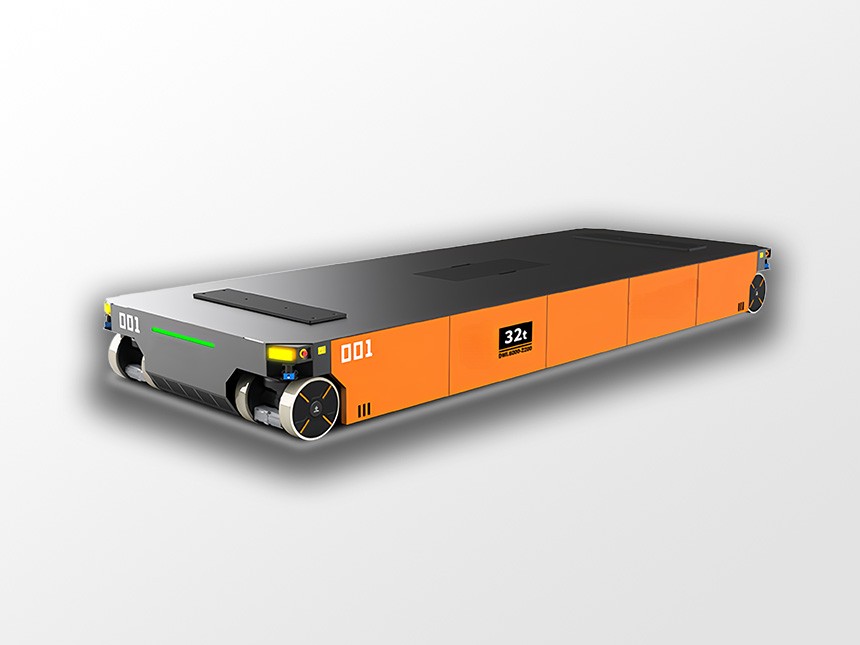
Heavy industry doesn't move small packages. We're talking steel coils, engine blocks, casting molds, and structural components that weigh tons. Traditional forklifts reach their limits — literally. Load capacity, aisle width, and safety margins all become critical constraints.
That's where specialized material handling solutions come in. Electric transfer carts, rail-guided systems, and heavy-duty platform vehicles fill the gap where conventional equipment falls short. The question isn't whether you need them — it's which configuration matches your operation.
Rail systems offer precision and high capacity. A cart on rails can't wander off course, which matters when you're moving 100-ton loads through a crowded factory. Rails also distribute weight across the floor, reducing point loading that can damage concrete.
The downside? Fixed routes. Once rails are laid, changing the path is expensive. Rail-guided systems work best for repetitive, point-to-point transport between fixed stations.
These offer flexibility. No rails means you can change routes, avoid obstacles, and adapt to layout changes. Modern rail-less carts use robust wheel systems and differential steering to handle heavy loads while maintaining maneuverability.
Floor quality matters more here. Uneven surfaces, expansion joints, and debris affect performance. But for operations that need flexibility — job shops, mixed production lines, or facilities undergoing reorganization — rail-less is often the better choice.
Cranes have their place, but they're not always practical. Installation costs are high, they block overhead space, and they require certified operators. Floor-based transfer carts can replace or supplement cranes in many applications, freeing up overhead space for other uses.
Heavy loads concentrate stress. A 50-ton mold on a 4-meter platform creates different loading patterns than the same weight spread across a 6-meter deck. The cart's frame design — beam spacing, plate thickness, and weld patterns — must match the load characteristics.
Most reputable manufacturers use FEA (Finite Element Analysis) to validate designs. Ask for this. It's the difference between a cart that lasts 10 years and one that cracks at the welds in year three.
Moving heavy loads requires torque. DC motors with gear reducers are standard, but motor sizing depends on more than just weight. Ramp angles, acceleration requirements, and duty cycle all factor in.
Battery capacity calculations must account for the worst-case scenario: full load, maximum distance, and frequent starts. Undersized batteries lead to mid-shift charging and production delays.
Heavy industry has no margin for error. Emergency stop buttons, collision sensors, and audible alarms are standard. Some operations also need explosion-proof ratings for hazardous environments.
Speed limiting under load is another consideration. A cart moving at 1.5 m/s empty might need automatic speed reduction when loaded to maintain safe stopping distances.
Material handling doesn't exist in isolation. The best solutions integrate with:
Production scheduling systems. Carts that receive dispatch signals from MES or ERP systems reduce manual coordination and improve throughput.
Quality control stations. Automated routing to inspection points ensures nothing skips verification.
Storage and retrieval. Integration with warehouse systems enables just-in-time delivery of materials to production lines.
This integration requires communication protocols — Modbus, Profinet, or Ethernet/IP depending on your existing infrastructure. Verify compatibility before committing to a solution.
The right material handling solution delivers measurable improvements:
Reduced labor costs. One operator with a remote-controlled cart can replace multiple forklift drivers and rigging crews.
Improved safety. Ground-level operation eliminates overhead lifting risks. Remote control keeps operators away from pinch points and falling load hazards.
Higher throughput. Dedicated transport paths reduce congestion. Carts move on schedule rather than waiting for forklift availability.
Lower maintenance. Electric systems have fewer moving parts than internal combustion engines. Battery maintenance is predictable and schedulable.
Start with your requirements, not a product catalog:
What's the heaviest load? Size for peak, not average. But don't oversize by 300% — that wastes capital and reduces efficiency.
What's the transport distance? Short shuttle runs favor compact carts. Long hauls across the plant need higher speed and battery capacity.
How often does the route change? Fixed routes = rail systems. Variable routes = rail-less or AGV options.
What's your floor condition? Cracked or uneven floors need special wheel configurations or rail systems.
Do you need integration? Standalone operation is simpler and cheaper. System integration adds capability but requires engineering support.
Heavy-duty material handling equipment is a capital investment. Look at total cost of ownership:
Initial cost: Equipment, installation, and commissioning. Rail systems add civil engineering costs.
Operating cost: Electricity, battery replacement, and routine maintenance. Electric systems typically cost 60-70% less to operate than diesel equivalents.
Downtime cost: This is where cheap equipment hurts. A cart that fails twice a year, costing a day of production each time, quickly erases any upfront savings.
Disposal/residual value: Quality equipment retains value. Some manufacturers offer buyback or trade-in programs.
Heavy industry material handling isn't about buying a cart — it's about solving a logistics problem. The right solution matches your loads, your layout, and your operational rhythm.
Invest time in requirement analysis. Engage providers who ask detailed questions about your application. And look beyond the sticker price to total cost of ownership. The equipment you choose will be moving your production for the next decade. Choose accordingly.