+86 183 3953 1958
中文
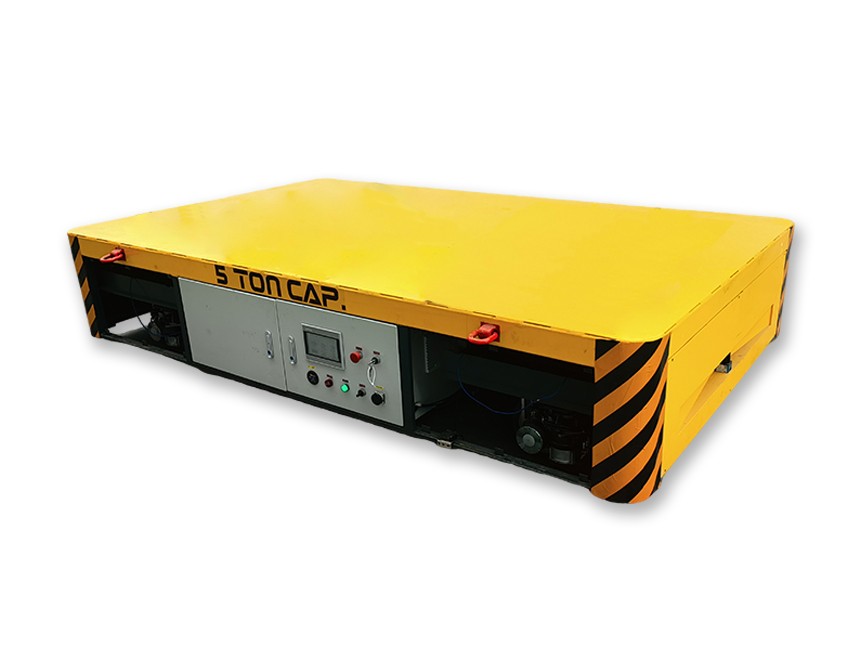
Choosing the right electric flatbed cart size is one of those decisions that seems straightforward until you realize how much it affects daily operations. Too small, and you're making extra trips or overloading equipment. Too large, and you're wasting capital, consuming excess floor space, and potentially creating maneuverability problems in tight aisles. This guide walks through the sizing decision methodically — no guesswork, just engineering logic.
The most common mistake in cart selection? Looking at cart specifications before fully understanding what you're moving. Start by documenting your actual loads.
Weight is obvious — but it's not just maximum weight. Consider your typical load, your heaviest anticipated load, and whether those loads are concentrated or distributed. A 5-ton cart carrying a 4-ton machine with all the weight centered in one spot faces different stresses than the same cart carrying 4 tons of evenly distributed steel plate. Dynamic loading during acceleration and braking adds further stress that static weight ratings don't capture.
Load dimensions matter just as much. A cart deck must provide adequate support surface — undersized decks lead to overhang, which creates tipping risks and load instability. Measure the footprint of your largest typical load, then add margin. As a rule, the deck should extend at least 100–150 mm beyond the load perimeter on all sides.
Load height affects your overall transport envelope. Add the cart deck height (typically 200–400 mm for standard models) to your load height, then check against doorway clearances, overhead obstructions, and any equipment the cart must pass under.
Electric flatbed carts are available across a wide capacity range — from 1-ton light-duty models to 300-ton heavy-duty systems. The temptation is to buy for your maximum load and call it done. That's usually wrong.
For operations with varied loads, consider a fleet approach. A 2-ton cart handles 80% of your daily material movement, while a 10-ton cart covers the occasional heavy job. Running a 10-ton cart for light loads wastes energy, accelerates wear on drive components, and takes up more space than necessary. The capital savings from right-sizing your primary fleet often justify having one or two oversized units for exceptions.
Safety margin is essential, but don't overdo it. Industry practice typically applies a 1.25–1.5 safety factor to maximum expected loads. A 5-ton maximum load calls for a 6.25–7.5 ton cart. Going to 10 tons "just to be safe" adds unnecessary cost and bulk without meaningful safety improvement.
Cart length and width determine what fits — but also where the cart fits. Measure your narrowest aisle, tightest turn, and smallest doorway the cart must navigate. Then remember that the cart needs clearance for operation, not just physical passage.
A cart that's exactly the same width as your aisle leaves no room for operator positioning, slight steering corrections, or load overhang. Practical minimum aisle width is typically cart width plus 400–600 mm on each side for manual operation, or 200–300 mm for rail-guided systems.
Turning radius becomes critical in confined spaces. Four-wheel steering or differential drive systems improve maneuverability, but they add complexity and cost. If your facility has long straight runs with minimal turns, a simple front-steer configuration works fine. If you're navigating around pillars, equipment, and into tight loading bays, all-wheel steering or short-wheelbase designs deserve consideration.
Deck height affects loading method. Low-profile carts (under 250 mm deck height) allow loading by forklift from the side or by overhead crane from above. Higher decks may require ramps or lifting equipment for ground-level loading. If your workflow involves frequent manual loading with pallet jacks, deck height must accommodate the jack's lift range.
Ground clearance matters in facilities with uneven floors, expansion joints, or minor debris. Standard industrial carts offer 30–50 mm clearance, sufficient for smooth concrete floors. Outdoor use, rough floors, or areas with weld slag and metal chips call for higher clearance — 80–120 mm — to prevent underside damage and hang-ups.
Battery capacity should match your duty cycle, not just your load weight. A cart moving 2 tons on a 200-meter cycle 50 times per day consumes more energy than the same cart moving 5 tons on a 50-meter cycle 10 times per day. Calculate your daily travel distance, number of cycles, and any grade changes that increase power consumption.
Standard lead-acid battery systems suit single-shift operations with moderate duty cycles. For multi-shift operations, high-frequency use, or facilities without charging downtime, lithium iron phosphate (LiFePO4) batteries offer faster charging, longer cycle life, and opportunity charging capability. The higher upfront cost often pays back within 2–3 years through reduced maintenance and longer service life.
Charging infrastructure is part of the sizing decision. If your facility lacks dedicated charging stations, battery swapping systems let you exchange depleted batteries for fresh ones in minutes. This approach requires spare battery inventory and storage space, but it eliminates charging downtime entirely.
Temperature extremes influence both battery sizing and mechanical specifications. Cold environments reduce battery capacity — a battery that delivers 100% at 25°C may provide only 60–70% at -10°C. If your facility operates in cold conditions, specify larger battery capacity or plan for more frequent charging.
High-temperature environments (above 40°C) accelerate battery degradation and may require thermal management systems. Mechanical components — bearings, seals, and lubricants — also need high-temperature ratings.
Dust, moisture, and chemical exposure affect cart selection. Standard industrial carts handle typical factory dust. Foundries, chemical plants, and outdoor applications need sealed electrical enclosures, corrosion-resistant finishes, and specialized wheel materials. These environmental requirements don't change the cart's physical size, but they influence weight and may require additional protective features that affect deck space.
Your cart must work with your current infrastructure. Check crane hook heights, loading dock levels, conveyor transfer heights, and any automated systems the cart needs to interface with. Height mismatches between the cart deck and adjacent equipment create loading inefficiencies and potential safety hazards.
If you're integrating with automated systems or planning future automation, specify carts with compatible control interfaces. Even if you're operating manually now, choosing carts with positioning sensors, communication modules, and programmable controllers preserves upgrade paths without equipment replacement.
Oversizing "for growth" is the most frequent error. Buy for your verified requirements today, with modest headroom. If your business grows significantly, adding a second cart is usually more economical than running an oversized primary unit for years.
Ignoring dynamic loads causes premature wear and safety issues. Static load ratings don't account for acceleration forces, braking loads, or the impact of traveling over uneven surfaces. Always apply dynamic factors to your load calculations.
Neglecting maintenance access leads to headaches later. Ensure adequate clearance around the cart for battery changes, wheel replacement, and drive system service. A cart squeezed into a tight space with no service access becomes expensive to maintain.
Right-sizing an electric flatbed cart requires looking beyond the catalog specifications to understand your actual operational requirements. Start with load characteristics, add facility constraints, factor in environmental conditions, and size the power system for your real duty cycle. The cart that fits your specific workflow — not the one with the highest capacity or the lowest price — delivers the best long-term value. When in doubt, run a pilot test with a rental or demo unit before committing to a full fleet. Real-world validation always beats theoretical analysis.