+86 183 3953 1958
中文
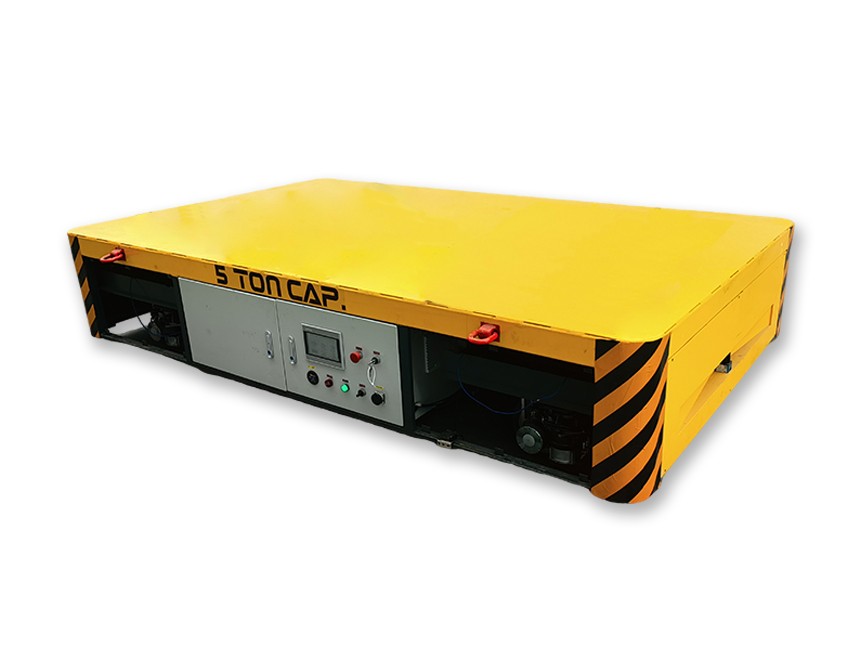
Die and mold transport is one of the most demanding applications in the material handling industry. The items being transported—production dies, molds, jigs, and fixtures used in metal forming, casting, and injection molding—are simultaneously among the most expensive, most fragile, and most critical items in the manufacturing facility. A die that is damaged during transport is not just an equipment failure: it is a production interruption that can take weeks or months to resolve, at a cost that far exceeds the value of the die itself. Electric flatbed carts used for die and mold transport must therefore meet requirements that are significantly more demanding than those of standard material handling applications, and the selection process must reflect this higher level of requirement.
Production dies and molds present several load characteristics that complicate the design of the transport system. The most significant is concentrated load distribution: dies and molds are not uniformly distributed masses—they have weight concentrated at specific points, particularly around the mold parting line, the ejector system, and the guide pin locations. The pressure points where a die sits on the flatbed cart are not distributed evenly across the cart deck; they are concentrated at specific locations that correspond to the die's mounting features. A flatbed cart designed for uniformly distributed loads may experience localized stress concentrations at these pressure points that exceed its design limits, even if the total load weight is within the cart's rated capacity.
Die and mold geometry creates another challenge: the dimensional sensitivity of the transported item. Dies and molds must maintain precise dimensional accuracy to produce parts within tolerance. Any deformation of the die or mold during transport—caused by improper support, excessive vibration, or impact loads—can affect the dimensional accuracy of the parts produced. The flatbed cart's deck must provide even, stable support across the full die footprint, without creating stress points that could deform the die. Anti-vibration mounting systems may be required for the most sensitive dies, adding cost and complexity to the transport system.
The flatbed cart deck must be large enough to accommodate the full footprint of the largest die or mold that will be transported, plus adequate margin for positioning the die accurately and for securing it against movement during transport. Dies come in a wide range of sizes—from small stamping dies weighing a few hundred kilograms to large injection molds weighing several tons with footprints of several square meters. A single facility may need to transport dies at multiple sizes within this range, which may require multiple carts of different deck sizes or a single cart with an adjustable deck system.
The deck surface and its interaction with the die mounting system is another important configuration consideration. Most dies have mounting features—T-slots, bolt patterns, or clamping surfaces—that interface with the press or mold machine, and these same features are used to secure the die to the transport cart. The flatbed cart deck must have compatible mounting features or must be equipped with a universal fixture system that can accommodate the full range of die mounting configurations in the facility. Dies without compatible mounting features require custom-designed fixtures that add cost and complexity to the transport system.
The weight distribution of a die or mold on a flatbed cart affects both the structural integrity of the cart and the stability of the transport. Every flatbed cart has a rated load capacity that assumes the load is distributed within a defined area—the load center—and within a defined maximum pressure per unit area at the wheel contact points. Loads that exceed the load center limits, or loads that concentrate weight beyond the cart's deck pressure rating, can cause structural damage to the cart deck or frame, wheel bearing failures, or instability during transport that increases the risk of the load shifting or falling.
Calculating the actual weight distribution for a specific die requires knowing not just the total weight but the weight distribution across the die's footprint. This information is sometimes available from the die design documentation, but in many cases—especially for dies that were designed many years ago—the weight distribution data is not documented. In these cases, the weight distribution must be estimated based on the die geometry and the typical weight distribution patterns for dies of that type, or the cart must be specified with sufficient margin to accommodate the worst-case weight distribution scenario.
Die and mold transport involves multiple phases—starting, stopping, turning, and traversing grades—each of which creates inertial forces that act on the load. A die that is not properly secured can shift, slide, or tip during transport, causing damage to the die, damage to the cart, or a safety hazard to personnel in the area. Load securing for die transport must account for the inertial forces in all directions—forward, backward, and lateral—and must provide adequate clamping force to prevent movement under the maximum expected acceleration conditions.
The most common load securing methods for die transport are tie-down straps, chain binders, and dedicated die clamps. Tie-down straps are the simplest method and are adequate for light dies in low-risk transport applications. Chain binders provide higher clamping forces and greater durability for heavy dies and for transport in demanding conditions. Dedicated die clamps—fixtures designed for a specific die's mounting features—provide the most secure and fastest method of load securing, but require a custom fixture for each die type and represent a significant investment for facilities with many different die types.
Electric flatbed carts used for die and mold transport typically experience higher maintenance demands than carts used for standard material transport, for two reasons. First, the loads handled are heavier and more concentrated, which accelerates wear on wheels, bearings, and structural components. Second, the critical nature of the transported items means that any maintenance issue that could affect transport reliability must be addressed immediately, which often means more frequent inspections and lower thresholds for component replacement.
The maintenance program for die transport carts should include more frequent wheel and bearing inspections than standard carts, with specific attention to signs of brinelling or spalling on bearing surfaces that could cause vibration during transport. The deck surface and mounting features should be inspected for distortion, cracks, or wear that could affect die positioning or load securing. The braking system should be tested for proper function under load, including testing the parking brake's ability to hold the cart on the maximum grade in the facility with maximum load. The battery should be tested more frequently for capacity, as a battery that has degraded to 80% of original capacity may not complete a full shift of die transport operations, leaving a critical production tool stranded mid-route.