+86 183 3953 1958
中文
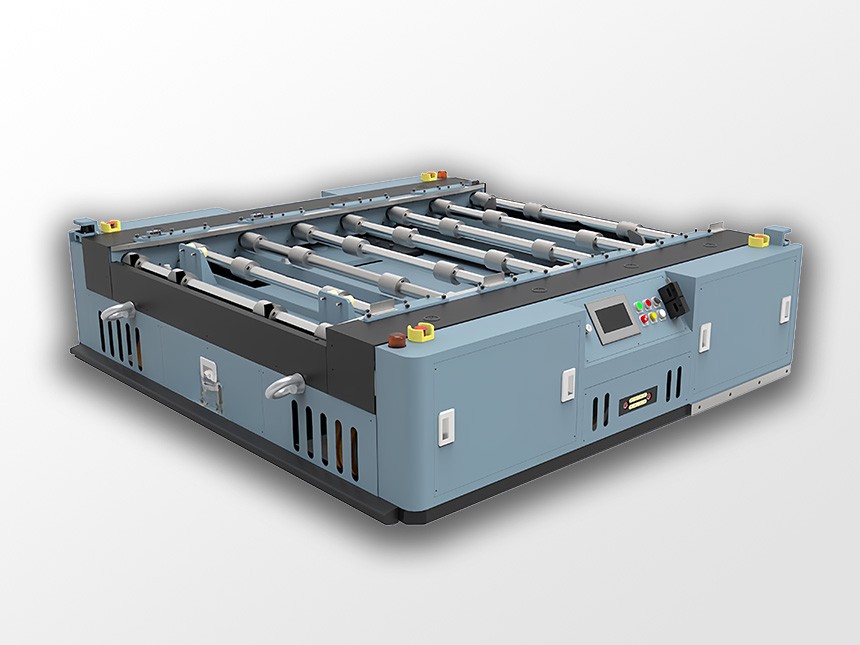
Managing heavy material flow across a factory floor is one of the most persistent operational challenges in modern manufacturing. Conventional manual transport methods—forklifts, tuggers, manual pallet jacks—are increasingly unable to meet the demands of high-throughput production lines. Labor shortages, safety regulations, and the push for continuous operation have made automated heavy load transport not a luxury but a competitive necessity.
Electric flatbed carts, a specialized class of automated guided vehicles (AGVs), are purpose-built to move substantial payloads reliably and repeatedly. Unlike generic AGVs, these carts feature reinforced chassis designs, high-capacity power systems, and navigation suites engineered for industrial environments. Selecting the right one, however, requires understanding a set of interrelated technical criteria that most product brochures gloss over.
This guide walks through the five factors that matter most when evaluating electric flatbed carts for heavy load transport, along with a practical comparison framework and scenario-based recommendations to help procurement managers, logistics directors, and plant engineers make informed decisions.
Load capacity is the most obvious starting point—but the number on the spec sheet rarely tells the whole story. Rated payload (typically ranging from 500 kg to 30,000 kg or more) is usually calculated under ideal, level-floor conditions. Real factory environments introduce variables that can substantially reduce effective capacity.
Key factors affecting usable load capacity include:
When evaluating capacity, look for carts that specify a continuous rated load rather than a peak or intermittent figure. For loads in the 2,000–10,000 kg range, many manufacturers offer standardized platforms; beyond 10,000 kg, custom engineering is often required.
The navigation system determines how the cart perceives its environment and follows a route—directly impacting accuracy, flexibility, and infrastructure cost.
Magnetic tape navigation is the most established method. A magnetic strip embedded in or adhered to the floor provides a reliable, low-cost guide path. Setup is straightforward and the system performs well in stable, low-change environments. The tradeoff is flexibility: any route change requires physical modification of the tape.
Laser navigation (laser triangulation) uses rotating LiDAR sensors to detect reflectors mounted on walls or pillars. It offers high positioning accuracy (typically ±10 mm), operates without floor-mounted infrastructure, and allows dynamic route reprogramming via software. This is the preferred choice for facilities with frequent layout changes. The main drawbacks are higher upfront cost and the need to maintain reflector visibility.
Visual SLAM (Simultaneous Localization and Mapping) represents the newer generation of navigation technology. Using cameras and onboard processing, the cart builds and updates its own map of the environment in real time. This approach eliminates the need for any physical infrastructure and adapts to dynamic obstacles. However, it requires well-controlled lighting conditions and more sophisticated software tuning during commissioning.
For heavy load applications, laser navigation currently strikes the best balance between accuracy, reliability, and flexibility for most industrial settings.
Battery technology directly governs how long a cart operates between charges and how quickly it can resume work. For heavy load transport, two battery chemistry types dominate:
Lithium-ion (Li-ion) batteries offer high energy density, low self-discharge, and no memory effect. A single charge typically supports 8–16 hours of continuous operation depending on load and duty cycle. Opportunity charging (brief top-ups during breaks) is viable with Li-ion, enabling near-continuous operations in multi-shift facilities. Charging time from 0% to full is generally 2–4 hours.
Lead-acid batteries remain common in cost-sensitive applications. They have a lower upfront cost and are proven in heavy industrial use. However, they have significantly shorter run times (typically 4–8 hours), longer charging cycles (8–12 hours), and degrade faster with opportunity charging patterns. For heavy load operations running more than one shift, lead-acid systems often prove more expensive over a 3–5 year total cost of ownership.
When evaluating battery performance, pay attention to the manufacturer's stated run time under realistic load conditions—not just under no-load or half-load test cycles. Also check the battery's cycle life rating (number of charge/discharge cycles before capacity degrades below 80%) and whether the battery is user-replaceable or requires service technician involvement.
Heavy load electric flatbed carts operate in environments where people and other equipment are present. Regulatory compliance (ISO 3691-4 for industrial trucks) and practical safety requirements demand more than a single emergency stop button.
Key safety features to evaluate include:
For facilities operating in close human-machine collaboration environments, look for carts that support safety laser scanner integration with dynamic protective zones rather than fixed-radius detection. This allows speed modulation based on real-time proximity assessment.
A single electric flatbed cart rarely operates in isolation. Integration with existing warehouse management systems (WMS), manufacturing execution systems (MES), and broader fleet operations determines how effectively automation delivers ROI.
Most modern AGV platforms support:
Before purchasing, audit your existing infrastructure: what systems need to communicate with the cart, and what protocols do they use? Carts with open, well-documented APIs reduce integration time dramatically and give your IT team flexibility rather than locking you into a vendor's proprietary ecosystem.
The following framework summarizes the primary tradeoffs across the most relevant selection dimensions:
| Criterion | Magnetic Tape | Laser Navigation | Visual SLAM |
|---|---|---|---|
| Positioning accuracy | ±15–25 mm | ±5–15 mm | ±10–30 mm |
| Route flexibility | Low (physical tape changes) | High (software config) | Highest (no infrastructure) |
| Setup cost | Low | Medium–High | Medium |
| Lighting sensitivity | None | Low | High |
| Best environment | Stable, fixed routes | Dynamic, multi-route facilities | Adaptive, changing layouts |
Scenario A: Single-shift automotive parts plant with fixed conveyor-to-assembly routing. A magnetic tape or laser-guided flatbed cart with lead-acid or Li-ion batteries (based on shift length) delivers the best ROI. Route flexibility is not a priority; reliability and low maintenance cost are. Consider models rated for 5,000–10,000 kg continuous operation.
Scenario B: Multi-shift 3PL logistics hub with variable pick-and-place zones and frequent layout reconfiguration. Laser navigation with Li-ion batteries is the clear choice. The ability to reprogram routes via software eliminates the ongoing cost of tape replacement and reduces downtime during peak seasonal adjustments. Look for carts with fleet management software and WMS integration.
Scenario C: Large-scale aerospace manufacturing with wide aisles, heavy payloads (10,000–20,000 kg), and stringent safety requirements. Laser-guided carts with advanced safety scanner integration, high-capacity Li-ion systems, and PROFINET/Modbus connectivity are necessary. Custom engineering from specialized AGV manufacturers is typically required for payloads above 15,000 kg.
Selecting an electric flatbed cart for heavy load transport is ultimately a systems decision, not a spec sheet comparison. Capacity, navigation, battery, safety, and integration must be evaluated together against your specific operational profile.
The most common procurement mistake is optimizing purely on upfront price or rated payload, only to discover during commissioning that the chosen platform lacks the navigation flexibility or safety certification required for the actual operating environment. A thorough requirements analysis before RFQ—covering floor conditions, shift structure, integration requirements, and growth trajectory—pays dividends throughout the cart's 10–15 year operational life.
When in doubt, engage vendors with a detailed site survey and request a pilot demonstration on your actual floor, with your real payload profile. There is no substitute for real-world performance data.
" }