+86 183 3953 1958
中文
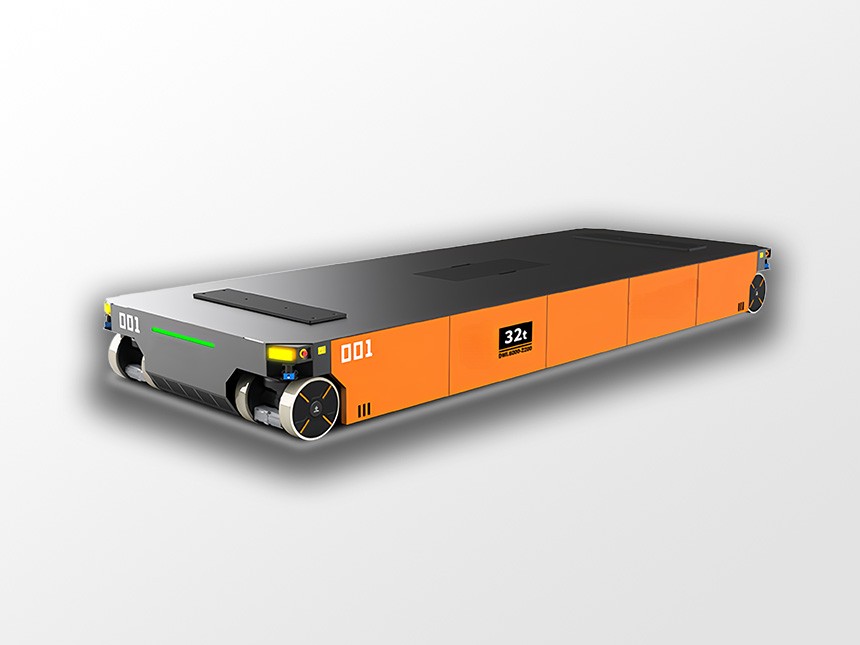
A battery powered transfer cart is a mobile material handling unit that runs on rechargeable batteries and moves loads along fixed or variable paths within factories and warehouses. Unlike cable-fed or diesel-powered equipment, these carts operate cordlessly, giving facilities maximum layout flexibility. They are a core product category within the AGV (Automated Guided Vehicle) family, typically used for transporting raw materials, work-in-progress assemblies, and finished goods between production zones, loading docks, and storage areas.
The first specification buyers evaluate is rated load capacity. Most industrial transfer carts range from 500 kg to 100 metric tons. For general assembly line feeding, models in the 1–5 ton range are most common. Beyond the headline figure, examine the chassis construction — a genuinely durable cart uses heavy-duty steel framing with reinforced deck plating, not thin-gauge sheet metal. Look for a safety factor of at least 25% above the rated capacity. If your operation involves shock loads (e.g., dropping a pallet from height), factor that into your selection, not just the steady-state weight.
Battery choice directly impacts uptime, maintenance cost, and total cost of ownership. The three dominant chemistries are:
Lead-acid (flooded or AGM): Lowest upfront cost. Runtime per charge typically 6–10 hours. Lifespan 800–1,200 cycles. Requires scheduled watering maintenance for flooded types.
Lithium-ion: Higher initial investment, but 2,000–4,000 cycle lifespan and 2–4 hour opportunity charging windows. Best for multi-shift operations where cart availability is critical.
Nickel-metal hydride (NiMH): A mid-range option, less common in new equipment. Good cycle life but being displaced by lithium in most new AGV designs.
For a durable, high-utility transfer cart, lithium-ion batteries have become the industry preference for operations running more than one shift.
Transfer carts use several navigation methods, each with trade-offs:
Fixed path (inductive wire, magnetic tape, QR code rail): Lower cost, high repeatability. The cart follows a predetermined route precisely. Best for stable, unchanging layouts.
Natural navigation (SLAM — LiDAR or camera-based): Higher flexibility. The cart maps its environment and navigates dynamically. Ideal for facilities that frequently reconfigure production lines. Cart cost is higher, but facility adaptation costs are lower.
Remote control or Wi-Fi guided: Used in some hybrid systems where a central warehouse management system (WMS) directs cart movement via network commands.
For most factory floor transfer applications, a well-tuned fixed-path system delivers the best reliability-to-cost ratio, while SLAM is preferable if layout flexibility is a strategic priority.
A durable transfer cart must include comprehensive safety features. Minimum requirements include obstacle detection sensors (laser scanners or ultrasonic), emergency stop buttons accessible from all sides, audio/visual warning signals during movement, and speed reduction in pedestrian zones. For European market compliance, the cart should meet EN 1525 (Automated Guided Vehicles and their systems) and Machinery Directive 2006/42/EC requirements. For North American operations, ANSI B56.1 is the relevant safety standard.
Modern manufacturing environments run on connected systems. Before purchasing, verify that the transfer cart's control interface is compatible with your existing infrastructure: PLC brands and communication protocols (Profinet, EtherNet/IP, Modbus), WMS or MES integration capability (REST API, MQTT), and onboard diagnostics that report to a central monitoring dashboard. A cart that cannot communicate with your production management system creates manual workarounds that erode its value.
| Factor | Entry-Level | Mid-Range | Heavy-Duty |
|---|---|---|---|
| Load capacity | Up to 5 tons | 5–50 tons | 50–100+ tons |
| Battery type | Lead-acid | Lead-acid or Li-ion | Li-ion or lithium iron phosphate |
| Navigation | Fixed path (tape/wire) | Fixed path or QR | SLAM or hybrid |
| Safety sensors | Basic bumpers | Laser scanners | Multi-layer safety system |
| Integration | Dry contact outputs | PLC protocol support | Full WMS/MES API |
| Typical use | Low-volume storage | Production line feeding | Heavy manufacturing, steel, aerospace |
Choosing based on price alone. A cart that frequently requires maintenance or cannot handle peak loads will cost more over its lifetime than a properly specified unit. Evaluate total cost of ownership, not purchase price.
Underestimating battery replacement timing. Battery replacement is the largest maintenance expense over a cart's operational life. Plan the battery replacement budget and schedule at the time of purchase, not when the batteries fail.
Ignoring floor conditions. Transfer carts are designed for specific floor tolerances. Uneven floors, ramps exceeding the cart's gradeability specification, or debris-covered surfaces significantly reduce effective battery life and navigation accuracy.
Skipping a site survey. A professional supplier should conduct a site survey before confirming a cart model. This identifies potential conflicts with racking, door heights, turning radii, and pedestrian traffic patterns that are not apparent from a specification sheet.
Selecting a durable battery powered transfer cart comes down to matching three things: your load requirements, your operational environment, and your integration needs. Start with a clear specification of the heaviest load, the longest travel distance, the number of shifts, and the floor layout. From there, narrow the options to models that meet the relevant safety standards and offer battery and navigation options that fit your facility's flexibility requirements.
If you need a model recommendation for a specific load range or application, consult with a technical specialist who can validate the cart's specifications against your actual floor conditions.