+86 183 3953 1958
中文
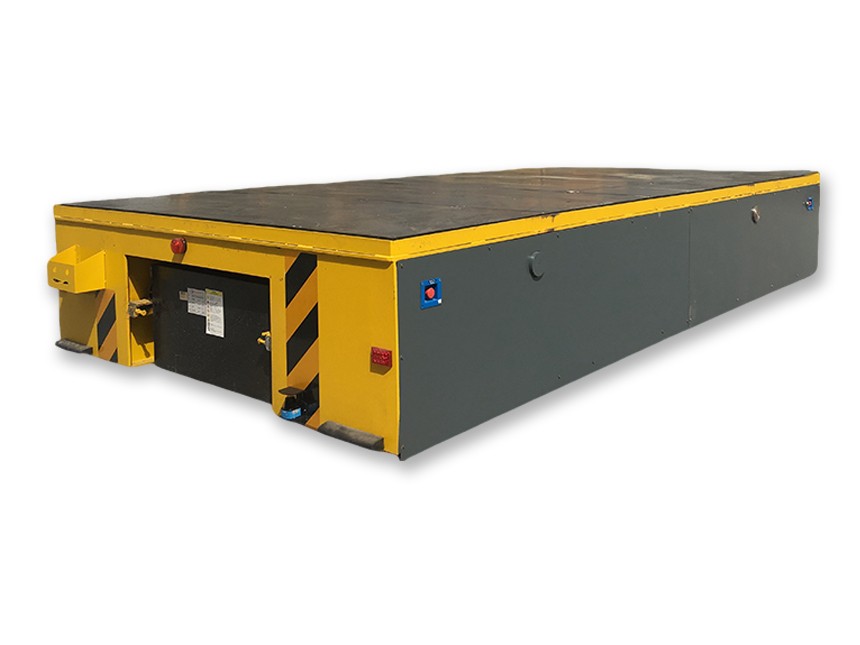
Steel manufacturing is one of the most demanding industrial environments in the world. Facilities face relentless pressure to move heavy raw materials — molten metal, steel coils, ingots, and fabricated components — across shop floors that span acres. Traditionally, these operations relied on manual forklifts, overhead cranes, and conveyor systems operated by skilled human workers navigating hazardous zones. As production volumes increase and safety regulations tighten, steel producers are turning to remote-controlled AGV carts to automate internal logistics with precision, consistency, and zero compromise on safety.
Steel plants present a uniquely challenging operating environment. High temperatures, heavy loads, toxic fumes, and confined spaces create risk factors that make manual material transport both costly and dangerous. Operations managers report that internal物流 (logistics) inefficiencies account for up to 25% of unplanned production downtime — fork trucks idle, routes get blocked, and crane availability becomes a bottleneck at critical casting or rolling stages.
Beyond downtime, labor costs in steel facilities are rising sharply, and turnover among certified forklift and overhead crane operators is a persistent problem. Plants need a solution that can operate reliably in Zones 2 and 22 classified hazardous areas, navigate dynamic obstacles, and integrate seamlessly with existing MES (Manufacturing Execution Systems) without major infrastructure overhaul.
Remote-controlled AGV carts designed for steel industry applications solve these challenges by combining rugged hardware with intelligent navigation software. Unlike conventional AGVs that follow fixed tracks or magnetic tapes, modern steel-grade AGV carts use laser LiDAR, inertial navigation, and vision-based obstacle detection to operate autonomously in semi-structured environments.
Key features that make these carts suitable for steel plant operations include:
A mid-sized integrated steel producer in Southeast Asia recently completed a phased deployment of 8 remote-controlled AGV carts across its hot-rolling mill and coil warehouse. The implementation followed a three-stage approach:
Phase 1 — Mapping and Simulation (Weeks 1–4): Engineers conducted 3D laser scanning of the entire shop floor to generate a digital twin. Using the digital twin, they simulated traffic flows, identified collision hotspots, and optimized cart routing before any hardware was installed.
Phase 2 — Pilot Zone (Weeks 5–10): Two AGV carts were deployed in the coil transfer zone between the rolling mill exit and the cooling line. The carts operated in mixed traffic alongside manual forklifts, with the remote monitoring dashboard in the control room providing real-time position and battery status data. Initial operations confirmed path-planning accuracy within ±5 cm.
Phase 3 — Full Fleet Rollout (Weeks 11–16): Six additional carts were commissioned across the slab yard, annealing shop, and dispatch warehouse. Integration with the plant's SAP ME system enabled automatic dispatch triggers — when a heat number was marked "ready for transfer" in SAP, the nearest available AGV cart was automatically assigned and routed to the pickup point.
The deployment delivered quantifiable results within the first six months of full operation:
The steel industry's shift toward remote-controlled AGV carts is not a matter of if, but when. Facilities that have completed deployments consistently report that the technology pays for itself within 18–24 months through labor savings and throughput gains alone — before accounting for incident reduction and compliance benefits.
For operations managers evaluating this transition, the critical success factors are: invest in detailed site mapping before deployment, prioritize fleet management software with MES/ERP integration, and select hardware rated for your specific hazardous area classification. Starting with a pilot zone rather than a facility-wide rollout dramatically reduces integration risk and provides operational learning that shapes the broader deployment.
Remote-controlled AGV carts are no longer a concept for the steel industry — they are a proven, commercially available solution that is reshaping how heavy manufacturing approaches internal logistics.
As steel producers face mounting pressure to improve safety, reduce costs, and increase throughput, remote-controlled AGV carts offer a practical, proven path forward. The deployment reviewed here demonstrates that with proper planning, phased implementation, and integration with existing plant systems, AGV technology can deliver measurable results in one of the most demanding industrial environments on earth. For facilities considering similar transformations, the evidence is clear: automated material handling is not a future aspiration — it is a present-day competitive necessity.