+86 183 3953 1958
中文
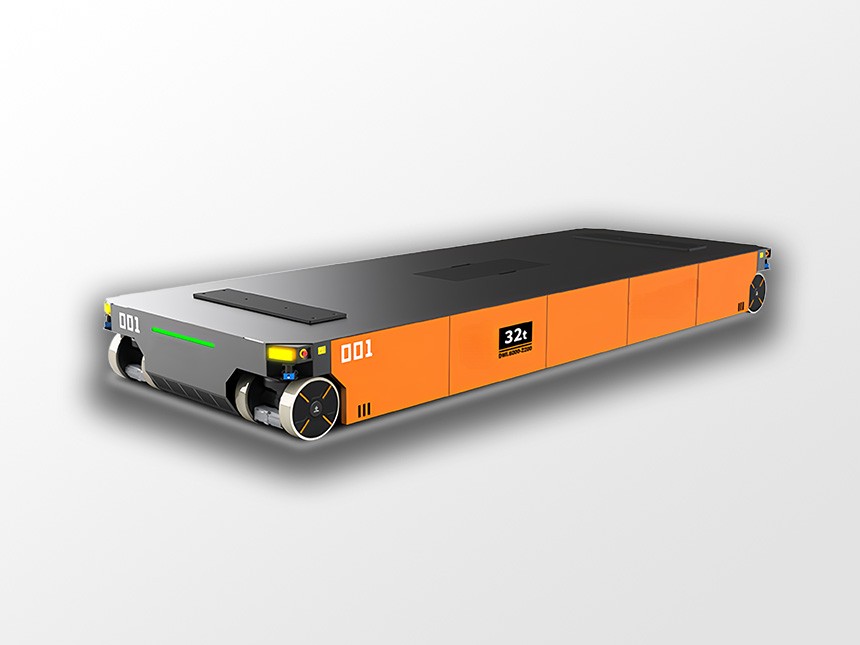
Industrial transport equipment encompasses the diverse range of machinery and systems used to move materials within manufacturing facilities, warehouses, distribution centers, and other industrial environments. This equipment ranges from simple manual carts to sophisticated automated systems, each designed for specific applications and operating conditions. Understanding the types of transport equipment available, their capabilities and limitations, and their suitability for different applications is essential for facility managers, engineers, and procurement professionals who are responsible for material handling system design and operation.
Industrial transport equipment can be categorized by its power source, operating mode, and application. The main categories include: manual transport equipment—carts, dollies, and hand trucks that rely on human power for movement, suitable for light loads and short distances; powered industrial trucks—forklifts, pallet jacks, and tow tractors that use internal combustion or electric motors for propulsion and lifting, suitable for medium to heavy loads; conveyors—belt conveyors, roller conveyors, and chain conveyors that move materials along fixed paths, suitable for high-volume, repetitive transport; overhead handling equipment—cranes, hoists, and monorails that move materials suspended from above, suitable for heavy loads and vertical transport; and automated guided vehicles (AGVs) and autonomous mobile robots (AMRs)—self-propelled vehicles that follow programmed paths or navigate autonomously, suitable for flexible, high-frequency transport.
Each type of equipment has distinct advantages and limitations. Manual equipment is low-cost and flexible but limited by operator strength and endurance. Powered trucks provide high capacity and speed but require trained operators and create safety hazards. Conveyors provide high throughput and reliability but lack flexibility and require significant infrastructure. Overhead equipment provides excellent utilization of vertical space but requires structural support and careful load handling. Automated vehicles provide consistent performance and labor savings but require significant capital investment and technical support. The selection of equipment type should be based on a thorough analysis of the application requirements and the operational environment.
The selection of industrial transport equipment requires systematic evaluation of multiple criteria. The primary selection criteria include: load characteristics—the weight, dimensions, shape, and fragility of the materials to be transported, which determine the required capacity and handling features; transport distance and frequency—the length of the transport path and the number of transport cycles per hour or shift, which determine the required speed and duty cycle; route characteristics—the floor conditions, grades, doorways, and obstacles along the transport path, which affect equipment maneuverability and power requirements; operational environment—temperature, humidity, contamination, and hazardous conditions that may require special equipment features; and integration requirements—the need for the transport equipment to interface with production equipment, storage systems, or facility management systems. Each criterion should be evaluated with specific values and requirements, not general assumptions.
The selection process should also consider future needs and growth. Equipment that meets today's requirements may be inadequate if production volumes increase, product mix changes, or facility layout evolves. Specifying equipment with 20-30% additional capacity provides headroom for growth without requiring premature replacement. However, over-specification should be avoided, as it increases cost and may reduce efficiency. The optimal specification balances current requirements with reasonable growth projections, providing adequate capacity without excessive over-design.
Electric transfer carts represent a versatile category of industrial transport equipment that bridges the gap between manual carts and fully automated systems. These carts use electric motors for propulsion, providing powered movement without the emissions, noise, and maintenance requirements of internal combustion engines. Electric transfer carts are available in a wide range of capacities, from a few hundred kilograms to hundreds of tons, and can be customized with features such as lift tables, roller conveyors, and specialized fixtures to meet specific application requirements.
The advantages of electric transfer carts include: clean operation—battery-powered carts produce no emissions, making them suitable for indoor use and clean environments; quiet operation—electric motors operate at lower noise levels than combustion engines, improving the work environment; low maintenance—electric drive systems have fewer moving parts than combustion engines, reducing maintenance requirements and costs; and precise control—electronic speed control and braking systems provide smooth, accurate movement that reduces load damage and improves safety. These advantages make electric transfer carts suitable for a wide range of applications, from light assembly operations to heavy material handling in steel mills and shipyards.
Safety is a critical consideration in the selection and operation of industrial transport equipment. Each type of equipment presents specific hazards that must be addressed through design features, operating procedures, and training programs. Common safety considerations include: operator protection—guards, interlocks, and emergency stop systems that protect operators from moving parts, falling loads, and collision hazards; pedestrian protection—warning devices, visibility features, and speed limitations that protect pedestrians who share the transport area with equipment; load security—features that prevent load shifting, falling, or damage during transport; and environmental protection—features that prevent equipment from causing damage to the facility, such as floor protection, wall guards, and collision avoidance systems. The safety evaluation should consider not only the equipment design but also the operational environment and the interaction between equipment and personnel.
Safety standards and regulations provide a framework for equipment design and operation. In the United States, OSHA regulations govern the operation of powered industrial trucks. In Europe, CE marking requirements ensure that equipment meets safety and health standards. And international standards such as ISO 3691 provide guidelines for the safety of industrial trucks. Compliance with applicable standards is not just a legal requirement; it is also a best practice that reduces accident risk and liability exposure. Buyers should verify that equipment meets relevant standards and that suppliers can provide documentation of compliance.
The reliability and maintainability of industrial transport equipment have a significant impact on operational efficiency and total cost of ownership. Equipment that is unreliable—frequent breakdowns, long repair times, or difficulty obtaining spare parts—creates production disruptions and maintenance costs that far exceed any purchase price savings. The evaluation of reliability and maintainability should include: design quality—the use of robust components, conservative design margins, and proven technology that reduces failure probability; parts availability—the supplier's ability to provide spare parts within acceptable timeframes, including critical components that may have long lead times; service support—the availability of qualified technicians who can perform maintenance and repairs, either on-site or at a service facility; and documentation quality—the completeness and accuracy of maintenance manuals, parts lists, and troubleshooting guides that enable effective maintenance by the buyer's staff.
Preventive maintenance programs are essential for maximizing equipment reliability and service life. These programs should include scheduled inspections, lubrication, adjustments, and component replacements based on operating hours, calendar time, or condition monitoring data. The maintenance program should be tailored to the equipment type, the operating environment, and the criticality of the equipment to production. Critical equipment—equipment whose failure would cause significant production loss—should receive more frequent and thorough maintenance than non-critical equipment. And the maintenance program should be continuously improved based on failure data, maintenance records, and operational experience.
Industrial transport equipment is evolving rapidly, driven by advances in automation, electrification, and digitalization. Key trends include: autonomous operation—AGVs and AMRs that navigate without fixed infrastructure, using laser guidance, vision systems, or natural feature navigation; battery technology—lithium-ion batteries that provide longer life, faster charging, and better performance than traditional lead-acid batteries; connectivity—equipment that communicates with facility management systems, providing real-time data on location, status, and performance; and predictive maintenance—condition monitoring systems that predict component failures before they occur, enabling maintenance to be scheduled at optimal times. These trends are transforming industrial transport from a mechanical function to an intelligent system that contributes to overall operational excellence.
The adoption of these technologies requires investment in infrastructure, training, and organizational change. Facilities that embrace these trends gain competitive advantages through improved efficiency, reduced costs, and enhanced flexibility. Facilities that lag in adoption may find themselves at a competitive disadvantage as customers and markets demand the responsiveness and quality that advanced transport systems enable. The strategic planning for industrial transport equipment should consider not just today's requirements but also the trajectory of technology development and the competitive landscape of the future.