+86 183 3953 1958
中文
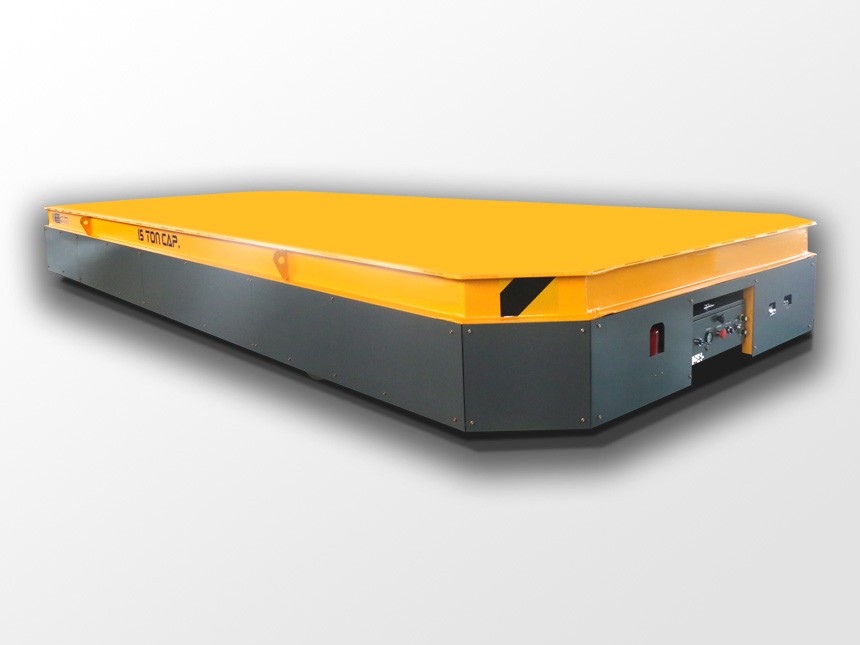
Choosing between OEM and standard transfer carts is one of the most consequential decisions in an AGV procurement project. It affects not just your upfront budget, but delivery timelines, integration complexity, long-term maintenance, and scalability. Yet many buyers delay this decision or make it based on price alone—only to face costly redesigns later. This guide breaks down exactly what distinguishes these two approaches and how to determine which aligns with your facility's real needs.
A standard transfer cart is a pre-engineered, off-the-shelf AGV platform designed to handle a defined range of payloads, environments, and workflows. Manufacturers typically offer standardized models in load-capacity tiers—500 kg, 1,000 kg, 2,000 kg, and above—with fixed navigation systems, battery configurations, and control interfaces.
The primary advantage of a standard transfer cart is predictability. Specifications are proven, lead times are typically 4–8 weeks, and spare parts are readily available. For facilities with conventional workflows—straight-line transfer, standard pallet handling, uncomplicated docking—a standard cart often delivers the best return on investment with the least engineering risk.
An OEM transfer cart is a custom-engineered solution built to a buyer's exact specifications. Every parameter—dimensions, load capacity, navigation technology (laser, magnetic tape, visual SLAM, or hybrid), communication protocols, safety systems, and accessory integration—is tailored to the target application and facility layout.
OEM carts are the preferred choice for complex production environments: cleanrooms, clean manufacturing lines, hazardous areas, and facilities with irregular routing or tight dimensional constraints. While the engineering investment is higher upfront, OEM carts often reduce total cost of ownership by eliminating the need for workarounds, additional handling equipment, or post-installation modifications.
Standard transfer carts are available in fixed capacity increments. If your payload falls neatly within a standard tier, this is straightforward. However, if your load is unconventional in weight, center of gravity, or physical dimensions, a standard cart may require a custom carriage or counterweight configuration—effectively negating the cost advantage.
Rule of thumb: For payloads within ±15% of a standard tier and standard pallet dimensions, choose a standard cart. Outside those ranges, evaluate OEM pricing before committing to a work-around.
Standard carts typically ship with one primary navigation method—often magnetic tape or fixed-path laser. This is sufficient for predictable, low-complexity routes but can be limiting in dynamic environments where carts need to avoid obstacles or reroute in real time.
OEM carts can integrate advanced navigation stacks from the outset: multi-sensor fusion, real-time SLAM, fleet management API integration. If your facility operates in a dynamic environment or plans to scale fleet size, this flexibility is worth the premium.
Consider your existing WMS, MES, or PLC infrastructure. Standard carts typically support common industrial protocols (Modbus, PROFINET, OPC-UA) but may have limited customization for proprietary systems. OEM carts are engineered with your specific integration architecture in mind, reducing commissioning time and troubleshooting overhead.
Ask your supplier: Does the cart's control system expose the API endpoints your software team needs? Can it report positional data to your fleet manager? If the answer requires work-arounds, factor that engineering cost in.
Temperature extremes, cleanroom requirements, explosive atmospheres (ATEX/IECEx zones), and washdown conditions all impose specific design constraints. Standard carts cover the typical industrial environment (0–40°C, IP54). If your facility operates outside these norms, OEM engineering for environmental sealing, material compatibility, and safety certification is non-negotiable.
Standard carts have a lower initial price, but evaluate the full lifecycle: maintenance frequency, spare parts availability, expected uptime over five years, and the cost of production losses if the cart goes down. OEM carts carry higher initial costs but often deliver superior uptime and lower per-year maintenance expense—especially in demanding applications.
Here is a framework to guide your evaluation:
| Factor | Standard Cart | OEM Cart |
|---|---|---|
| Upfront cost | Lower | Higher |
| Lead time | 4–8 weeks | 12–20+ weeks |
| Customization | Limited | Full |
| Integration effort | Moderate | Engineered from scratch |
| Spare parts | Off-the-shelf | May require custom fabrication |
| Best for | Standard workflows, budget-sensitive | Complex, mission-critical applications |
Choose a standard transfer cart if: Your workflow is linear and predictable, your payload fits standard specifications, your facility is a conventional industrial environment, your project timeline is tight, and integration is with mainstream WMS/MES platforms.
Choose an OEM transfer cart if: Your application involves non-standard payloads, multi-path or dynamic routing, integration with proprietary systems, demanding environmental conditions, or multi-site scalability requirements. The higher upfront investment is typically recovered within 18–36 months through reduced downtime and eliminated workarounds.
The choice between OEM and standard transfer carts is not a simple binary—it is a strategic decision that should be driven by your specific operational requirements, integration landscape, and long-term production roadmap. Request detailed proposals from both standard and OEM suppliers, map each specification against your actual application, and calculate total cost of ownership—not just purchase price. When in doubt, consult with an AGV specialist who can evaluate your facility layout and workflow data before you commit.
Ready to discuss your requirements? Our engineering team provides free application assessments for facilities evaluating AGV transfer solutions.