+86 183 3953 1958
中文
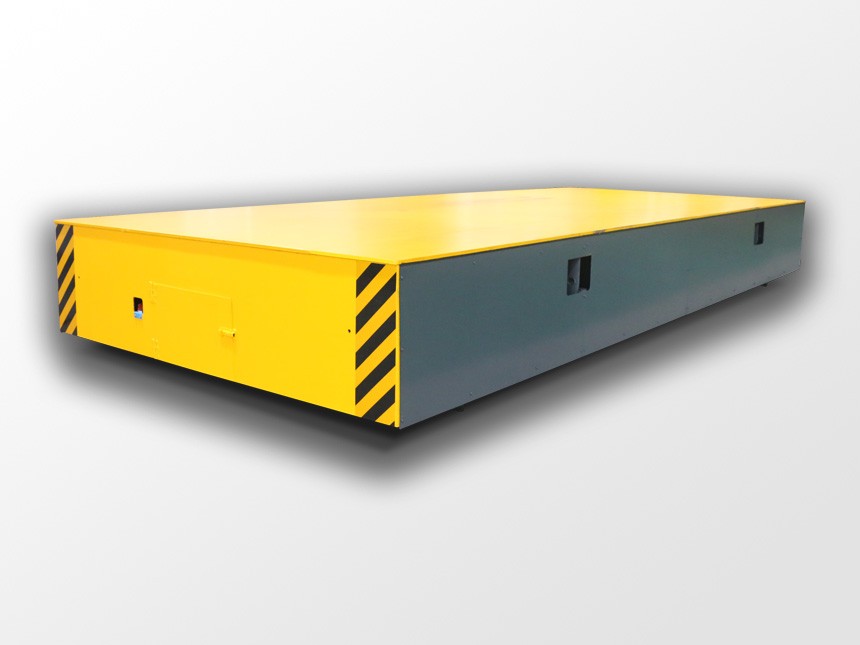
Automotive assembly has always been a demanding environment for material handling: high production volumes, tight production schedules, zero tolerance for production line stoppages, and continuous pressure to reduce cost. The automotive industry's approach to material handling has influenced industrial logistics broadly—many of the standard practices in material handling equipment design, fleet management, and supply chain integration originated in automotive manufacturing and migrated to other industries over time. Understanding how electric platform carts are being applied in automotive manufacturing provides insight into the leading edge of material handling practice.
Automotive final assembly lines operate on a just-in-time principle: components arrive at the line at the moment they are needed, in the quantity needed, from the source needed. The consequence of this discipline is that any variation in component supply—late delivery, wrong quantity, wrong sequence—immediately disrupts the assembly sequence. For material handling equipment serving the line, this means the primary performance requirement is reliability and predictability, not raw throughput capacity.
The transition from traditional forklifts to electric platform carts for line-side delivery in automotive assembly has been driven primarily by the reliability and predictability advantage of electric drive. Electric platform carts provide consistent, repeatable performance that is not affected by the engine performance variations that affect internal combustion equipment in varying temperature conditions. The absence of exhaust emissions is also important in the tightly climate-controlled environments of modern automotive assembly plants. The carts operate on fixed delivery routes programmed into the cart's control system, with each stop triggered by the production line's actual consumption rather than by a fixed schedule, implementing true demand-pull delivery at the assembly line level.
The body shop in an automotive assembly plant presents the most demanding material handling environment in the plant: the heaviest payloads, the largest components, and the tightest positioning requirements. Body shop components—welded body-in-white structures, door assemblies, hood assemblies, and decklid assemblies—are large, rigid, and require positioning accuracy measured in millimeters at the assembly stations. The body shop environment is also one of the harshest in the plant: heavy welding equipment creates electrical interference, floor surfaces are contaminated with welding spatter and grinding residue, and ambient temperatures near welding operations are elevated.
Electric platform carts serving the body shop are typically heavy-capacity units rated for 5,000-15,000 kg, with precision electronic steering that provides positioning accuracy of ±2mm at the target station. The independent wheel drive system on these carts provides smooth, controlled acceleration that reduces the dynamic loads on the body structures during transport—important for maintaining the dimensional accuracy of the precisely fixtured assemblies. The carts are equipped with wireless communication systems that integrate with the plant's manufacturing execution system, receiving delivery instructions and sending status updates in real time, and providing the production management system with accurate information about material flow through the body shop.
The paint shop in an automotive assembly plant requires the most stringent air quality control of any area in the plant. Paint booth airflow is precisely controlled to capture overspray and maintain the clean conditions required for high-quality paint application. Any source of particulate contamination or air quality variation in the paint shop affects paint quality directly. Diesel or propane-powered material handling equipment in the paint shop creates particulate emissions that contaminate the paint booth environment, even when the equipment is operating in adjacent areas with separate ventilation.
Electric platform carts have become the standard for all material handling in and adjacent to automotive paint shops, replacing internal combustion equipment that required additional exhaust filtration systems or separate ventilation zones. The electric carts eliminate the particulate source entirely and produce no exhaust gases that could affect paint booth air quality. Battery technology has advanced to the point where a single charge provides enough capacity for a full production shift in most paint shop applications, with opportunity charging during breaks sufficient to maintain charge levels through continuous operation. The thermal management systems in modern electric carts also perform better in the variable temperature conditions of paint shop environments than equipment not designed for these conditions.
The parts sequencing center in an automotive plant receives components from suppliers and prepares them for delivery to the assembly line in the specific sequence that the production schedule requires. This operation combines high product variety—the sequencing center may handle thousands of different part numbers—with high delivery frequency, where each component must arrive at the line at a specific time in a specific quantity. The material handling equipment serving the sequencing center must accommodate this high-mix, high-frequency pattern without errors.
Electric platform carts equipped with automated guided system technology—wire guidance, vision-based navigation, or magnetic tape guidance—operate continuously in sequencing center applications, running fixed routes between the sequencing area and the assembly line delivery points. The automated guidance eliminates the variability in operator driving that creates positioning errors and timing inconsistencies in manually operated carts. Route scheduling software dynamically adjusts delivery timing based on the actual production line speed, ensuring that components arrive at the line at the scheduled moment regardless of variations in line speed during the shift. The integration between the cart fleet management system and the production scheduling system means that when the production schedule changes—as it frequently does in automotive manufacturing—the delivery routes and timing are updated automatically.
Engine assembly operations in automotive manufacturing require clean room conditions for many of the assembly processes, with air quality specifications that preclude internal combustion equipment operation inside the assembly area. Engine short blocks and major subassemblies are among the heaviest payloads handled in automotive manufacturing—individual components can weigh hundreds of kilograms—and require material handling equipment that can both meet the clean room requirements and handle the heavy loads that engine assembly involves.
Electric platform carts designed for clean room engine assembly applications feature sealed motor and control enclosures, stainless steel construction without crevices that could accumulate contamination, and battery systems that can be charged outside the clean room with the cart positioned so that the charging connection does not breach the clean room boundary. The carts operate on routes that are physically separated from areas with higher particulate levels, and air filtration systems on the carts maintain positive pressure inside the electrical enclosures to prevent contamination ingress. Positioning accuracy at the assembly stations is maintained through the same electronic steering technology used in body shop applications, ensuring that heavy engine components are delivered to precise locations for automated and manual assembly processes.
The common thread across these automotive applications is not specific equipment or technology but a principle: material handling equipment is integrated into the production process rather than operating independently of it. The electric platform carts in automotive manufacturing are not separate from the production system—they are nodes in the production network, receiving instructions from and reporting status to the production management system, operating on routes optimized by the production scheduling system, and delivering materials timed to the production line's actual consumption rather than to a fixed transport schedule. This integration is what makes the automotive industry's material handling performance possible, and it is available to any facility willing to invest in the information system integration that enables it.