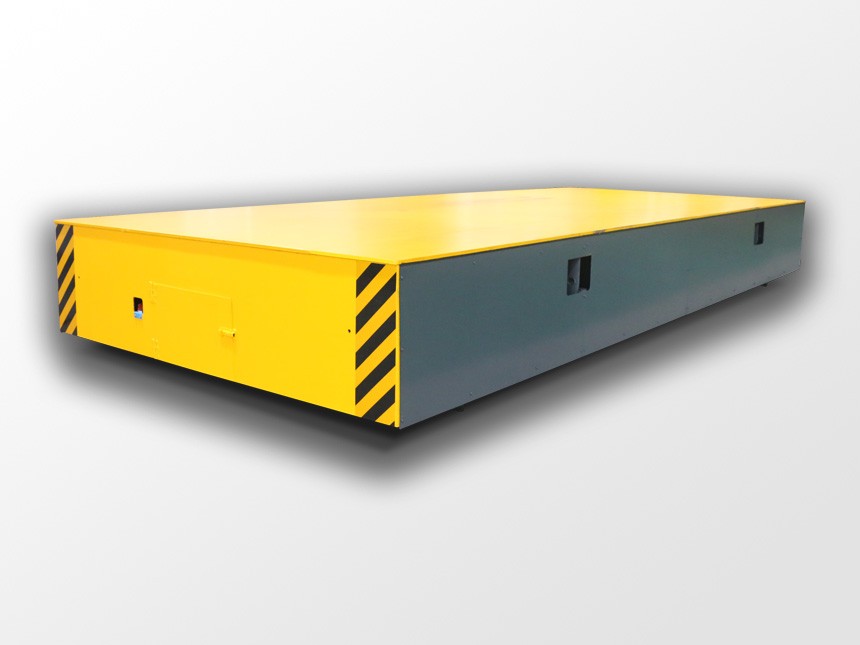
How to Build a Custom Transfer Cart System
Off-the-shelf transfer carts work for standard loads and routes. But when your operation has unique requirements — unusual dimensions, harsh environments, or integration with existing automation — custom is the only path. Building a custom system isn't just about welding a frame and adding wheels. It requires understanding your workflow, specifying precisely, and managing the build process.
Define the Problem First
Before contacting any manufacturer, document your actual needs:
- Load specifications: Weight, dimensions, center of gravity, fragility
- Route details: Distance, turns, slopes, floor conditions
- Operating environment: Temperature, humidity, dust, chemicals, explosion risk
- Integration points: How does the cart connect to production equipment?
- Performance requirements: Speed, acceleration, stopping precision, cycle time
- Operator interface: Manual control, remote, fully autonomous, or mixed?
Vague requirements produce expensive disappointments. We've seen customers request "a heavy-duty cart" and receive equipment rated for 10 tons when they actually move 25-ton loads. Precision in specification prevents costly rework.
Choose the Right Partner
Not every manufacturer handles custom work. Look for:
- Engineering capability: In-house design team, not just assembly
- Similar project experience: Have they built for your industry and load range?
- Prototyping process: Do they build and test prototypes before production?
- Certification support: Can they provide CE, ISO, or industry-specific certifications?
- After-sales infrastructure: Spare parts, technical support, field service
Ask for references from similar custom projects. Visit if possible. A factory tour reveals more than any brochure.
The Design Phase
Expect this sequence:
- Requirements review: Engineer validates your specifications, asks clarifying questions
- Concept design: Preliminary drawings and 3D models for approval
- Detailed engineering: Final drawings, BOM, electrical schematics, control logic
- Prototype build: Single unit for testing and validation
- Test protocol: Load testing, endurance runs, integration trials
- Production: Manufacturing of final units
Each phase requires your sign-off. Don't rush. Changes after production starts are exponentially more expensive.
Critical Design Decisions
Frame and Structure
Steel grade matters. Q235 is standard and cost-effective. Q345 handles higher stress. For extreme loads or fatigue cycles, consider alloy steels. Weld quality is non-negotiable — specify welding standards (ISO 3834, AWS D1.1) and require weld inspection reports.
Drive System
Options include:
- DC motor + gearbox: Simple, proven, cost-effective for most applications
- AC motor + VFD: Better speed control, regenerative braking, higher efficiency
- Servo motor: Precision positioning, dynamic response, higher cost
- Hydraulic drive: Extreme torque, smooth acceleration, maintenance-intensive
Match the drive to your precision and performance needs, not just the load weight.
Power Supply
Battery (lead-acid or lithium), cable reel, sliding contact line, or induction power. Each has trade-offs in range, maintenance, infrastructure cost, and operational flexibility. Lithium batteries cost more upfront but deliver lower total cost of ownership for high-utilization applications.
Control System
From simple relay logic to PLC-based systems with HMI touchscreens. Specify:
- Control modes (manual, semi-auto, automatic)
- Safety functions (emergency stop, collision avoidance, load detection)
- Communication protocols (Modbus, Profinet, EtherCAT for integration)
- Data logging and diagnostics capability
Testing and Acceptance
Define acceptance criteria before build:
- Load test at 125% rated capacity
- Endurance run (typically 8-24 hours continuous operation)
- Precision test (stop accuracy, repeatability)
- Environmental test (if applicable — high/low temperature, dust)
- Integration test with your equipment
Witness testing at the factory if possible. It's cheaper to find problems there than after delivery.
Budget Reality
Custom systems cost 2-5× standard equivalents. Budget for:
- Engineering and design (15-25% of total)
- Prototype build and testing (10-20%)
- Production units (50-60%)
- Spare parts and tooling (5-10%)
- Installation and commissioning support
Resist the temptation to cut engineering costs. Good design prevents expensive problems later.
Conclusion
Building a custom transfer cart system is a significant investment that pays off when standard equipment can't meet your needs. Success depends on precise requirements, the right manufacturing partner, disciplined design review, and rigorous testing. Treat it as a collaborative engineering project, not a simple purchase, and you'll get equipment that fits your operation perfectly.