+86 183 3953 1958
中文
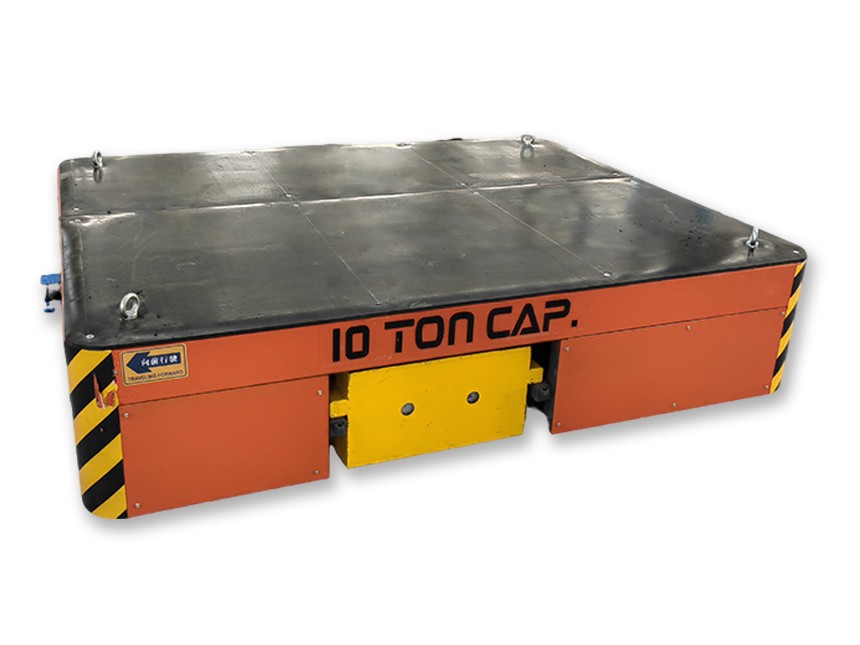
Electric flatbed carts and automated guided vehicles (AGVs) are both used to solve the same fundamental problem: moving materials through a facility without manual labor. But they approach the problem from fundamentally different directions, and understanding these differences is essential for selecting the right technology for a specific application. An electric flatbed cart is a manually controlled or semi-automated transport vehicle that is operated by a human or by a simple control system. An AGV is a fully automated transport vehicle that navigates autonomously through the facility without human intervention. The choice between these technologies is not simply a matter of selecting the more advanced option; it is a matter of matching the technology to the application's requirements, constraints, and economic justification.
The most fundamental difference between electric flatbed carts and AGVs is the control philosophy. Electric flatbed carts are operator-centric: a person makes the decisions about when to move, where to move, and how to navigate around obstacles. The cart provides the motive power, but the intelligence—the decision-making—is human. AGVs are system-centric: a central control system or on-board computer makes the decisions about routing, scheduling, and obstacle avoidance. The AGV provides both the motive power and the intelligence, and the human role is reduced to monitoring and exception handling.
This difference in control philosophy has profound implications for the applications where each technology is appropriate. Electric flatbed carts excel in applications where the transport requirements are variable, where routes change frequently, and where the transport tasks require judgment that is difficult to automate. AGVs excel in applications where the transport requirements are predictable, where routes are stable, and where the volume of transport is high enough to justify the investment in automation infrastructure. A facility with highly variable transport requirements and low volume may find that electric flatbed carts are more cost-effective than AGVs, even though AGVs represent more advanced technology.
AGVs navigate using fixed guidance systems—magnetic tape, laser reflectors, vision systems, or pre-mapped routes—that define the vehicle's path through the facility. The AGV follows this path automatically, and deviations from the path are treated as errors that trigger corrective action. This fixed-path navigation provides precise, repeatable positioning that is essential for applications where the AGV must interface with automated equipment—loading and unloading at fixed stations, for example. But it also means that changing an AGV's route requires modifying the guidance infrastructure, which can be expensive and time-consuming.
Electric flatbed carts navigate using human judgment or simple sensor systems. A human operator can navigate around obstacles, adjust to changing conditions, and take alternative routes without any infrastructure modification. This free-movement navigation provides flexibility that AGVs cannot match, but it also means that the positioning accuracy and repeatability are lower than AGVs can achieve. For applications where precise positioning is not required—transporting materials between areas where exact positioning is not critical—the flexibility of electric flatbed carts may be more valuable than the precision of AGVs.
The cost structure of electric flatbed carts and AGVs differs significantly, and this difference affects the economic justification for each technology. Electric flatbed carts have a lower capital cost—a basic electric flatbed cart costs significantly less than a basic AGV—but they have higher operating costs because they require human operators. AGVs have a higher capital cost—the vehicle itself is more expensive, and the navigation infrastructure adds additional cost—but they have lower operating costs because they do not require operators for normal operation.
The economic crossover point—the application volume at which AGVs become more cost-effective than electric flatbed carts—depends on the specific cost parameters: the labor cost for operators, the cost of the AGV and its infrastructure, the operating hours per year, and the cost of downtime from equipment failures. For facilities in high-labor-cost regions, the crossover point occurs at lower transport volumes. For facilities in low-labor-cost regions, the crossover point occurs at higher transport volumes. A detailed economic analysis that accounts for all cost components over the equipment's life is necessary to determine which technology is more cost-effective for a specific application.
Electric flatbed carts are inherently more flexible than AGVs because they do not require fixed infrastructure. Adding a new transport route with electric flatbed carts requires only training an operator on the new route. Adding a new transport route with AGVs requires installing new guidance infrastructure, updating the control system software, and validating the new route. This flexibility advantage makes electric flatbed carts more suitable for facilities with changing layouts, variable production schedules, and frequent new product introductions.
AGVs are more scalable than electric flatbed carts in high-volume applications because adding capacity requires only adding vehicles to the existing infrastructure. The navigation infrastructure—the magnetic tape, laser reflectors, or vision system—is shared among all AGVs in the fleet, so the marginal cost of adding an AGV is lower than the cost of the first AGV. Electric flatbed carts do not share infrastructure in the same way—each cart requires its own operator, and adding capacity requires adding both carts and operators. For facilities that anticipate significant growth in transport volume, AGVs may provide better scalability despite their higher initial cost.
AGVs are designed to integrate with other automated systems—production scheduling systems, warehouse management systems, and building management systems—and this integration is one of their primary value propositions. An AGV fleet can receive transport orders directly from the production scheduling system, execute the transport autonomously, and report completion back to the scheduling system without human intervention. This integration enables fully automated material flow that responds dynamically to production requirements.
Electric flatbed carts can also integrate with other systems, but the integration is less direct. A production scheduling system can generate transport orders that are communicated to cart operators through a mobile device or a terminal, and the operators execute the transport manually. This human-in-the-loop integration provides less automation than AGV integration but may be adequate for applications where full automation is not required or where the cost of full automation is not justified. The choice between AGV and electric flatbed cart integration depends on the level of automation required and the economic justification for that level of automation.