+86 183 3953 1958
中文
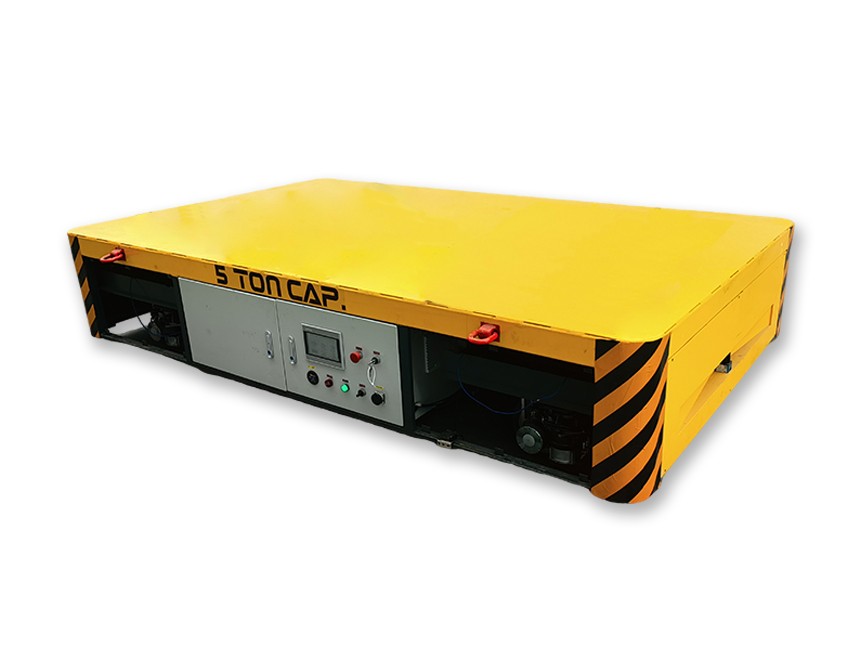
Electric flatbed carts have become essential material handling equipment in modern manufacturing, evolving from simple battery-powered platforms to sophisticated transport systems that integrate with production management systems. Their flat, open platform design—without sides, bins, or specialized fixtures—makes them adaptable to a wide range of load types, from raw material sheets and fabric rolls to semi-assembled components and finished products. This versatility has driven their adoption across industries where flexibility and reliability in internal transport matter more than specialized handling features.
A steel service center processes custom orders from steel coils and sheets, cutting and forming materials to customer specifications. The operation involves frequent moves of heavy steel plates and coils between storage areas, cutting equipment, and loading docks. Forklifts had been the primary transport equipment but created congestion at the loading docks—forklifts needed significant maneuvering space and could not operate safely near the dock doors during active truck loading operations.
Electric flatbed carts with heavy-duty load ratings replaced forklifts for internal steel transport. The carts operated on fixed routes between the cutting area and storage, with dock-side carts dedicated to the loading dock zone and loaded only during planned loading breaks to eliminate the safety conflict with active dock operations. The carts' low profile and precise steering control allowed them to position steel loads at the correct height for the customer's delivery truck without the space requirements of forklift maneuvering. Throughput at the loading dock increased by 20%, and the switch eliminated the safety incidents that had occurred when forklifts operated in the confined loading dock space.
An aerospace structures manufacturer assembling wing components for commercial aircraft required internal transport of large composite panels and aluminum structural sections. The components were too large and too valuable for standard carts, requiring custom handling solutions that were expensive and took months to manufacture. Production delays were occurring because component transport equipment was not keeping pace with assembly throughput requirements.
The facility deployed electric flatbed carts with modular load-securing systems—removable clamping fixtures, adjustable support cradles, and integrated tie-down points that could be repositioned for different component geometries. One cart with multiple fixture configurations replaced the need for several custom carts serving different component types. The modular system allowed rapid changeover between component types without tools, reducing the changeover time for transport equipment from hours to under 15 minutes. Component delivery reliability to the assembly line improved from 78% on-time to 97%, and the investment in modular carts was less than half the cost of equivalent custom cart solutions.
An automotive stamping plant producing body panels for two assembly plants experienced bottlenecks in the die change process. Stamping dies—each weighing several tons and requiring precise positioning in the press—were transported using overhead cranes, which required dedicated operators and created scheduling constraints: crane availability determined die change timing, which in turn affected press utilization.
Heavy-capacity electric flatbed carts replaced overhead cranes for die transport between the die storage area and the press line. Each cart was equipped with die-specific positioning fixtures that allowed the die to be loaded at the storage area and transported directly to the press without intermediate repositioning. Press operators could manage die changes independently without crane scheduling coordination, reducing average die change time from 45 minutes to 22 minutes. Press utilization increased by 12 percentage points across the press line, and the production capacity freed by faster die changes was equivalent to adding a new press without the capital investment.
A pharmaceutical manufacturer producing sterile injectable drugs required transport of loaded and empty pallets and bulk containers between production areas and the warehouse. The facility operated under cleanroom protocols that restricted vehicle traffic in classified areas, with material transport permitted only during defined production pauses when area classifications could be temporarily downgraded.
Electric flatbed carts designed for cleanroom environments—smooth surfaces without crevices that could harbor contamination, sealed wheel assemblies that prevent particulate generation, and battery systems that eliminate exhaust emissions—provided the transport capability the production protocol required. The carts' battery operation meant they could enter the cleanroom zones during permitted periods without the air quality concerns that combustion equipment would create. Transport scheduling was integrated with the production scheduling system so that material movements occurred only during the permitted time windows, eliminating the protocol violations that had occurred with the previous less-integrated transport approach.
A custom cabinet manufacturer producing made-to-order residential cabinetry faced the challenge of transporting oversized, irregular-shaped cabinet components through a production facility with multiple process steps. Components varied significantly in size between orders, making fixed-dimension transport equipment inefficient for the variety of loads.
Electric flatbed carts with adjustable load supports and a powered roller conveyor surface allowed the facility to handle the load variety efficiently. Components of any size placed on the cart could be secured with adjustable stops and supports, while the roller surface enabled powered loading and unloading without forklifts or additional equipment. The versatility of the cart system allowed the facility to handle 30% more daily orders with the same floor space and a reduced total equipment count compared to the previous approach of multiple specialized carts plus forklifts.
The common factor in these cases is that the flatbed design—without constraints on load dimensions or geometry—provided the flexibility needed to handle diverse load types efficiently. Combined with electric drive for clean, quiet operation and precise control for accurate positioning, the flatbed cart platform adapts to applications where specialized equipment would be too expensive or too inflexible. As manufacturing continues to trend toward higher product variety and smaller batch sizes, this flexibility advantage becomes increasingly valuable.