+86 183 3953 1958
中文
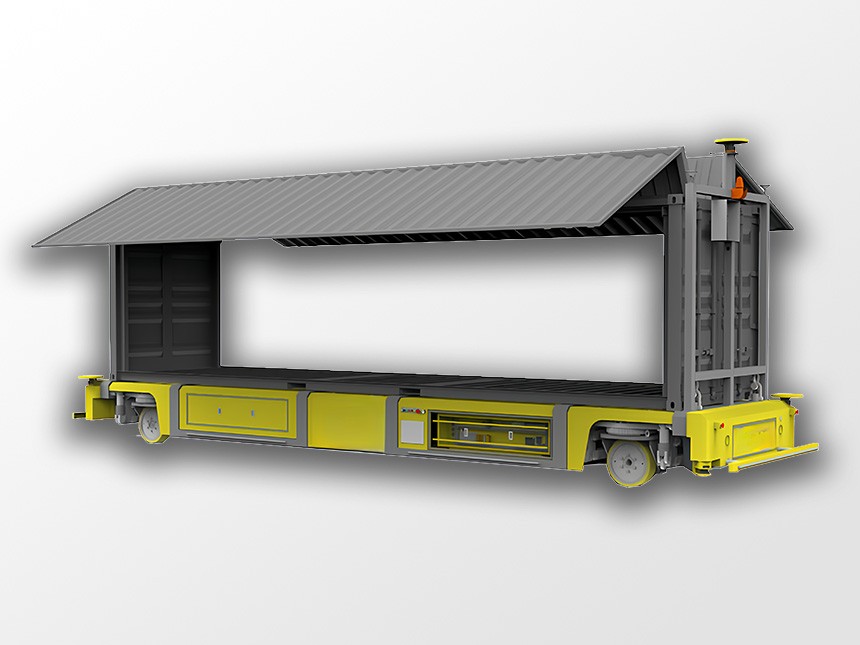
When a factory needs to move materials between workstations, two equipment categories typically surface in the evaluation: conveyor systems and electric platform carts. They solve the same problem—moving things from A to B—but they represent opposite philosophies. A conveyor says "the path is fixed, so optimize for throughput." A cart says "the path may change, so optimize for flexibility." Choosing between them means understanding not just your current material flow, but how likely that flow is to change over the next decade.
This comparison examines the practical trade-offs between the two approaches across the dimensions that matter for operational decisions.
Conveyors are infrastructure. Installing a roller, belt, or chain conveyor system requires: structural mounting to the floor or overhead supports, power distribution along the entire conveyor path, control system integration with PLCs and sensors, and physical space that is permanently dedicated to the conveyor footprint. A 50-meter conveyor line in a factory represents a commitment—it cannot be cheaply moved, shortened, or reconfigured. Installation typically takes 2–6 weeks with production disruption at installation points. The upfront cost for a powered roller conveyor system ranges from $300 to $800 per linear meter depending on width, load capacity, and control complexity.
An electric platform cart requires virtually no infrastructure. It arrives on a flatbed truck, is driven off under its own power, and begins operating on the existing floor surface. There is no installation—commissioning consists of charging the battery, verifying controls, and potentially programming speed limits or route constraints in the controller. A cart can be operational within hours of delivery. The floor surface must be flat and rated for the combined weight of the cart and load, but this is the same requirement that would apply to a conveyor system's load path. For facilities with existing smooth concrete floors, the infrastructure cost of deploying an electric cart rounds to zero dollars.
This is where the philosophies diverge most dramatically.
A conveyor system serves exactly the route it was designed for. If production layout changes—a new machine is added between two existing stations, or product flow is rerouted—the conveyor must be physically modified. This means downtime, engineering cost, and potentially new control programming. For facilities with stable production processes that haven't changed in 5+ years, conveyor rigidity is a non-issue. For facilities that reconfigure annually or introduce new product lines regularly, conveyor rigidity becomes an expensive constraint on operational flexibility.
An electric platform cart follows whatever path the operator chooses, on whatever schedule the production plan requires. The same cart that moves steel coils from receiving to the press line in the morning can move finished assemblies from the press line to quality inspection in the afternoon. Changing the route requires zero modification—the operator simply drives a different path. This makes carts ideal for: multi-product facilities where material flow varies by product, factories with seasonal production changes, operations where the cart serves multiple workstations on an as-needed basis, and facilities that expect layout changes within the equipment's lifespan.
Conveyors win on sustained, high-volume throughput. A conveyor running at 15 meters per minute with parts spaced every 2 meters delivers 450 parts per hour continuously, with zero operator attention between loading and unloading. There is no travel-back time, no battery charging downtime, no operator variability. For production lines where the same part moves along the same path at a consistent cadence all day, every day, conveyors are unmatched on throughput per dollar of equipment cost.
An electric cart's cycle time includes: load time at origin, travel time to destination (typically 20–40 meters per minute depending on load and safety settings), unload time at destination, and return travel time to origin. For a 100-meter round trip at 30 m/min with 2 minutes of load/unload time, a cart completes approximately 6–8 cycles per hour. This is adequate for batch production, intermittent transport, and applications where the cart serves multiple stations—but it does not compete with a conveyor on parts-per-hour for continuous single-path transport.
Conveyor costs are front-loaded: high initial purchase and installation cost, relatively low ongoing operating cost. Maintenance is primarily mechanical—roller bearing replacement, belt tension adjustment, motor service—and is typically performed on a preventive schedule. A well-maintained conveyor system has a service life of 15–20 years. However, when the conveyor reaches end-of-life or the facility layout changes, removal cost is significant—dismantling a 50-meter conveyor line with power distribution costs nearly as much as installation. Conveyor salvage value is near zero; it is demolition and scrap, not asset recovery.
Cart costs are spread more evenly: moderate purchase price, very low installation cost, moderate ongoing costs (battery replacement every 3–5 years for lead-acid, 7–10 years for lithium, plus occasional motor and controller service). An electric cart's service life is 10–15 years with proper maintenance. When the cart reaches end-of-life or is replaced, it has residual value—a used electric cart in working condition typically recovers 20–30% of purchase price on the secondary market. When a cart is no longer needed at one facility, it can be sold or transferred to another facility—a conveyor cannot.
Conveyors present a specific safety profile: pinch points at rollers and drive mechanisms requiring guarding, the risk of entanglement with rotating parts, and the need for emergency stop cables or buttons along the entire conveyor length. OSHA and ISO conveyor safety standards mandate fixed guarding, emergency stop accessibility at regular intervals, and lockout/tagout procedures for maintenance. These requirements add to the conveyor's footprint and installation cost but are well-established and straightforward to implement.
Electric platform carts introduce different safety considerations: collision risk with personnel, equipment, and infrastructure, load stability during acceleration and deceleration, operator visibility (especially with large loads that obstruct the operator's view), and the need for audible and visual warning devices. Modern carts address these through obstacle detection sensors, automatic speed reduction in designated zones, emergency stop buttons accessible from multiple positions, and load securing fixtures. The safety advantage of a cart is that it stops moving when not in use—a conveyor that is powered on presents continuous hazards along its entire length.
Choose a conveyor system when: the material flow path is permanent and unlikely to change for at least 10 years, throughput exceeds 200 units per hour on a single dedicated path, the product is consistent in size and weight, and the facility layout has dedicated space for fixed material handling infrastructure.
Choose an electric platform cart when: material flow paths vary by product or shift, the cart needs to serve multiple origin/destination pairs, the facility layout changes periodically, throughput requirements are batch-oriented rather than continuous (under approximately 15 cycles per hour per cart), infrastructure modification is difficult or expensive (leased facilities, historic buildings), or the cart needs to operate outdoors as well as indoors.
In many modern factories, the decision is not "cart or conveyor"—it's "conveyor for the high-volume backbone, carts for the variable last-mile connections between the conveyor system and individual workstations." Understanding which category your current material flow falls into is the first step toward the right equipment decision.