+86 183 3953 1958
中文
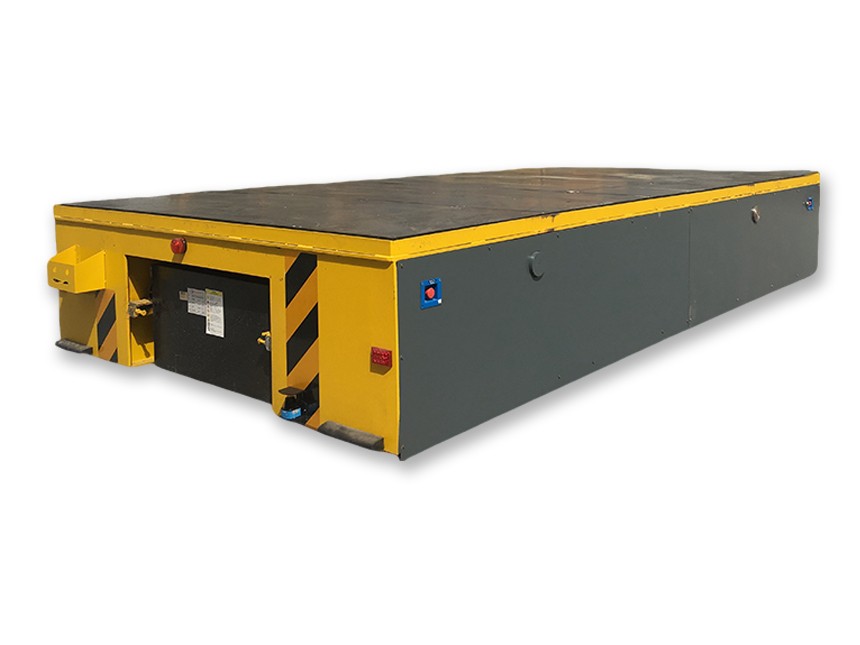
The history of material handling equipment is a history of human ingenuity applied to the fundamental problem of moving materials from where they are to where they need to be. From the earliest human-powered carts and pulleys to today's autonomous robotic systems, the evolution of material handling technology reflects the broader evolution of industrial civilization: the substitution of mechanical power for human muscle, the substitution of automated control for human judgment, and the continuous pursuit of greater efficiency, safety, and reliability. Understanding this evolution provides context for evaluating current technologies and anticipating future developments in the material handling industry.
Before the industrial revolution, material handling was entirely dependent on human and animal power. Workers carried materials by hand, pushed wheelbarrows, or used simple mechanical devices—levers, pulleys, and inclined planes—to reduce the physical effort required. These methods were slow, labor-intensive, and limited by the physical capacity of the workers. A single worker could move only a few hundred kilograms per hour over short distances, and the risk of injury from lifting and carrying heavy loads was high. The productivity of material handling operations was fundamentally constrained by human physiology, and the cost of material handling was a significant component of total production cost in any industry that required the movement of raw materials or finished goods.
The limitations of human-powered material handling created strong economic incentives for mechanization. As manufacturing operations grew in scale, the cost of manual material handling became an increasingly significant barrier to productivity improvement. The industrial revolution provided the technological foundation for addressing this barrier: steam power, and later electric power, made it possible to substitute mechanical energy for human muscle, dramatically increasing the capacity and speed of material handling operations.
The industrial revolution transformed material handling through the introduction of mechanized systems powered by steam engines. Conveyor belts, powered by steam-driven machinery, enabled continuous material flow that was impossible with manual handling. Overhead cranes, powered by steam hoists, made it possible to lift loads that were far beyond human capacity. Rail-mounted carts, pulled by steam locomotives or cable systems, enabled the movement of heavy loads over long distances within factories and mines. These mechanized systems increased material handling productivity by orders of magnitude, reducing the labor required per unit of material moved and enabling manufacturing operations to scale to previously impossible levels.
The steam-powered material handling systems of the industrial revolution established design principles that continue to influence modern equipment. The overhead crane, with its bridge spanning the work area and its trolley moving along the bridge, remains the dominant design for heavy lifting in manufacturing facilities. The rail-mounted cart, with its guided movement along fixed tracks, remains a common design for heavy transport in facilities with stable routes. These design principles—bridge and trolley for overhead cranes, rail guidance for transport carts—were developed in the 19th century and have been refined rather than replaced by subsequent technological advances.
The electrification of material handling equipment in the late 19th and early 20th centuries enabled a new level of precision control and made indoor operation practical. Electric motors provided smooth, controllable power that was cleaner and quieter than steam engines, making material handling equipment suitable for use in enclosed manufacturing facilities. Electric overhead cranes with precise motor control could position loads with accuracy that was impossible with steam hoists. Electric transfer carts could start, stop, and reverse with precision that was impossible with cable-pulled systems. The electric era transformed material handling from a rough, noisy, outdoor activity into a refined, controlled, indoor process that could be integrated with precision manufacturing operations.
The introduction of electric forklifts in the early 20th century was a particularly significant development. Forklifts combined vertical lifting capability with horizontal mobility, enabling a single piece of equipment to handle the full range of material handling tasks in a warehouse or manufacturing facility. The forklift's ability to lift, transport, and place loads without requiring fixed infrastructure—rails, conveyors, or cranes—made it the most versatile material handling equipment ever developed. The forklift remains the dominant material handling equipment in warehouses and distribution centers today, a century after its introduction, testament to the fundamental soundness of its design.
The most recent phase in the evolution of material handling equipment is the transition from mechanization to automation. Automated guided vehicles (AGVs), introduced in the 1950s for manufacturing applications, represented the first step in this transition: vehicles that could follow fixed guidance paths without operator control. The AGV's navigation technology—magnetic tape, laser reflectors, or vision systems—enabled automated transport along predefined routes, reducing labor requirements and improving transport consistency. But AGVs were limited by their fixed guidance infrastructure; they could not adapt to changing routes or respond to unexpected obstacles without human intervention.
The development of autonomous mobile robots (AMRs) in the 2010s represented a significant advance in material handling automation. AMRs use sensor-based navigation—lidar, cameras, and ultrasonic sensors—to navigate autonomously without fixed guidance infrastructure. They can plan routes dynamically, avoid obstacles in real time, and coordinate with other AMRs in the same space. This autonomy enables AMRs to operate in dynamic environments where AGVs cannot, and to adapt to changing facility layouts without infrastructure modification. The AMR represents the current state of the art in material handling automation, and its capabilities are continuing to improve as sensor technology, artificial intelligence, and computing power advance.
The future evolution of material handling equipment will be shaped by three converging trends: intelligence, integration, and sustainability. Intelligence—the application of artificial intelligence and machine learning to material handling operations—will enable equipment that can optimize its own performance, predict maintenance needs, and coordinate with other equipment in ways that are not possible with current control systems. Integration—the connection of material handling equipment with broader production and logistics systems—will enable material flow that responds dynamically to demand signals, production schedules, and supply chain conditions. Sustainability—the reduction of environmental impact through energy efficiency, emissions reduction, and circular economy principles—will become an increasingly important selection criterion as regulatory pressure and customer expectations increase.
The material handling equipment of the future will be intelligent, connected, and sustainable. It will operate autonomously, coordinate with other equipment and systems, and optimize its performance based on real-time data. It will consume less energy, produce fewer emissions, and be designed for reuse and recycling at end of life. And it will be integrated with the broader digital infrastructure of the facility, providing visibility into material flow that enables continuous improvement of the entire operation. The evolution from human-powered carts to intelligent autonomous systems is a journey that has taken centuries, but the pace of change is accelerating, and the material handling industry is entering a period of transformation that will reshape how materials are moved in every industry.