+86 183 3953 1958
中文
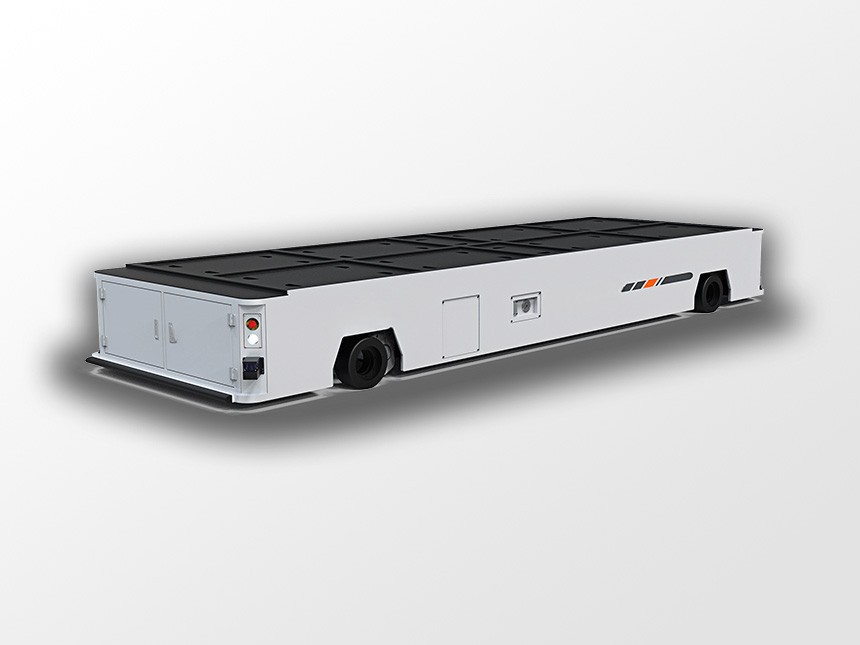
Shipyards are some of the most demanding environments for material handling. Hull sections weighing hundreds of tons, engine blocks the size of small rooms, and propulsion systems that can't be lifted by standard rigging — all of these need to move from fabrication to assembly, and eventually to the dock. Cranes play a role, but they aren't the whole story. Flatbed carts fill the gaps where overhead lifting falls short.
Here's why shipyards are increasingly relying on custom electric flatbed carts for their heaviest and most awkward loads.
Ship construction isn't like factory production. There's no fixed assembly line. Each vessel is different, which means the transport path changes with every project. One month you're moving flat steel panels. The next, you're handling a curved hull section with a center of gravity nowhere near its geometric center.
Cranes can lift these loads, but they can't always move them horizontally across a cluttered yard. Rigging takes time. Weather delays outdoor crane operations. And some loads — like partially assembled superstructure modules — simply don't have lifting points designed into them yet.
That's where ground-level transport becomes essential. A flatbed cart carries the load directly on its platform, no slinging required. The load is secured by welding, bolting, or custom fixtures, then moved to exactly where it needs to be.
Standard industrial carts won't survive a shipyard. The environment is harsh — salt air, welding spatter, heavy dust, and uneven surfaces. Carts designed for shipyard use need specific adaptations:
Corrosion-resistant construction. Marine-grade coatings, stainless steel hardware, and sealed electrical enclosures protect against salt spray and moisture. Anything less, and you'll be replacing components faster than you're building ships.
Heavy-duty wheel assemblies. Shipyard floors are rarely perfect concrete. They may be steel plates, compacted earth, or temporary paving. Wheels need to handle uneven loads, sharp edges, and debris without failing. Dual-wheel bogies, pneumatic tires, and spring-loaded suspensions are common solutions.
Custom platform configurations. A flat deck isn't always enough. V-decks for cylindrical items, roller conveyors for containers, hydraulic lift tables for height adjustment, and rotatable platforms for alignment — these are standard options, not exotic add-ons.
High load capacity. It's not unusual for a shipyard cart to rate at 100, 200, or even 500 tons. The frame is engineered as a structural element, not just a carrier. Finite element analysis ensures the platform won't deflect under load, which matters when you're transporting precision-machined components.
Hull section transport. Large sections are fabricated in a shop, then moved to the building berth for assembly. A multi-axle cart with synchronized steering navigates the yard, carrying the section at ground level. Once at the berth, the cart's hydraulic system adjusts the section's height and angle for precise alignment.
Engine and machinery movement. Marine diesel engines and propulsion systems arrive at the shipyard as complete units. They're heavy, compact, and valuable. A flatbed cart with a recessed deck and tie-down points transports the engine from the quayside to the engine room opening, where a gantry crane takes over for the final vertical lift.
Propeller and shaft handling. These components are long, balanced, and easily damaged. A cart with V-block supports and soft padding cradles the shaft during transport. The low center of gravity reduces the risk of tipping, and the precise positioning capability aligns the shaft with the stern tube for installation.
Superstructure module transfer. Accommodation blocks and bridge sections are built off-site or in a separate workshop, then moved to the main hull. The cart's platform matches the module's footprint, and adjustable height allows the module to be rolled directly into position for welding.
Moving 200 tons of steel through a busy shipyard isn't a job for guesswork. Modern shipyard carts use multiple control options depending on the application:
Pendant control works for short, predictable moves where the operator walks alongside. Wireless remote control extends the operator's range and keeps them clear of the load. For the most complex operations, PLC-based automation with position feedback allows programmed routes and integration with yard management systems.
Safety systems are non-negotiable. Emergency stop buttons, collision avoidance sensors, audible alarms, and flashing beacons are standard. Some carts include load weight verification — the system won't move if the detected load exceeds the rated capacity. Tilt sensors trigger automatic stops if the platform angle becomes unsafe.
Speed is deliberately limited. A fully loaded shipyard cart might top out at 0.5 m/s. That's slow, but it's fast enough for yard operations while keeping stopping distances manageable. Acceleration and deceleration are ramped to prevent load shift.
Shipyards run long hours, and transport equipment can't wait for charging. Battery-powered carts with lithium iron phosphate (LiFePO4) cells offer the best balance of energy density, cycle life, and safety. A typical 100-ton cart might carry a 200 Ah battery pack, providing 8–10 hours of continuous operation.
For applications where the cart follows a fixed route, cable reel or busbar power eliminates battery concerns entirely. The trade-off is reduced flexibility — the cart is tethered to its power path.
Opportunity charging at loading stations extends battery life and reduces downtime. A 15-minute charge during load transfer can add hours of operation.
Off-the-shelf carts rarely fit shipyard needs. The load shapes are too varied, the environment too harsh, and the operational requirements too specific. Custom engineering ensures the cart matches the exact application — platform size, wheel configuration, control system, and safety features.
This doesn't mean every cart is a one-off. Modular designs allow platforms, wheel sets, and control systems to be recombined for different applications. A standard chassis might accept multiple deck configurations. A common drive system might power carts ranging from 50 to 300 tons.
The result is equipment that performs reliably in conditions that would destroy standard industrial carts, while maintaining enough standardization to control costs and simplify maintenance.
Shipyard material handling demands equipment that can handle extreme loads, harsh environments, and irregular transport paths. Flatbed carts designed for marine applications meet these demands in ways that cranes and standard industrial vehicles simply can't.
The investment in custom electric flatbed carts pays back through reduced reliance on crane time, faster transport cycles, improved safety, and the ability to handle loads that don't fit conventional lifting methods. For shipyards looking to increase throughput without expanding overhead crane capacity, ground-level transport is the logical next step.