+86 183 3953 1958
中文
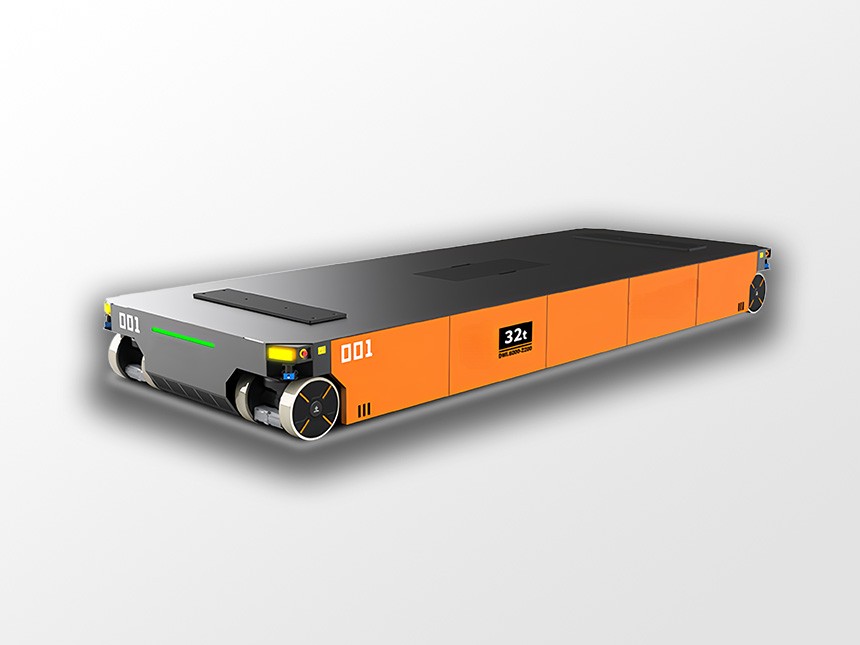
A battery powered transfer cart is, at its most fundamental level, a battery system with wheels attached. The cart's performance envelope—how much it can carry, how far it can travel, how long it can operate between charges, how reliable it is, and how much it costs to operate—is determined more by the battery system than by any other single component. Understanding how battery powered transfer carts work means understanding battery technology, battery system design, and the interaction between the battery system and the rest of the cart. The drive system, the braking system, the control system, and the charging infrastructure all exist in relationship to the battery system, and their specifications are determined in large part by what the battery system can provide.
The two battery chemistries most commonly used in electric transfer carts are lead-acid and lithium-ion, and the choice between them affects every aspect of how the cart works. Lead-acid batteries are the older and more established technology. They work by converting chemical energy into electrical energy through a reaction between lead dioxide and sponge lead plates submerged in sulfuric acid electrolyte. Lead-acid batteries are relatively inexpensive to manufacture, well understood by maintenance personnel, and recyclable—virtually all lead-acid batteries are recycled at end of life, making them an environmentally responsible choice in most regions. Their disadvantages are weight (they are heavy for their energy capacity), limited cycle life (they typically last 1,000-1,500 full charge-discharge cycles), and sensitivity to deep discharge (regularly discharging below 50% state of charge significantly reduces battery life).
Lithium-ion batteries are a family of chemistries, with lithium iron phosphate (LiFePO4) being the most common for industrial applications. LiFePO4 batteries offer significant advantages over lead-acid: they are lighter for the same energy capacity, they have much longer cycle life (typically 3,000-5,000 cycles), they can be discharged to a much lower state of charge without damage, and they have a flatter discharge voltage curve that provides more consistent power delivery throughout the discharge cycle. Their disadvantages are higher initial cost and more complex battery management requirements. The battery management system (BMS) required for lithium-ion batteries monitors cell voltages, temperatures, and currents to prevent conditions that could damage the battery or create safety hazards—and this complexity adds cost and requires more sophisticated service capability.
The drive system of a battery powered transfer cart consists of the motor, the motor controller, and the power transmission system. The motor is typically a DC motor—either a brushed motor or a brushless motor—although AC motors with variable frequency drives are used in some higher-power applications. The motor controller regulates the power flow from the battery to the motor, controlling speed and torque by adjusting the voltage and current supplied to the motor. The power transmission system—typically a gear reduction unit connected to the drive wheel—converts the motor's high-speed, low-torque output into the low-speed, high-torque output required to drive the cart.
The interaction between the battery and the motor controller determines the cart's performance characteristics. A battery with a high discharge rate capability can supply the high currents required for rapid acceleration and grade climbing; a battery with limited discharge rate capability will limit the cart's performance even if the motor and controller are capable of higher performance. The battery's state of charge affects available power: as the battery discharges, the voltage drops, and the available power decreases. At low state of charge, the cart may be unable to maintain full speed or complete grade climbs that were easy at full charge. This performance degradation is more pronounced in lead-acid batteries than in lithium-ion batteries, which maintain more consistent voltage throughout the discharge cycle.
The charging process is as important to the working of a battery powered transfer cart as the battery itself. Charging converts electrical energy from an external power source into chemical energy stored in the battery, and the charging process must be matched to the battery chemistry and the battery's current state. Charging a lead-acid battery with a lithium-ion charging profile, or charging at too high a current, will damage the battery and may create safety hazards. Charging with an incorrect charging profile will reduce the battery's cycle life and available capacity.
Lead-acid charging follows a characteristic profile: a bulk charging phase where the charger supplies maximum current and the battery voltage rises gradually; an absorption phase where the current decreases while the voltage is held constant; and a float phase where the voltage is reduced to maintain a fully charged battery without overcharging. The charger must recognize when to transition between phases based on the battery's response, and a charger with poor phase-transition logic will either undercharge or overcharge the battery. Lithium-ion charging follows a simpler profile: constant current until the voltage reaches the cell limit, then constant voltage until the current tapers to near zero. The BMS manages the charging process for lithium-ion batteries, preventing overcharge and balancing cell voltages during charging.
Opportunity charging—brief charging periods during work breaks rather than a single long charge at the end of a shift—is becoming more common in battery powered transfer cart applications. Opportunity charging extends the effective operating time of the cart and can eliminate the need for battery swapping in applications where downtime for charging is not acceptable. Lead-acid batteries can accept opportunity charging but do not benefit from it as much as lithium-ion batteries, because lead-acid batteries have a more limited tolerance for frequent partial discharge cycles. Lithium-ion batteries are well suited to opportunity charging, which is one reason they are increasingly preferred in high-utilization applications.
The operating time between charges—the distance the cart can travel or the number of hours it can operate before requiring a recharge—is determined by the battery's energy capacity, the cart's energy consumption rate, and the operating conditions. Battery energy capacity is measured in ampere-hours (Ah) or watt-hours (Wh), and the useful capacity is less than the rated capacity because the battery cannot be fully discharged without damage. For lead-acid batteries, the practical depth of discharge is typically 50-80% of rated capacity, meaning a 500Ah rated battery provides 250-400Ah of usable capacity. For lithium-ion batteries, the practical depth of discharge is typically 80-100% of rated capacity.
Energy consumption is determined by the work the cart must do: moving the load weight, overcoming rolling resistance, climbing grades, and accelerating. Heavier loads consume more energy; higher grades consume more energy; higher speeds consume more energy due to increased air resistance and tire hysteresis; frequent starts and stops consume more energy than smooth continuous operation. A cart that operates on level routes with light loads and low speed will consume far less energy per hour than a cart that operates on inclined routes with heavy loads at high speed. The operating conditions determine whether a given battery capacity is adequate for a full shift of operation, and battery system design must be matched to the actual operating conditions—not to ideal conditions that do not reflect the real application.