+86 183 3953 1958
中文
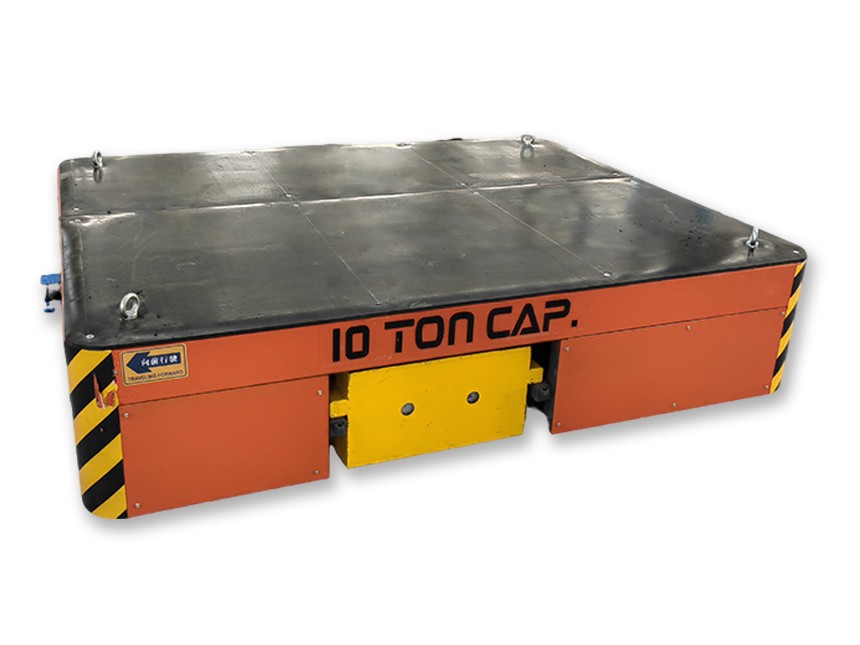
Ordering a standard electric transfer cart off a catalog page is straightforward: pick the capacity, confirm the lead time, sign the PO. But the moment your application requires something the catalog doesn't cover—an oversized deck, specialized load fixtures, explosion-proof electrics, or integration with existing production line controls—you're no longer buying a product. You're buying engineering capability, manufacturing quality, and a relationship that determines whether your cart arrives on spec or becomes a 6-month blame cycle between your production team and the supplier.
This guide walks through the criteria that separate competent custom cart manufacturers from those who will learn on your project.
Custom doesn't mean starting from zero. It means applying proven engineering to your specific constraints. The best manufacturers arrive at your door with a library of reference designs, not a blank sheet of paper.
A manufacturer's engineering depth is the single best predictor of whether a custom project succeeds or drifts. Ask directly how many mechanical and electrical engineers work in-house on cart design. A manufacturer with its own design team can iterate rapidly when your requirements change mid-project—as they always do. One that outsources design to a third-party firm introduces communication delays and liability gaps when problems arise.
For carts handling loads over 20 tons or involving unusual load distributions, finite element analysis (FEA) is not optional. It identifies stress concentrations, predicts deflection under load, and validates frame designs before a single piece of steel is cut. Ask to see FEA reports for similar projects. A manufacturer that can't produce them is designing by intuition—which works for standard carts and fails for custom ones.
The best manufacturers ask questions before quoting. They want to know your floor condition, your load geometry, your cycle frequency, your environmental conditions. A manufacturer that quotes based solely on capacity and dimensions without probing for application context is optimizing for order intake, not project success.
"Custom" means different things to different manufacturers. Clarify what's truly on the table.
Can they modify deck dimensions, frame construction, wheel configuration, and axle layout? Structural customization is where most custom projects live. A manufacturer limited to adding bolt-on accessories to standard frames isn't a custom manufacturer—they're an accessory shop.
Can they adapt the control system to your facility's communication protocols? Integrate with your MES for automatic job dispatch? Configure safety zones differently than the factory default? Electrical customization is where projects get expensive if the manufacturer lacks the capability—subcontracting control system work introduces the most common delay points in custom cart projects.
The deck-to-load interface determines whether operators love or hate the cart. Custom fixtures, powered roller tops, lift tables, turntables, and automatic load clamping systems should be within the manufacturer's demonstrated capability. Ask for photos of previous projects with similar load interface requirements—if they've never done it before, expect your project to take 50% longer than quoted.
A manufacturer's QA process reveals whether they trust their own work.
Every custom cart should undergo factory acceptance testing (FAT) before shipping. The FAT should include: load testing at 125% of rated capacity, full travel cycle testing under load, emergency stop function verification, sensor calibration and range verification, and battery runtime validation. A manufacturer that ships without documented FAT results is asking you to perform quality control in your facility.
Ask what welding certifications their shop maintains (AWS D1.1 or ISO 9606-1) and whether they perform non-destructive testing on structural welds for high-capacity carts. A cart's frame welds are subject to cyclic fatigue loading—a visually acceptable but structurally deficient weld fails after years, not months, making it the hardest defect to catch before it causes damage.
Critical components—motors, gearboxes, batteries, controllers—should have traceable serial numbers linked to the cart's project file. When a component fails three years into service, traceability eliminates the multi-week investigation into what was originally installed.
Custom equipment requires more support than standard equipment. Your manufacturer's support infrastructure matters more than their sales presentation.
Ask for the manufacturer's spare parts stocking policy. Do they maintain inventory of critical components for every cart model they've built? Can they ship a replacement motor controller within 48 hours? Custom carts with proprietary control systems are only as reliable as their manufacturer's spare parts pipeline.
Can they connect remotely to the cart's controller for diagnostics? For facilities in remote locations or with lean maintenance teams, remote diagnostic capability can resolve 60–70% of issues without an on-site visit, reducing downtime from days to hours.
Standard warranty on industrial carts is 12–24 months. For custom carts integrating multiple bespoke subsystems, consider extended warranty coverage or a service-level agreement that guarantees response times. The warranty document should specify what's covered (all components, not just the frame) and what triggers exclusions (overload operation beyond rated capacity, unauthorized modifications, operator-caused damage).
The most revealing question isn't "Can you do this?" but "Show me something similar you've done."
Request case studies or reference contacts for projects with similar capacity, customization level, and application environment. A manufacturer that built a 50-ton cart for a steel mill is well-qualified for your 30-ton foundry cart—less so for a 2-ton precision cart with micron-level positioning requirements. Domain relevance matters more than total tonnage.
The best validation of a custom manufacturer isn't a project photo—it's repeat business. When a customer orders their third or fourth cart from the same manufacturer, that's evidence that the first cart met expectations and the second confirmed the pattern. Ask what percentage of their business comes from repeat customers.
A custom industrial transfer cart is a 7–15 year capital investment. The manufacturer you choose determines not just whether the cart arrives correctly configured, but whether it can be maintained, upgraded, and supported throughout its operating life. Prioritize engineering depth, demonstrated experience with similar projects, documented quality processes, and responsive after-sales infrastructure. The lowest quote rarely represents the lowest total cost over the asset's life—it represents the manufacturer who hasn't yet discovered what your project actually requires.