+86 183 3953 1958
中文
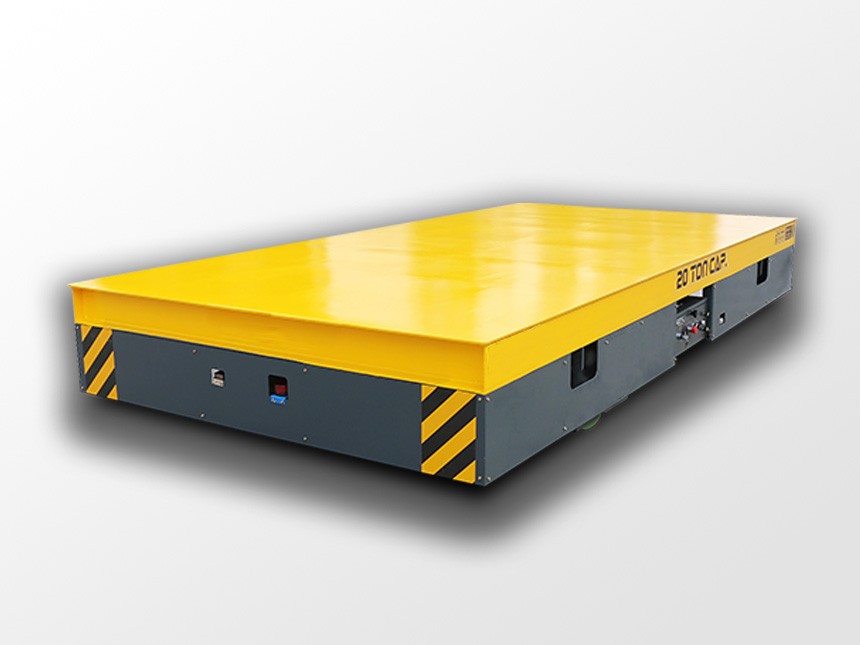
Not every factory has wide aisles and open floor plans. Many production facilities — especially older plants, specialty workshops, and crowded manufacturing floors — operate with narrow corridors, low ceilings, and limited turning room. Standard material handling equipment simply doesn't fit. Forklifts need clearance. Overhead cranes need span. Conveyor systems need straight runs.
Industrial carts designed for confined spaces fill this gap. But selecting the right unit requires looking beyond standard specifications. A cart that works beautifully in an open warehouse becomes a liability when it can't navigate a tight corner or fit under a low pipe run.
Before evaluating any cart, document your actual environment. Measure the narrowest aisle width, the lowest overhead obstruction, and the tightest turning point. These aren't theoretical constraints — they're the hard limits that determine whether a cart can operate at all.
Key measurements to capture:
One detail often overlooked: turning radius isn't just about the cart's physical dimensions. It's about the path the cart actually traces when loaded. A heavy load shifts the center of rotation, and operators need clearance for that swing path.
In confined spaces, wheel design matters more than motor power. The wrong wheel setup turns every direction change into a multi-point maneuver that wastes time and increases collision risk.
Common configurations:
For most factory applications, differential drive with robust polyurethane wheels offers the best balance of maneuverability, durability, and maintenance simplicity. Mecanum wheels sound impressive but require precise calibration and frequent maintenance — not ideal for production environments.
Here's a common trap: buyers specify the load capacity they need, then discover the cart that handles that weight is too large for their space. Heavy-duty carts need larger frames, bigger wheels, and more powerful motors — all of which increase physical dimensions.
The solution? Look at compact heavy-duty designs. Some manufacturers specialize in high-capacity carts with minimized footprints. These use:
If your heaviest load is 5 tons but your aisle is only 1.5 meters wide, you'll need a supplier experienced in custom compact designs. Standard catalog units rarely solve this combination.
Battery placement affects both cart dimensions and stability. In confined spaces, a low center of gravity matters — tall battery packs raise the deck height and increase tipping risk during turns.
Consider these options:
For very tight spaces where charging infrastructure is impractical, battery swap systems make sense. Operators exchange a depleted battery for a charged one in under two minutes — no need to maneuver the cart to a charging point.
In open spaces, coarse control works fine. In confined environments, operators need precise, responsive control. The difference between clearing an obstacle and hitting it is often millimeters.
Essential control features:
Some advanced systems offer proportional control — the further you push the joystick, the faster the cart moves. This gives operators fine control at low speeds and full power when the path is clear. In tight spaces, this feature isn't a luxury; it's essential.
Confined spaces amplify safety risks. Less room to maneuver means less margin for error. Less visibility means operators rely more on sensors and warnings.
Critical safety features:
One practical consideration: in very tight spaces, standard safety margins may not apply. Work with your supplier to calibrate sensor ranges for your actual environment rather than accepting factory defaults.
Confined spaces often mean the cart itself becomes part of the workstation. Loads may need to be accessed from multiple sides, or the cart may need to position precisely at a machine interface.
Deck features to evaluate:
A cart that merely transports isn't enough in confined spaces. It needs to integrate with your production workflow — positioning, feeding, and aligning as precisely as it moves.
Every machine needs maintenance. In confined spaces, accessing the cart for service becomes part of the design challenge. Look for:
A cart that requires a crane to service its battery isn't practical in a crowded workshop. Design for maintainability from the start.
The purchase price of a compact cart often runs higher than a standard equivalent. Smaller components with equivalent power cost more. Custom configurations add engineering time. But the real cost calculation must include:
Sometimes the right cart eliminates the need for expensive facility changes. That's where the ROI becomes clear.
Not every cart manufacturer understands confined space requirements. Look for suppliers with:
Ask specifically about their experience with your industry and spatial constraints. A supplier who specializes in warehouse automation may not understand the challenges of a 40-year-old machine shop with 1.2-meter aisles.
Selecting industrial carts for confined spaces isn't about finding the smallest unit that handles your load. It's about matching a complete system — wheels, power, control, safety, and deck configuration — to your actual operational environment.
Start with accurate measurements of your space, not just your load. Involve operators who know the daily challenges of moving materials through tight areas. Test drive candidate carts in your actual environment, not just a supplier's showroom.
The right cart doesn't just fit your space — it makes your space work better. That's the difference between equipment that occupies floor area and equipment that improves production flow.