+86 183 3953 1958
中文
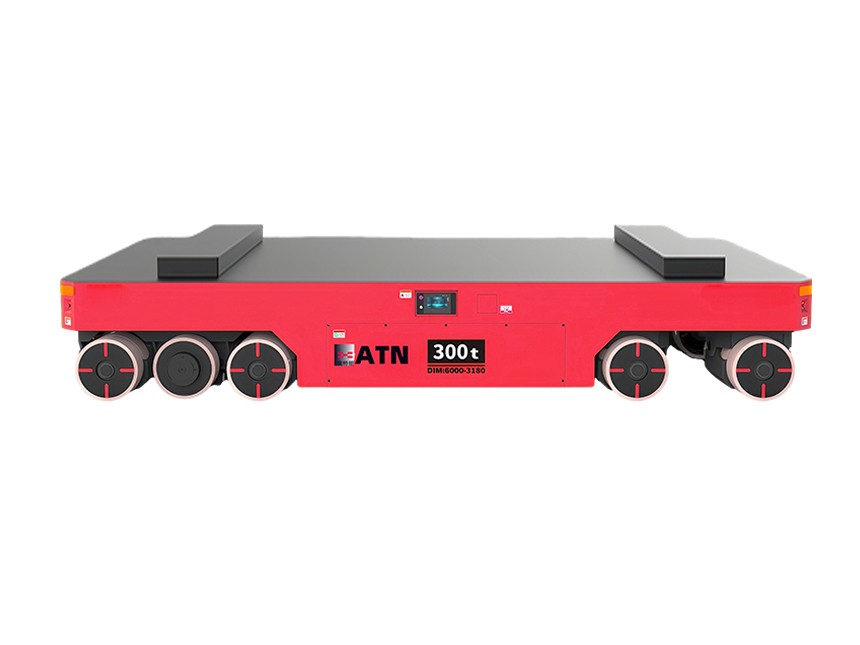
The design of an electric cart for a non-standard application is not a simple matter of scaling up or scaling down a standard product. Standard electric carts are designed for common applications—transporting standard load types on standard routes in standard facility conditions. Non-standard applications deviate from one or more of these parameters in ways that significantly affect the cart design requirements, and a cart that is optimized for standard conditions will perform poorly when applied to non-standard conditions.
The starting point for a non-standard cart design is a precise specification of how the application deviates from standard conditions. Is the load non-standard in its weight, its dimensions, its center of gravity, or its physical characteristics? Is the route non-standard in its length, its geometry, its grade conditions, or its surface conditions? Is the environment non-standard in its temperature, its contamination level, or its regulatory requirements? Each type of deviation affects the design in specific ways, and the design process must address each deviation systematically.
The load characteristics that most commonly require custom cart design are those that fall outside the assumptions built into standard cart designs. Standard carts assume loads with a low center of gravity, a uniform weight distribution, and a flat bottom surface that sits stably on the cart platform. Loads with a high center of gravity—a tall structure being transported horizontally, or a load where the weight is concentrated at the top—create stability challenges that standard carts are not designed to address. Loads with an uneven weight distribution—a load where the center of gravity is not at the geometric center of the load—create torsional stress on the cart frame that standard designs may not accommodate.
Loads that are physically constrained by the transport requirement also require custom design. A load that must be transported at a specific orientation—maintained level during transport, or kept at a specific angle—requires a cart with positioning mechanisms that are not part of standard designs. A load that must be lifted to a specific height during transport—moved up or down as part of the transport path—requires a cart with vertical travel capability, which is not available on standard platform carts. A load that is sensitive to acceleration forces—fragile materials or liquid loads that slosh—requires a cart with acceleration limiting capability that prevents sudden starts and stops.
The power system of an electric cart must be sized to meet the application's energy requirements: the power needed to move the load at the required speed on the grades the cart will encounter, for the duration of operation between charges. For non-standard applications, power system design often involves trade-offs that require careful analysis. The primary trade-off is between battery capacity (which determines how long the cart can operate between charges) and cart weight and cost (which increase as battery capacity increases).
Applications with high power requirements—very heavy loads on significant grades, or very high speed requirements—may require power system configurations that are not available in standard carts. Options for non-standard power systems include: dual motor configurations that provide more total power than single motor configurations, and that provide redundancy if one motor fails; dual battery configurations that provide more total energy storage and extend the operating time between charges; and hybrid power configurations that combine battery power with other power sources such as cable power or generator-assisted charging for continuous operation.
The battery technology choice becomes more critical in non-standard applications. Standard lead-acid batteries are appropriate for many applications but have limitations in extreme temperature conditions, in applications requiring opportunity charging (brief charges during short breaks), and in applications requiring long run times between full charges. Lithium-ion batteries offer significant performance advantages in these conditions but at higher initial cost. The appropriate technology choice for a non-standard application depends on a detailed analysis of the application's specific requirements and operating conditions.
The operating environment affects cart design in ways that are often underestimated. Standard cart designs assume indoor operation in controlled-temperature facilities with clean, dry floor surfaces. Deviations from these assumptions—outdoor operation, extreme temperatures, wet or humid environments, dusty or corrosive atmospheres—require design modifications that add cost and complexity to the cart.
Outdoor operation requires weather protection for the electrical and mechanical components: sealed enclosures that prevent water ingress, corrosion-resistant materials or coatings for all exposed surfaces, and lighting and marking systems that meet outdoor visibility requirements. Extreme temperature conditions require battery systems that are designed for the temperature range—standard lead-acid batteries perform poorly in temperatures below freezing or above 45 degrees Celsius, and lithium-ion batteries have their own temperature limitations that require thermal management systems for operation in extreme conditions. Contaminated environments—dusty, corrosive, or with chemical exposure—require specialized sealing, materials, and surface treatments that add significantly to the cart cost.
Non-standard applications often require control system capabilities that are not part of standard cart designs. Standard carts typically provide manual operator control, with basic functions such as forward/reverse, speed adjustment, and emergency stop. Non-standard applications may require: automated operation without an operator on board, using sensors and navigation systems to follow predetermined routes; coordinated operation of multiple carts that must avoid collisions and maintain spacing; integration with facility systems such as production schedules, inventory systems, or building management systems; and precise positioning capability that requires closed-loop position control rather than simple open-loop speed control.
The control system architecture for non-standard applications is designed as part of the overall cart design process, not specified after the basic cart is selected. The control system requirements affect the sensor suite, the processing capability, the communication systems, and the interface with the drive system. Selecting a standard cart and then specifying an advanced control system to be added later typically produces poor results, because the mechanical and electrical design of the standard cart was not optimized for the advanced control requirements. The correct approach is to specify the control requirements as part of the initial cart design, so that the mechanical and electrical design can be optimized for the full system requirements.