+86 183 3953 1958
中文
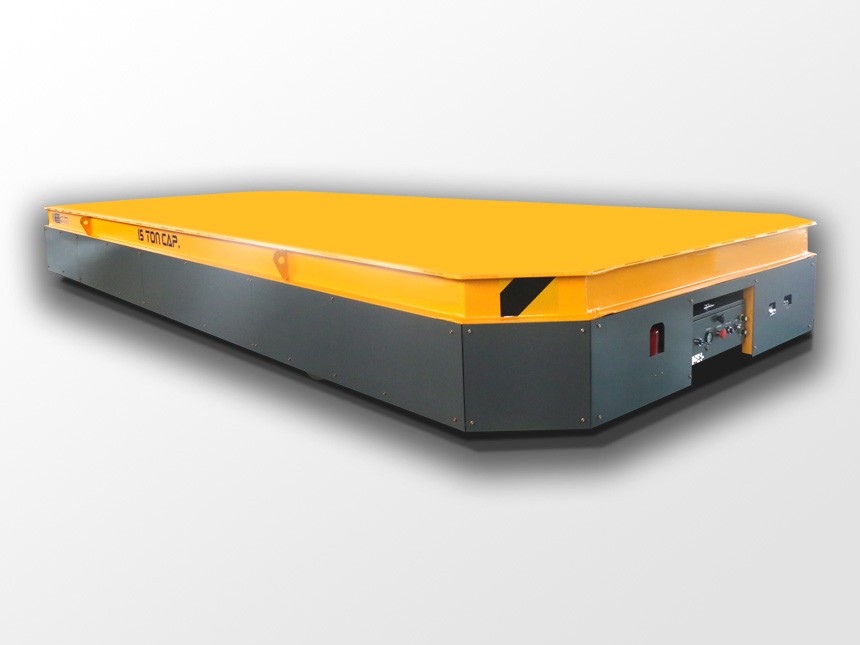
Operational cost management is a continuous priority for manufacturing facilities, and material handling represents one of the largest controllable cost centers in most operations. Labor, equipment maintenance, energy consumption, and downtime from equipment failures all contribute to material handling costs that directly affect product profitability. Electric flatbed carts offer significant and quantifiable cost reduction opportunities across every one of these categories, making them one of the highest-return investments available for manufacturing facility upgrades.
The key to achieving meaningful cost reduction is understanding the total cost picture—not just equipment purchase price, but the full lifecycle cost of each transport operation including labor, energy, maintenance, and the cost of production delays caused by slow material movement. When this full cost picture is analyzed honestly, electric flatbed carts consistently outperform alternatives including forklifts, manual carts, and conveyor systems in most manufacturing applications.
Material handling labor costs include more than operator wages—they encompass training time, supervision overhead, benefits, and the opportunity cost of skilled operators spending time on transport tasks instead of value-added production work. Electric flatbed carts reduce labor costs per transport operation significantly compared to forklifts or manual methods.
Electric cart operation requires minimal training compared to forklift operation—most operators achieve proficiency within a few hours rather than the days or weeks required for forklift certification. The reduced training requirement means you can deploy more operators for material handling without the scheduling constraints that forklift licensing creates. Additionally, electric carts with remote control capability allow a single operator to manage multiple carts simultaneously, further improving labor efficiency.
The total labor cost per transport move with an electric flatbed cart is typically 40-60% lower than the equivalent move using a forklift, based on reduced operator time, simplified control, and the ability for workers to manage additional responsibilities simultaneously.
Electric energy costs per transport operation are substantially lower than diesel or propane fuel costs for equivalent work. A typical electric flatbed cart consumes approximately $0.30-0.80 of electricity per hour of operation depending on load and usage patterns, while a diesel forklift consuming approximately 1.5-2.5 liters per hour at current fuel prices costs $3.00-6.00 per operating hour—five to eight times more than electric operation.
Battery charging costs vary based on facility electricity rates and usage patterns, but opportunity charging (brief charging sessions during operator breaks or shift changes) keeps batteries consistently available without requiring dedicated charging time. Lithium battery systems further optimize energy costs through their superior charge efficiency and the ability to participate in demand-response programs where facilities can reduce electricity costs by adjusting charging schedules to off-peak hours.
Electric motors have far fewer wearing parts than internal combustion engines. Electric cart drive motors have no spark plugs, filters, fuel injectors, oil pumps, or exhaust systems—components that require regular inspection, adjustment, and replacement on diesel equipment. The electric drive system reduces maintenance requirements by approximately 70% compared to internal combustion forklifts in equivalent applications.
Beyond the drive system, electric flatbed carts experience less wear on braking systems because regenerative braking reduces mechanical brake usage. Polyurethane or rubber wheels on electric carts create less floor wear than steel forklift wheels, reducing facility floor repair costs. These combined maintenance savings typically reduce total maintenance cost per electric cart by $2,000-5,000 annually compared to equivalent forklift operation.
Equipment downtime creates production delays that cost far more than the direct repair expense. Forklift equipment experiences unpredictable downtime from fuel system issues, hydraulic leaks, transmission problems, and engine performance degradation—particularly in dusty or high-temperature manufacturing environments. Electric flatbed carts experience dramatically less unplanned downtime because their simpler drive systems are more reliable and their condition is easier to monitor through battery management system diagnostics.
The opportunity cost of production delays from slow material transport compounds this downtime impact. A production line waiting for material delivery experiences labor idle time, schedule disruption, and potentially overtime costs to recover lost throughput. Faster, more reliable material delivery through electric cart systems eliminates these production delays and the associated costs.
Electric flatbed carts reduce several facility-level costs that are often overlooked. Electric operation produces no exhaust emissions, eliminating the ventilation requirements and health monitoring costs associated with internal combustion equipment in enclosed manufacturing spaces. The lower noise level of electric carts reduces hearing protection requirements and creates a less fatiguing work environment, contributing to improved operator performance and reduced error rates.
Additionally, electric carts do not require fuel storage infrastructure—no diesel storage tanks, no propane cylinder management, no fueling station maintenance. For facilities planning new construction or major renovation, eliminating fuel infrastructure requirements reduces building costs and removes ongoing compliance monitoring obligations.
The actual cost reduction from electric flatbed cart deployment depends on your current operation's specific characteristics. The most accurate approach uses your actual labor cost per hour, fuel or energy cost per unit, current equipment maintenance spending, and downtime records. A typical 100-operator facility spending $15,000 annually per forklift on combined fuel, maintenance, and downtime costs might expect $8,000-12,000 in annual cost per electric cart replacing that forklift, with the investment paying back within 12-24 months depending on operating hours.
Request a detailed cost analysis from your electric cart supplier that incorporates your specific operational data. Reputable manufacturers and distributors can provide ROI calculations based on your facility's actual cost structure, giving you confidence in the investment decision before committing to equipment purchases.