+86 183 3953 1958
中文
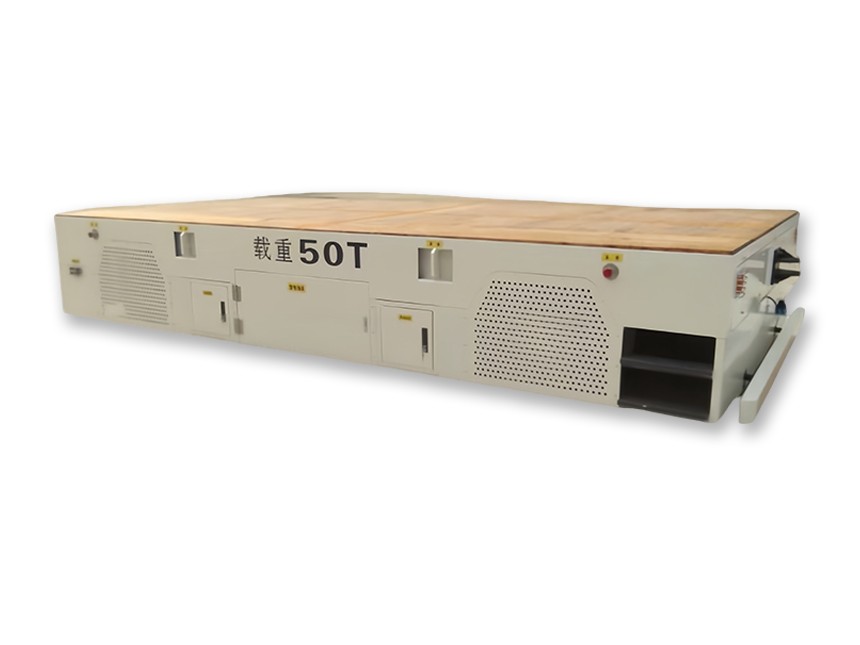
Electric transfer carts are not a single product type—they span a wide range of designs optimized for different applications, load characteristics, and operational requirements. Understanding the fundamental types of electric transfer carts and their respective strengths helps procurement managers and facility engineers select the right cart for their specific material handling needs. The wrong cart type for a given application creates ongoing operational problems; the right cart type delivers years of efficient, reliable service.
Flatbed transfer carts provide the simplest and most versatile platform for material transport. A flat deck with no side walls or enclosures accepts pallets, containers, machinery, and custom load configurations without constraints from integrated boundaries. This versatility makes flatbed carts the most commonly used type in manufacturing facilities with diverse material transport requirements.
Flatbed carts work best for loads that can be secured directly to the deck surface using straps, chains, or other load-securing methods. They are particularly suited to transport tasks where loads arrive on pallets or slip-sheets from forklifts and must be transferred directly to production line staging areas or warehouse locations. The open deck design also accommodates oversized loads that would not fit within enclosed or rail-guided cart configurations.
The primary limitation of flatbed carts is load securing—they require operator skill in proper load securing techniques. For facilities with consistent load types, custom deck configurations (roller tops, V-shaped cradles, pre-drilled securing points) address many of the securing challenges and make flatbed carts significantly more efficient.
Rail-guided transfer carts follow a fixed track embedded in or mounted on the facility floor. The rail provides precise guidance that enables safe, reliable transport along defined routes without requiring operator steering. Rail-guided carts are particularly valuable for high-capacity transport operations where the route is permanent and the volume of transport operations is high enough to justify the infrastructure investment of installing fixed rails.
The key advantage of rail-guided carts is their ability to handle very heavy loads with minimal risk of derailment or deviation from the planned route. At capacities above 50 tons, flatbed carts require increasing levels of operator skill and attention to maintain safe operation on curves and turns. Rail-guided systems eliminate this operator burden by physically constraining the cart to the rail path.
Rail installation costs are significant and the route is fixed, making this configuration most appropriate for high-volume permanent transport routes within a facility. For operations anticipating layout changes or flexible routing requirements, rail-guided carts are not the optimal choice.
Rail-less transfer carts—also called steerable transfer carts or omnidirectional carts—use motorized wheels with independent steering control to follow routes without fixed rails. Operators guide the cart along its route using a handheld pendant, remote control, or onboard control station. This flexibility makes rail-less carts suitable for facilities with changing layouts, multiple routing requirements, or transport operations that must adapt to production schedule changes.
Modern rail-less carts often include semi-automation features such as obstacle avoidance, route memory, and automated path following that reduce operator skill requirements while maintaining routing flexibility. Some rail-less cart systems support multiple predefined routes that can be selected based on current production requirements, providing the adaptability of rail-less operation with the consistency of fixed-route transport.
Some material handling applications require the cart to raise, lower, or tilt the load as part of the transport operation. Carts with integrated lift mechanisms perform these operations without requiring separate lifting equipment, reducing the number of equipment types and transfer steps in the material flow. Applications include loading and unloading containers at various heights, positioning loads for processing at specific heights, and facilitating transfer to conveyor systems or other handling equipment at different elevations.
Lift capability adds mechanical complexity, maintenance requirements, and cost to the cart, so this configuration is typically selected when the operational efficiency gains justify the additional investment. The most common lift configurations include scissors-lift platforms for lower heights and precision positioning, and hydraulic lifts for higher capacities and larger elevation changes.
Automated guided vehicles (AGVs) represent the most advanced category of electric transfer carts—carts capable of operating without a human operator through autonomous navigation systems. AGVs use various navigation technologies including magnetic tape following, laser landmark navigation, vision-based navigation, and natural feature recognition to determine their position and navigate along programmed routes.
AGV transfer carts deliver the highest labor efficiency for high-volume transport operations because they operate continuously without breaks, shifts, or operator fatigue. However, they require substantial infrastructure—navigation markers, system controllers, fleet management software—and operational maturity to implement effectively. AGV systems are most appropriate for facilities with stable, high-volume transport requirements and the engineering capability to manage automated systems.
Beyond the standard types, manufacturers offer numerous specialty configurations addressing specific operational requirements. Tapered deck carts for coil transport, tandem-axle carts for very heavy loads, articulated carts for navigating tight curves, and counterweighted carts for asymmetric loads represent a small sample of the customization options available. When standard cart types do not adequately address your application requirements, consult with manufacturers about custom configurations—the right specialty cart often costs far less over its lifetime than forcing a standard cart to perform an unsuitable application.