+86 183 3953 1958
中文
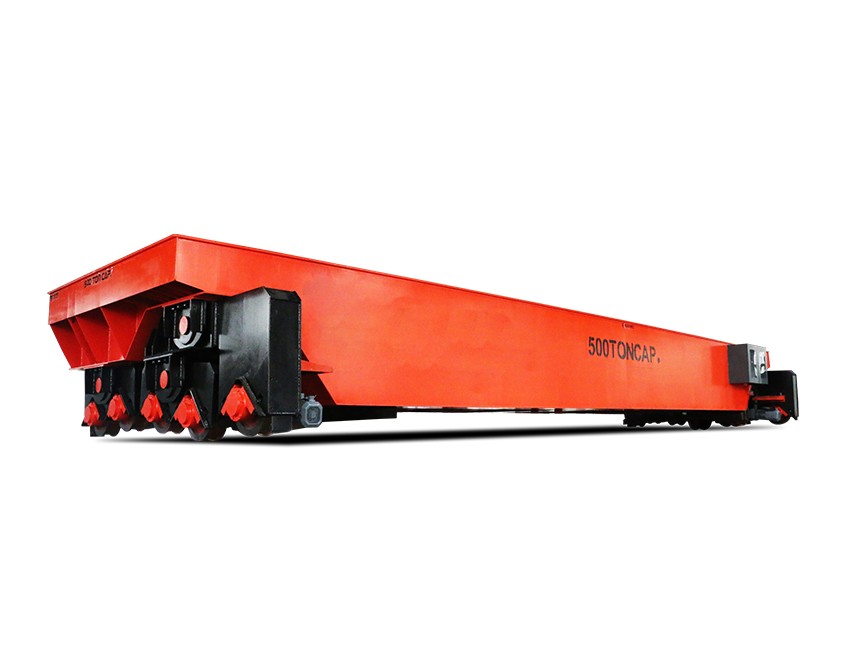
Heavy-Duty Rail-Guided Vehicles (RGVs) are purpose-built for stable, repetitive transport of heavy and oversized loads in industrial environments. When material weights exceed the safe or efficient limits of manual handling or standard logistics equipment, rail-guided solutions provide a controlled and reliable alternative.
By combining rigid rail guidance with reinforced steel structures, heavy-duty RGVs ensure load stability, minimal vibration, and precise motion control, even under high load conditions. This makes them essential equipment in production lines and workshops where heavy components must be moved repeatedly between fixed stations.
Heavy-duty RGV systems are best suited for operations involving:
Repetitive transport of heavy components or assemblies
High-load point-to-point material flow
Fixed production routes with consistent transfer cycles
Applications requiring minimal load sway or impact
Long-term continuous operation under heavy mechanical stress
Compared with forklifts or rubber-tired vehicles, rail-guided systems offer superior load stability and predictable performance for high-capacity transport tasks.
Handling heavy loads in industrial settings often leads to safety risks, uneven transport speeds, and accelerated equipment wear. Heavy-duty Rail-Guided Vehicles address these challenges by:
Distributing load weight evenly through rail-supported structures
Reducing mechanical shock during start, stop, and positioning
Ensuring repeatable transport accuracy under full load
Lowering operator-related safety risks
Supporting high-frequency transport cycles without performance degradation
These advantages make heavy-duty RGVs a long-term solution for demanding production environments.
Heavy-duty Rail-Guided Vehicles are widely applied in industries such as:
Metallurgy and steel processing plants
Large equipment and machinery manufacturing
Wind energy component production
Power generation and transformer assembly
Mold, die, and tooling workshops
Shipyard and heavy fabrication facilities
Their load capacity and structural flexibility allow customization for specialized heavy handling tasks.
| Parameter | Specification |
|---|---|
| Vehicle Type | Heavy-Duty Rail-Guided Vehicle |
| Load Capacity Range | 10–100 tons (customizable) |
| Track Type | Heavy-load rail track |
| Power Supply Options | Battery / Busbar / Cable Powered |
| Drive System | Dual or multi-motor drive with gearbox |
| Control Mode | Remote / Semi-Automated / Fully Automated |
| Travel Speed | 0–30 m/min (load-dependent) |
| Positioning Accuracy | ±5 mm |
| Structural Design | Reinforced steel frame |
| Safety Protection | Overload protection, emergency stop |
To meet heavy-load handling requirements, optional configurations include:
Load balancing and anti-slip deck structures
Hydraulic lifting or synchronized lifting systems
Turntable or crossing transfer mechanisms
High-strength rail clamps and wheel assemblies
Heat-resistant or explosion-proof components
Advanced braking and speed control systems
All configurations are engineered to ensure long-term stability and safety under heavy loads.